Rome
We spent eleven days in Rome and could have easily spent a month. With so much to see and do we had to pick and choose what our priorities were.
We got an apartment near the Vatican, it was a wonderful location, we had a nice big farmers market right across the street, we could walk to Vatican City and had numerous restaurants and shopping near by.
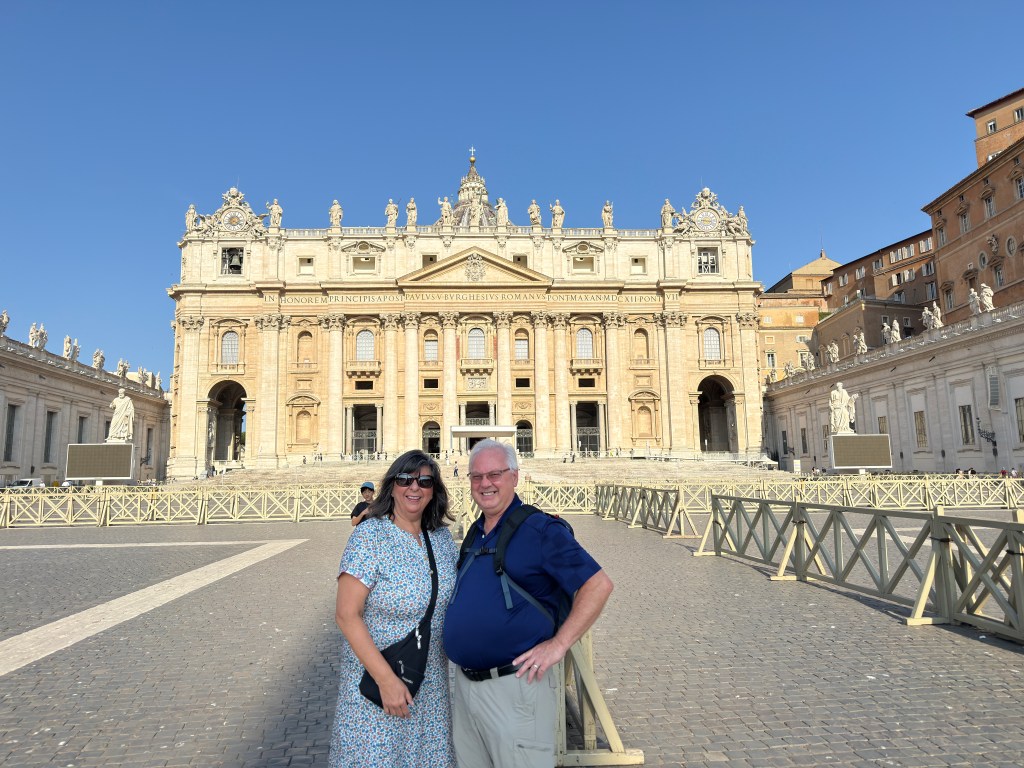
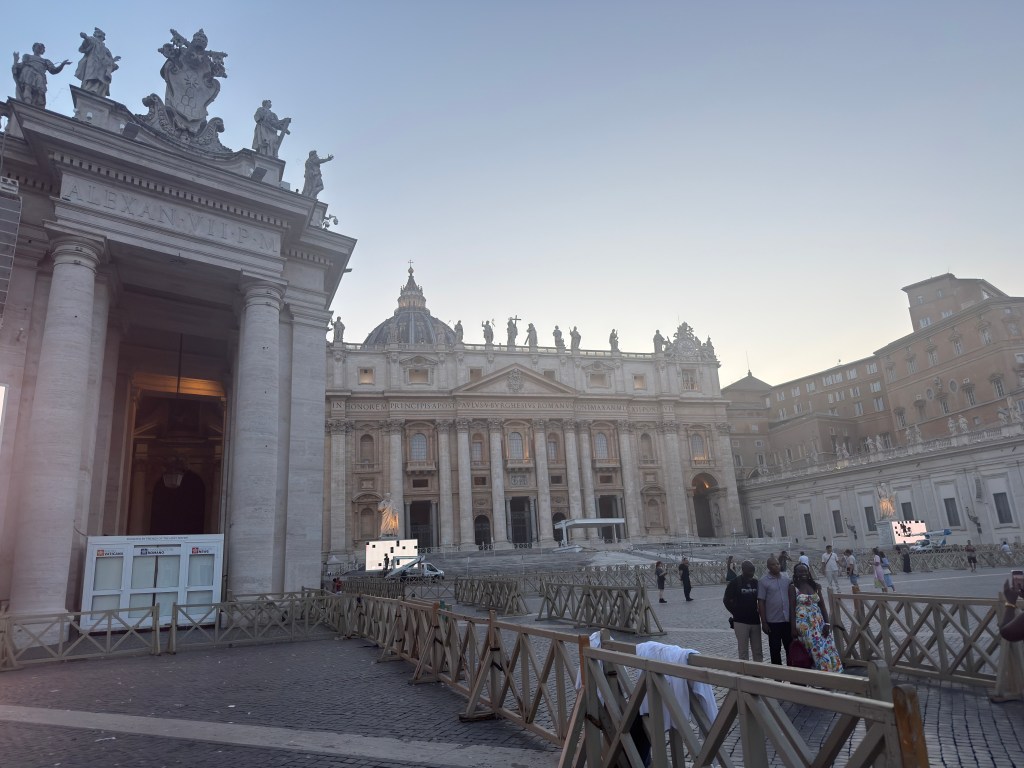
When we arrive at a new destination we are in the routine of not doing a lot the day after we travel. Usually on a travel day we get to our apartment, get settled in, run grab a few essential groceries and call it a day. And the next day we generally go scope out our neighborhood to see what’s around us, because we were so close to the Vatican we made our way down to St. Peter’s Square.
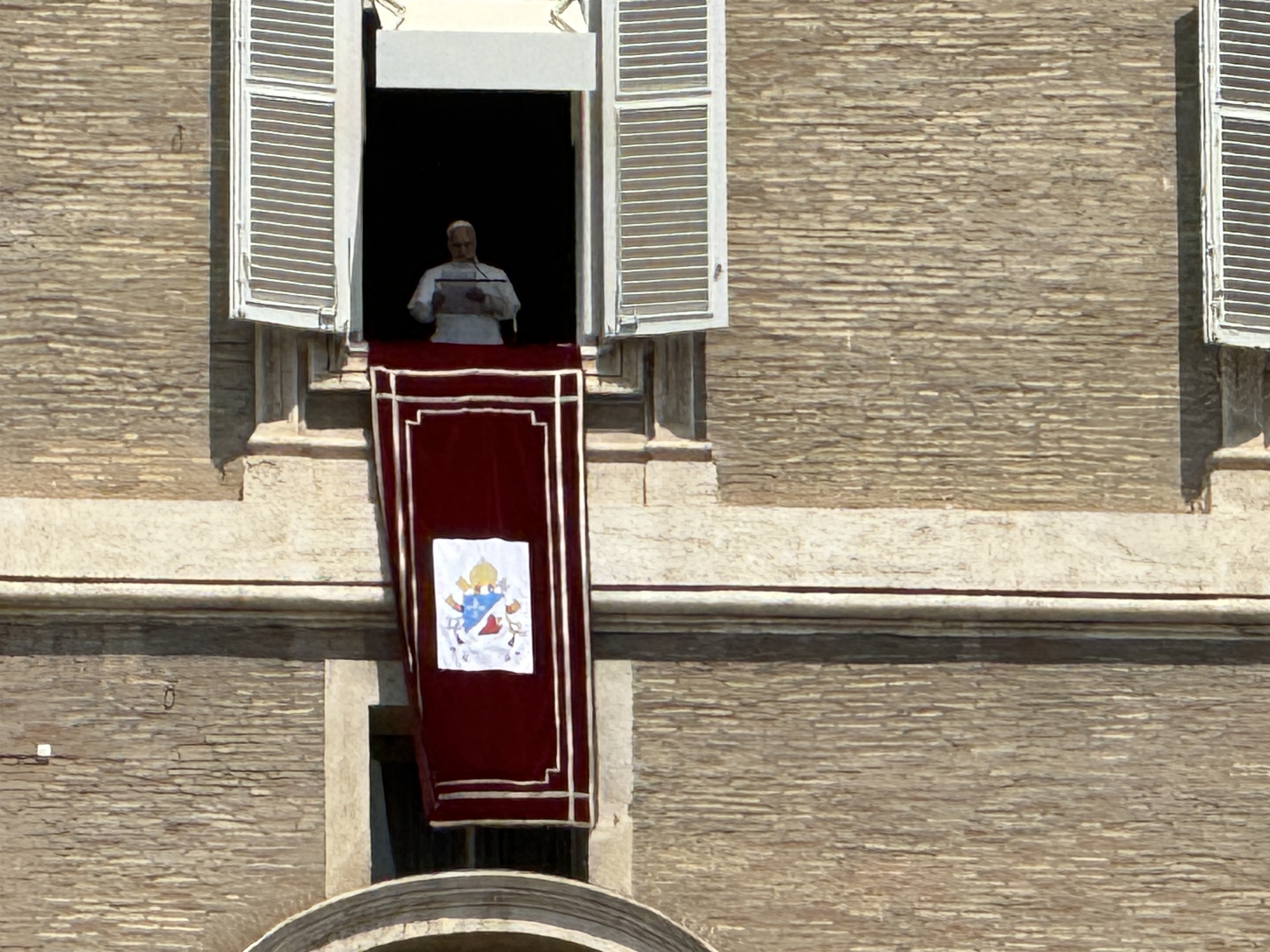
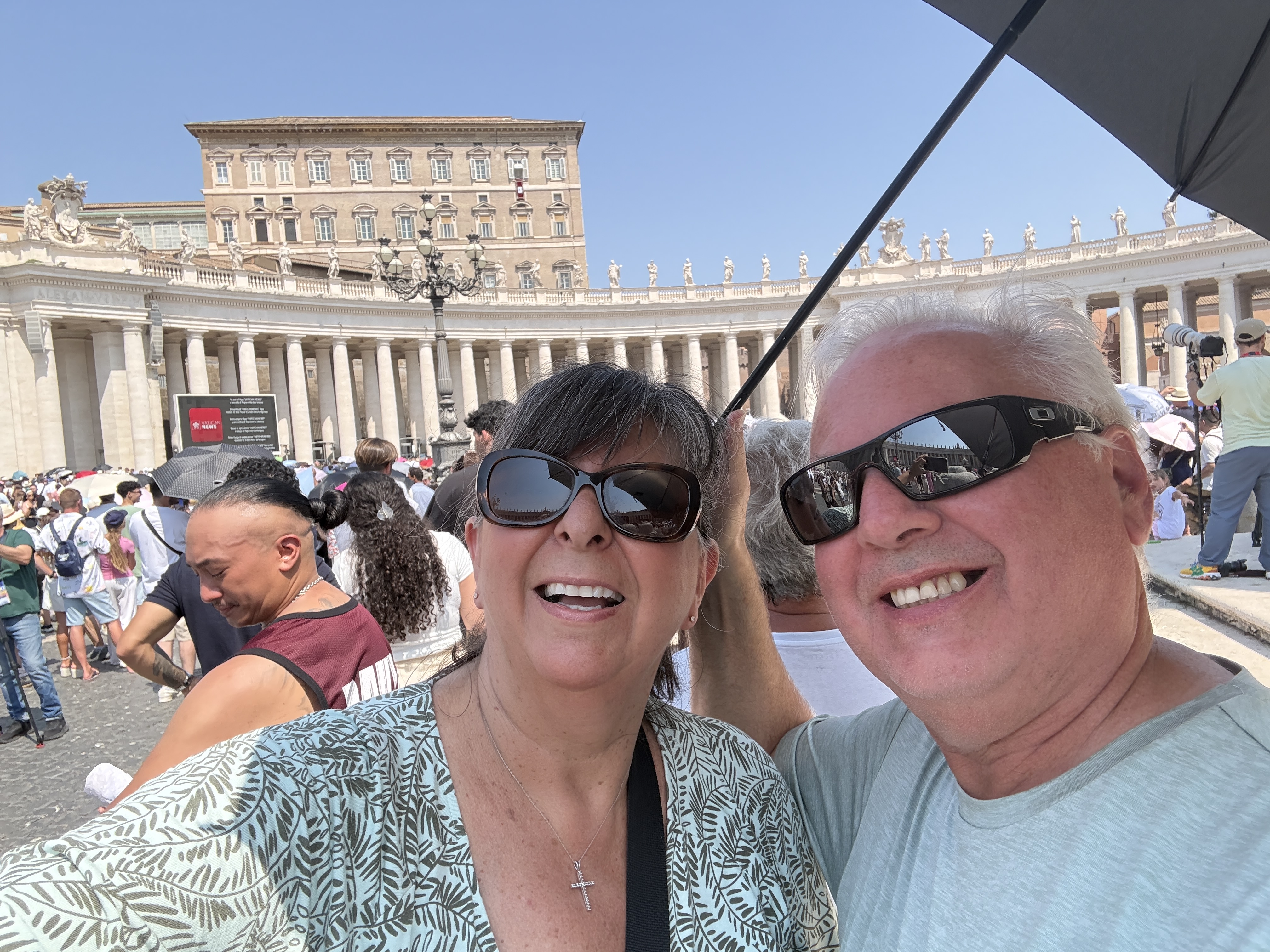
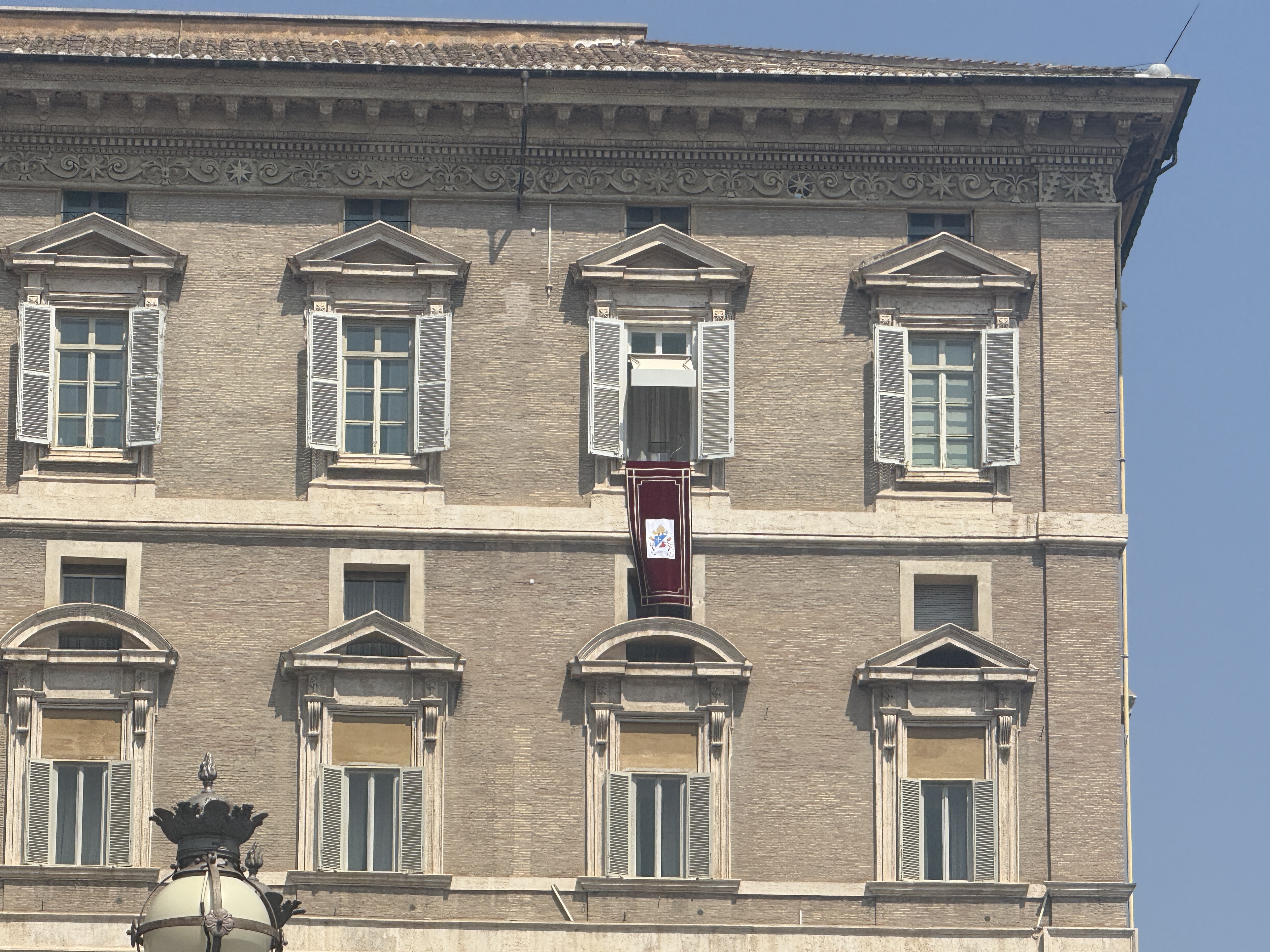
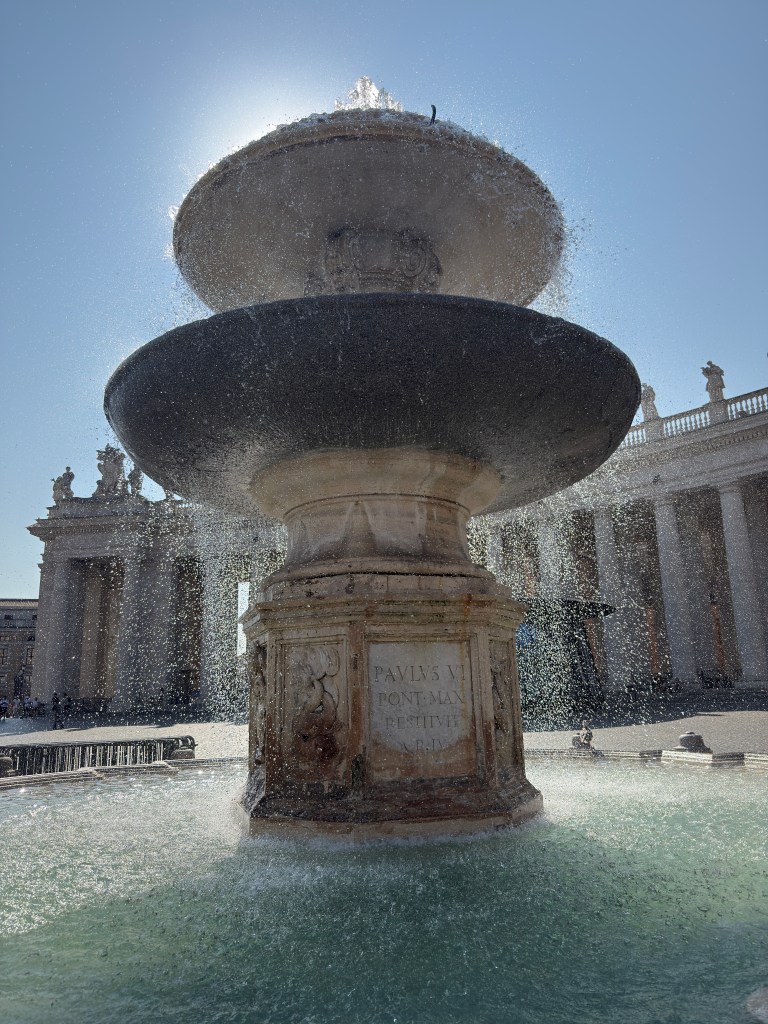
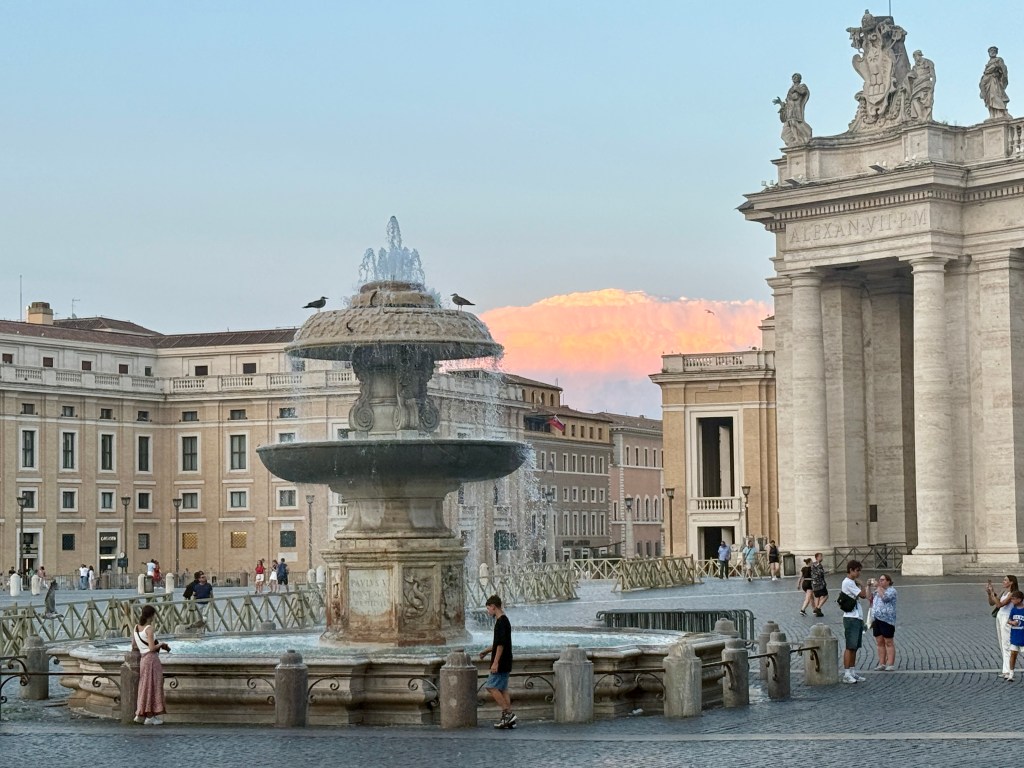
Designed by Bernini, The square is 1410 feet long and 787.5 feet wide and can hold around 300,000 people. It’s enclosed by double elliptical colonnade of 284 columns and 88 pilasters, completed in 1667. At the centre stands an almost 84 ft. ancient Egyptian obelisk brought to Rome by Emperor Caligula in 37 AD. Two Baroque fountains flank the obelisk. The square is the site of the Pope’s weekly Papal Audience (every Wednesday), also the Urbi et Orbi blessing (at Christmas and Easter), and large-scale liturgical events throughout the year. We were able to attend one of the weekly Papal Audiences for the weekly blessing from Pope Leo XIV. We arrived two hours early and found a seat on the ledge of the fountain gate. It was hot, but we froze water the night before and brought our umbrella and were able to wait in the heat, however we did see a couple of people pass out from the heat and were taken away by ambulance. So if you go in the Summer be prepared. There is no shade.
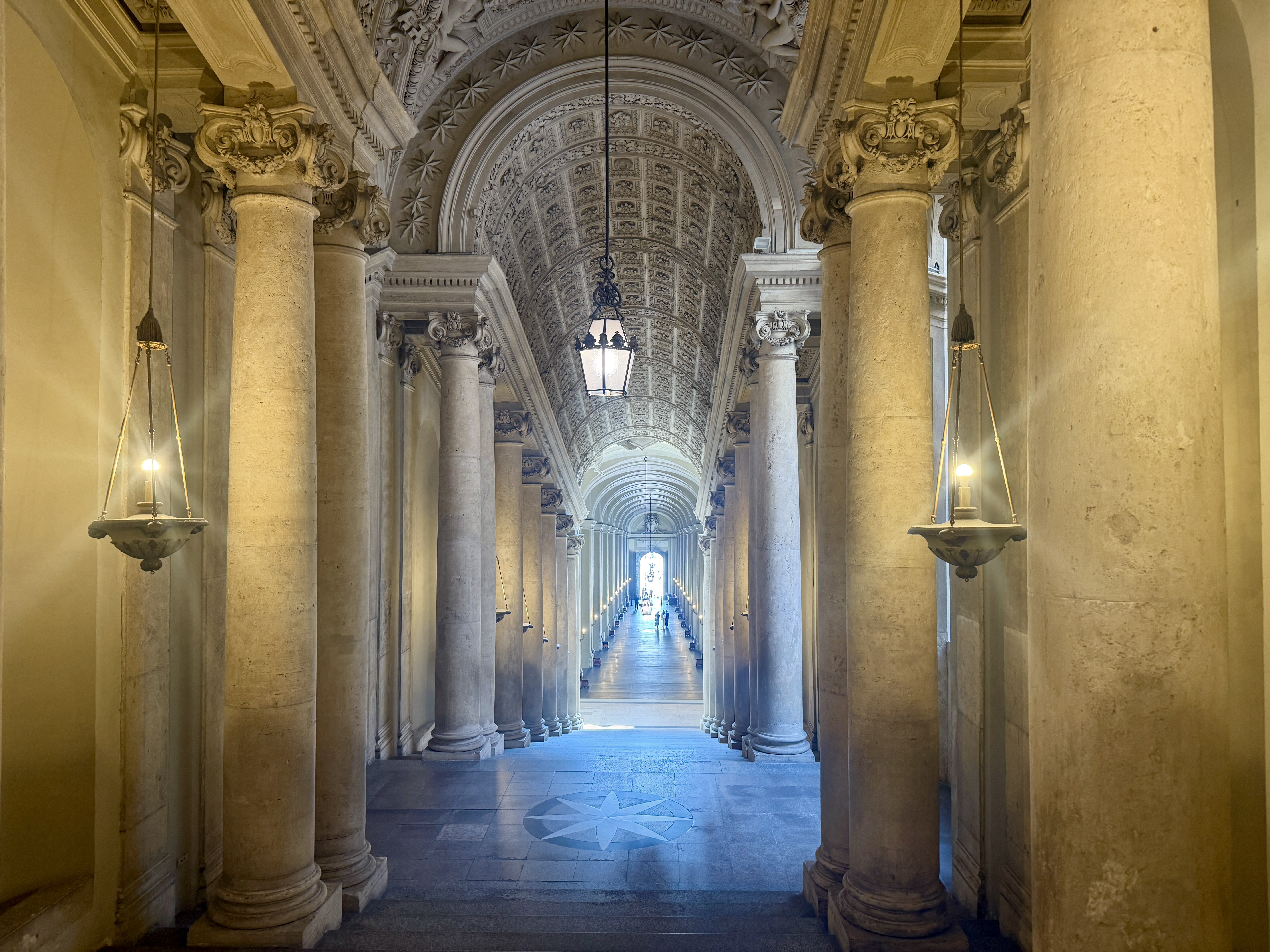
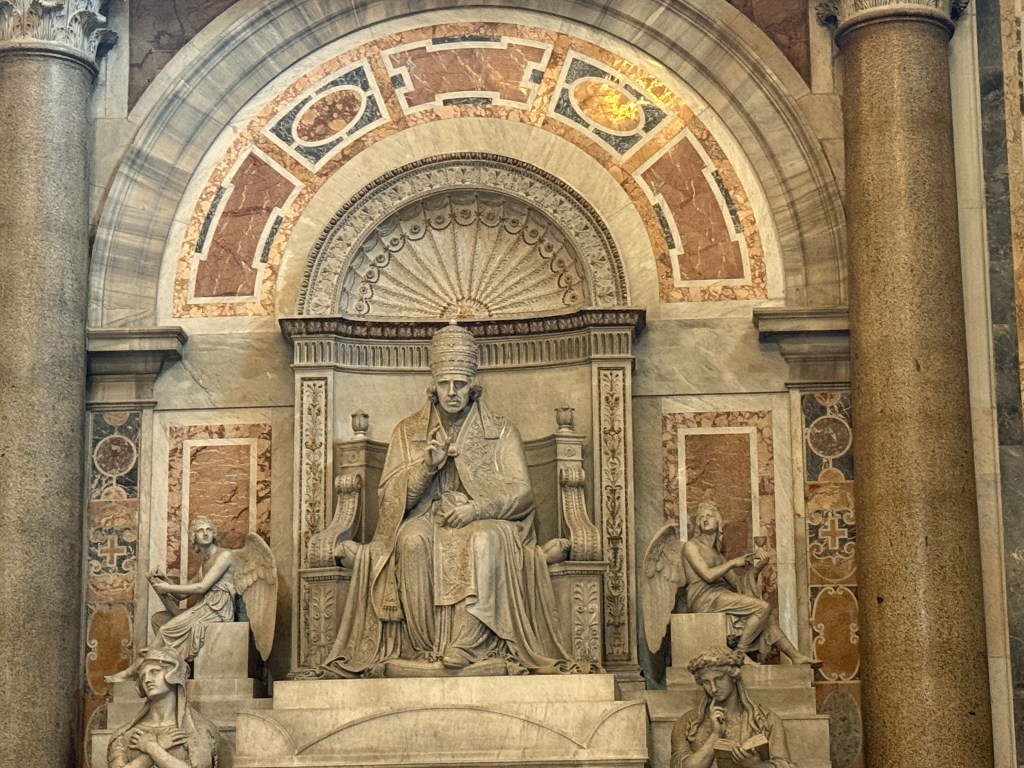
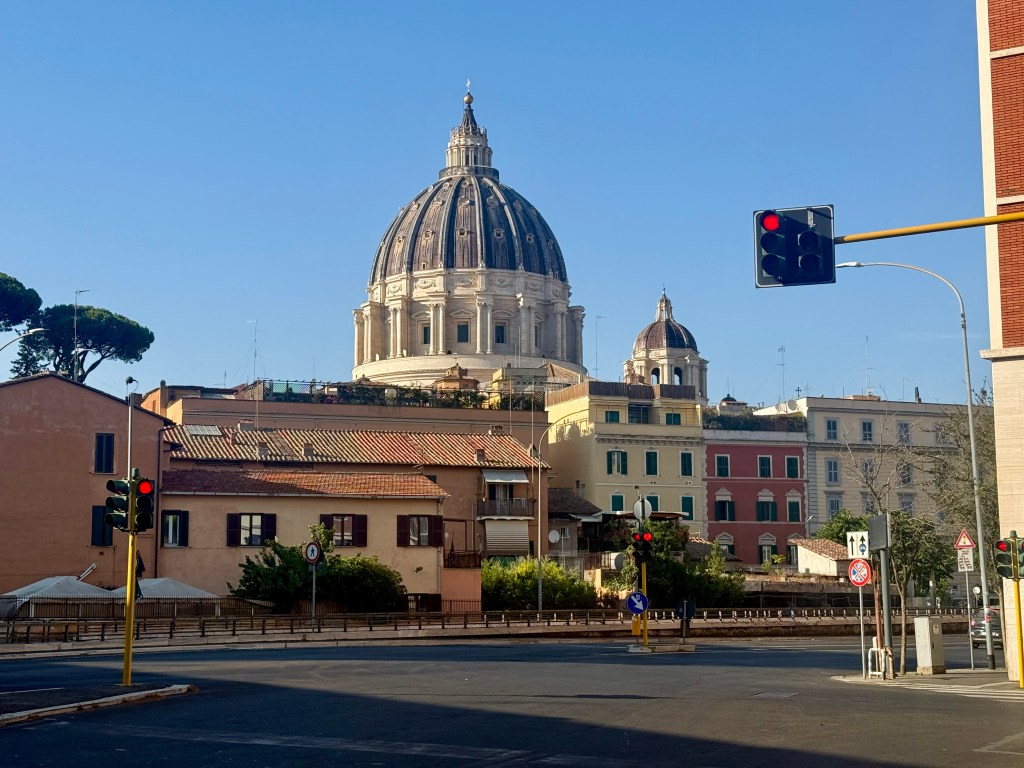
The next day we headed to the Vatican to St. Peter’s Basilica, built between 1506 and 1626, This basilica holds 60,000 people standing and 20,000 if seated.
St. Peter’s tomb sits directly below the high altar of the basilica known as the altar of the confession. It’s the largest Christian Church building in the world and is the second tallest building in Rome. If you enter the first chapel to your right you’ll find Michelangelo’s Pieta, he sculpted this when he was just 24 years old and it’s the only work he ever signed. Throughout the church you’ll find masterpieces of art, statues and paintings. It’s free to enter but arrive early, they open at 0700 and you must follow the dress code, knees and shoulders must be covered. If not they will refuse you entry.
We also decided to take a guided tour through the Vatican, including the Vatican museum and the Sistine chapel.
The tour we took was just ok so we aren’t going to give a recommendation. If we had to do it over again Im not sure if I would have just bought skip the line tickets and do it on my own or do an early morning tour, but if we did another tour it would have to be first thing in the morning. We did an afternoon tour and it said skip the line but the line for skip the line was so long that it made no difference. Our guide showed up sick and we felt like she breezed us through the tour, although we did feel like we got enough time in the Sistine chapel, the museum was very rushed and we didn’t get to see the things we wanted to stop and see and she lingered on things that weren’t as interesting to us. We are planning a return to Rome next year and will just get our tickets ahead on this one.
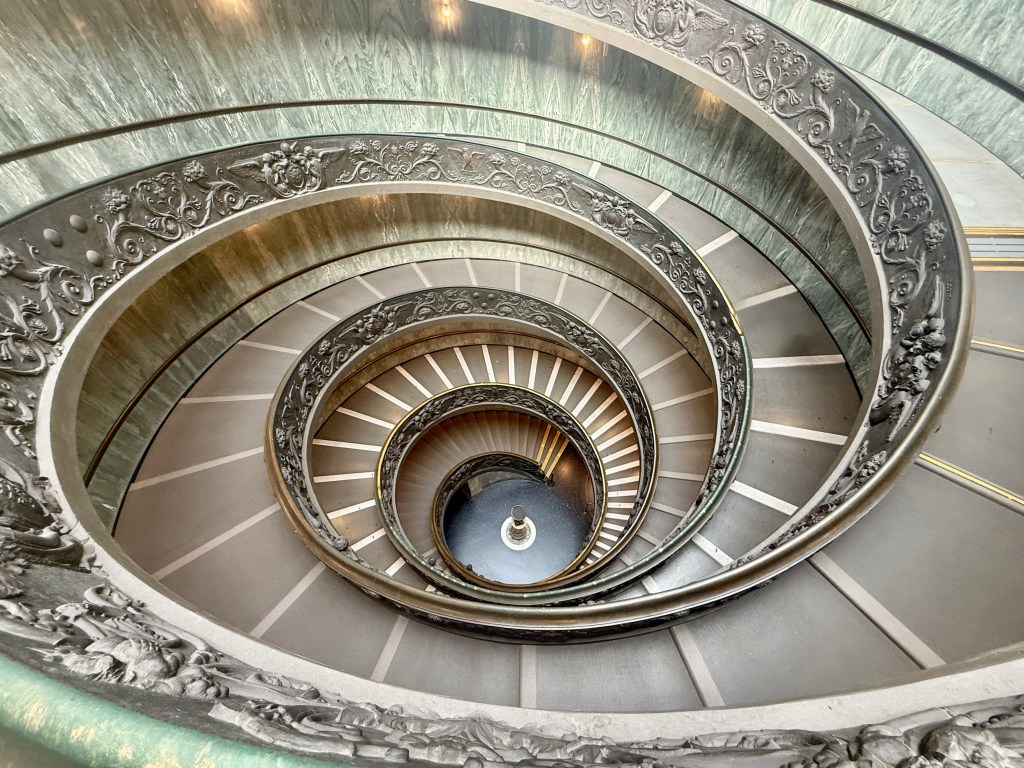
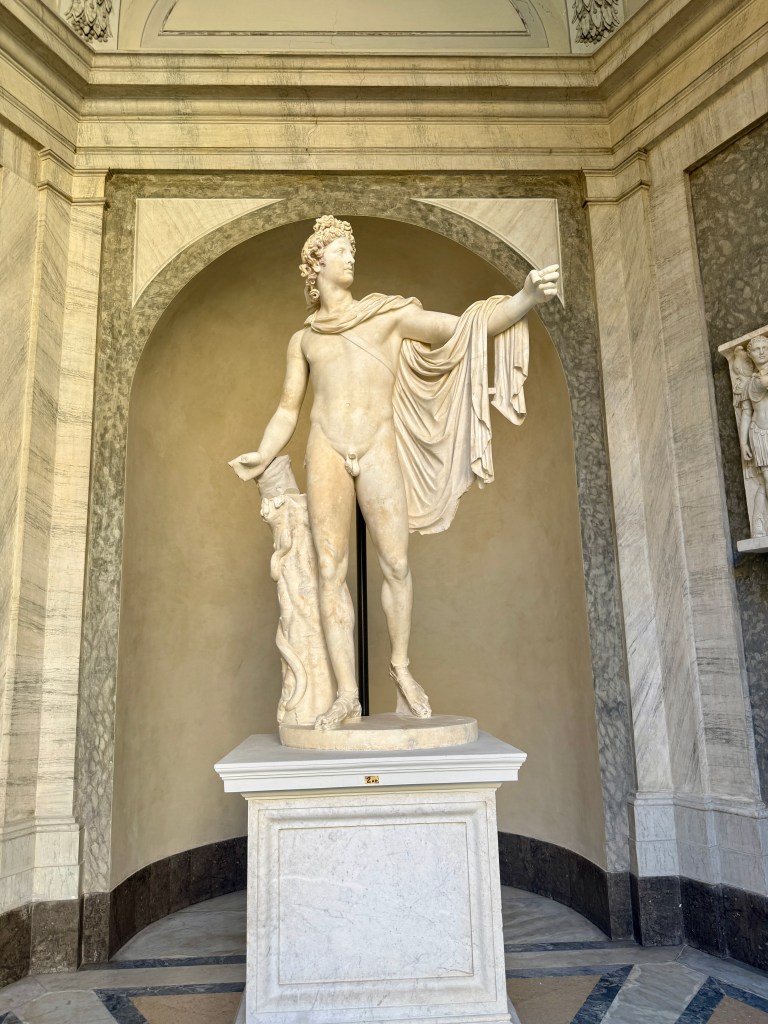
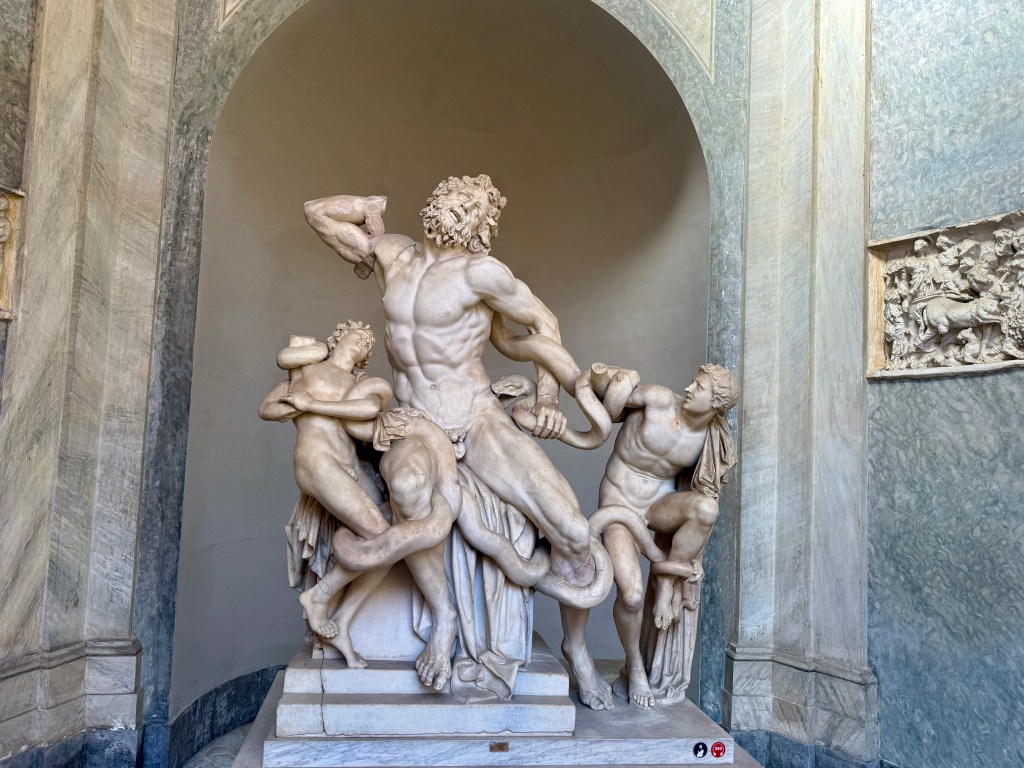
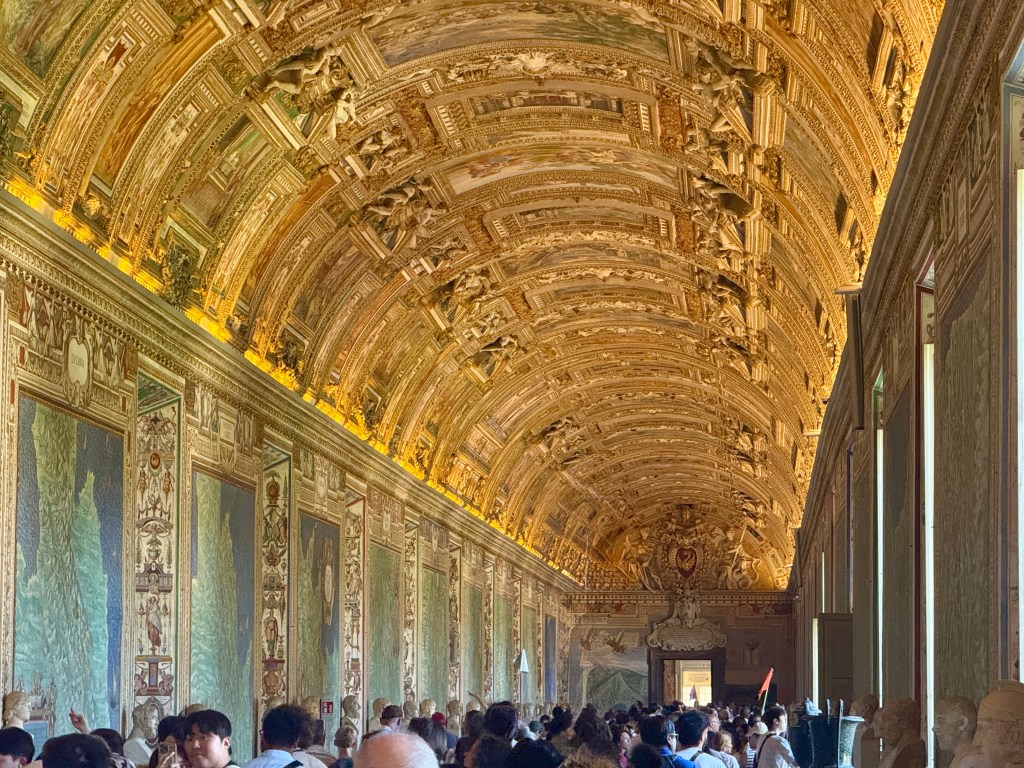
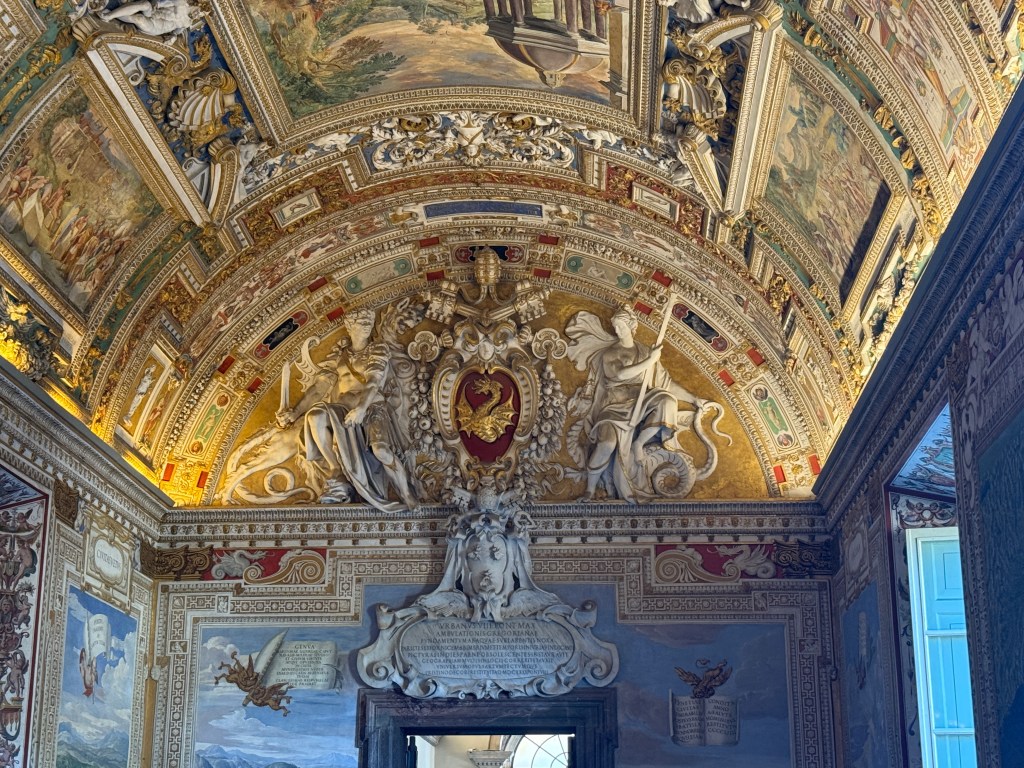
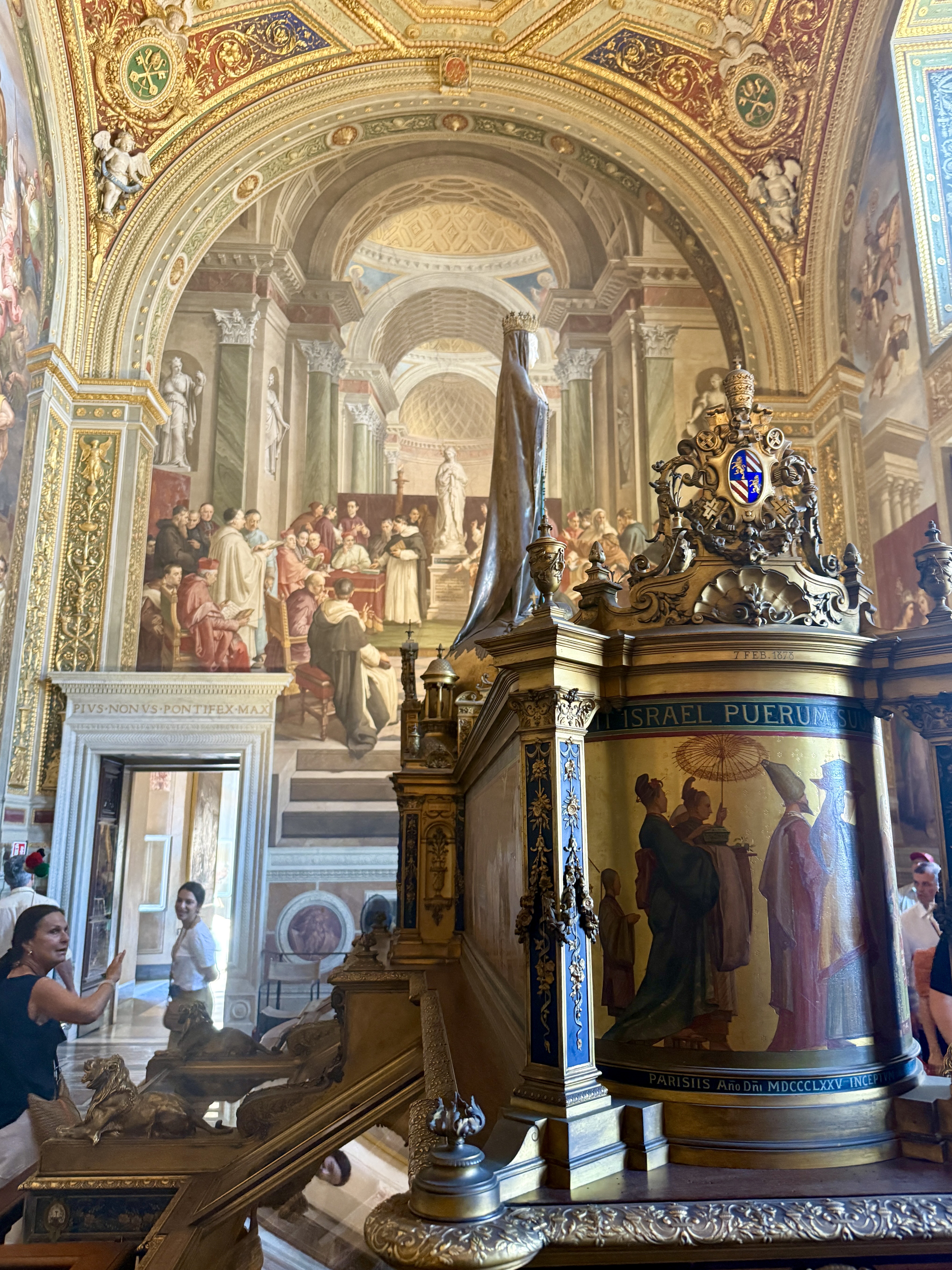
The Vatican museum which was established in 1506 are the collections amassed by the Catholic Church and are public museums of Vatican City. They contain roughly 70,000 works of art of which 20,000 are on display. There is so much to see in the museum, we recommend buying tickets, go early and take your time.
The Sistine chapel was Built between 1473 and 1481 and is the site of the papal conclave, the process of which a new pope is selected. There are a series of frescoes throughout the chapel done by various artists, however it’s the “Sistine chapel ceiling” that has brought a lot of its fame, and “ The Last Judgement” both done by Michelangelo showing the creation, “Adam and Eve” in the garden of Eden and “the great flood” covering an area well over 5000 square feet. He built his own scaffold and painted standing, not lying on his back contrary to popular belief. This is simply stunning and there is no way to absorb all that you are seeing in the time you have there. Photos or videos are absolutely not allowed.
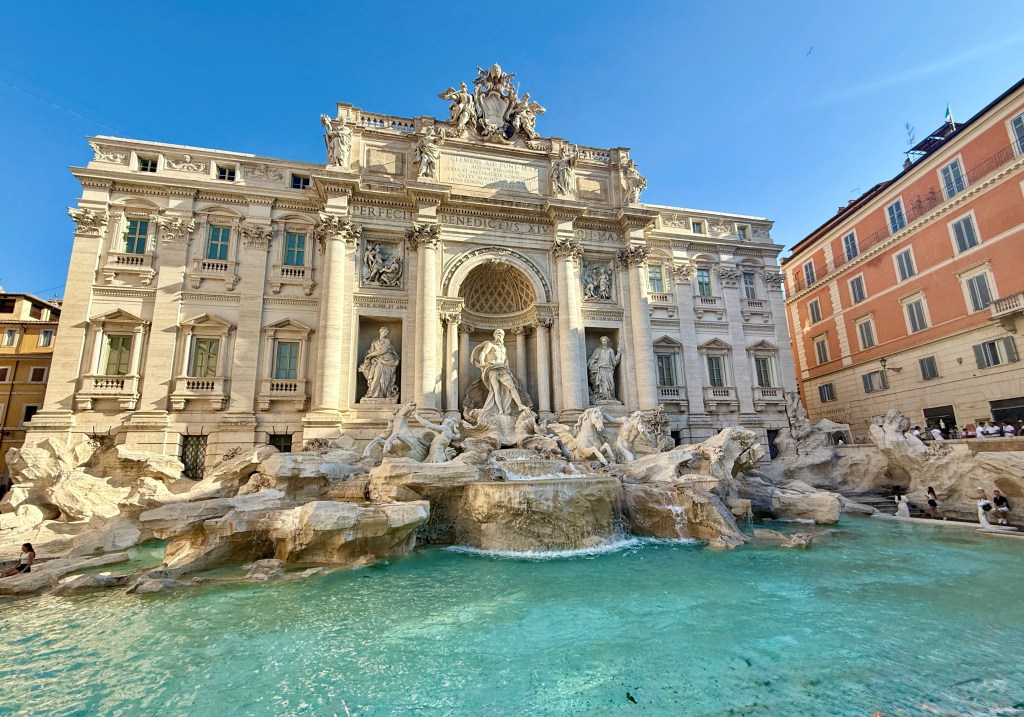
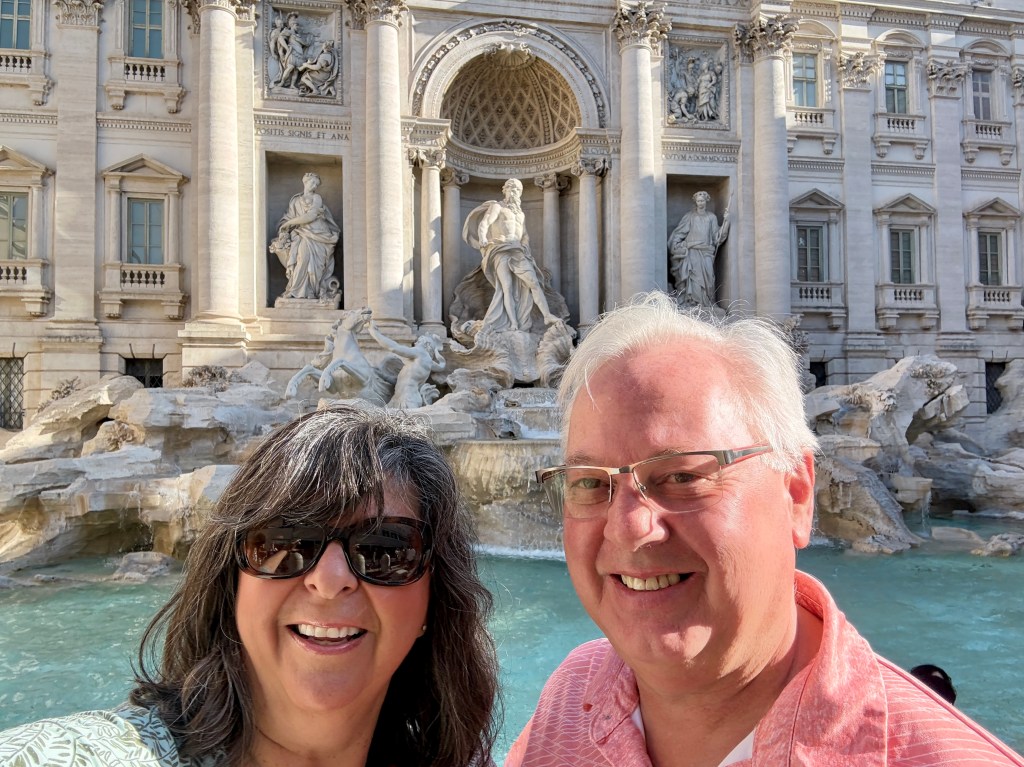
Our next day we headed out in the earlier morning to go to the Trevi fountain. This 18th century fountain standing at 86 ft high and 161.3 feet wide, is the largest baroque fountain in the world, constructed between 1732 and 1762, it’s made mostly of Travertine stone from Tivoli. We wanted to get there before they started charging the fee so we arrived around 8 am. It was still very busy but we were able to do our coin toss, a tradition that states if you turn your back to the fountain and toss a coin using your right hand over your left shoulder you will someday return to the eternal city.
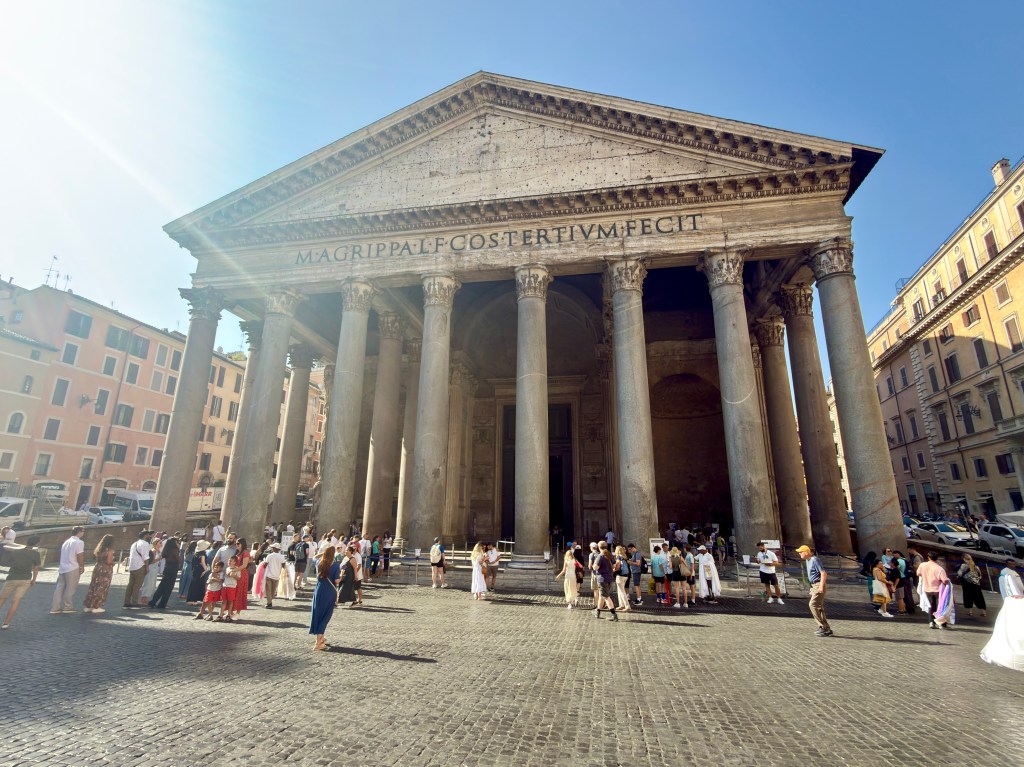
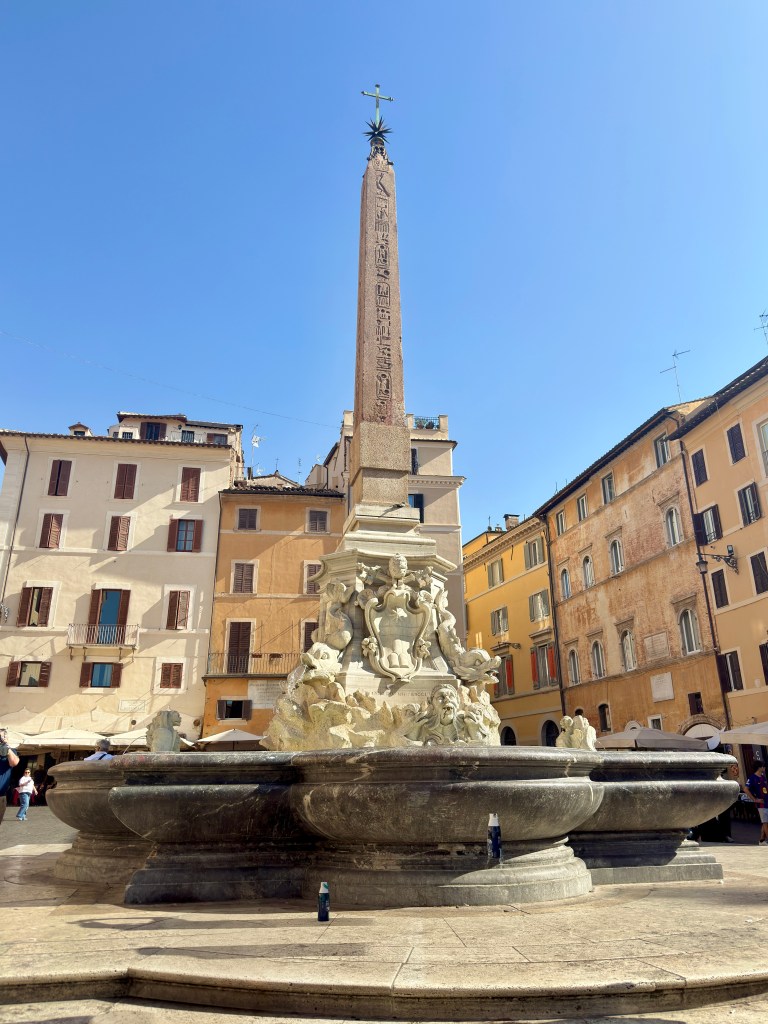
We then walked over to the Piazza della rotunda where the Pantheon sits, as well as the Fontana del Pantheon, a fountain with a rich history, dating back to 1575, with continuous changes added to it including the obelisk that is older than the fountain itself dating back to 1279 and 1213 BC, we then went over to the pantheon, we didn’t have tickets and a tour guide was offering tours outside. This pretty much happens at almost every site, so if they say there are no tickets available online show up anyways because we found most places had tour offerings outside.
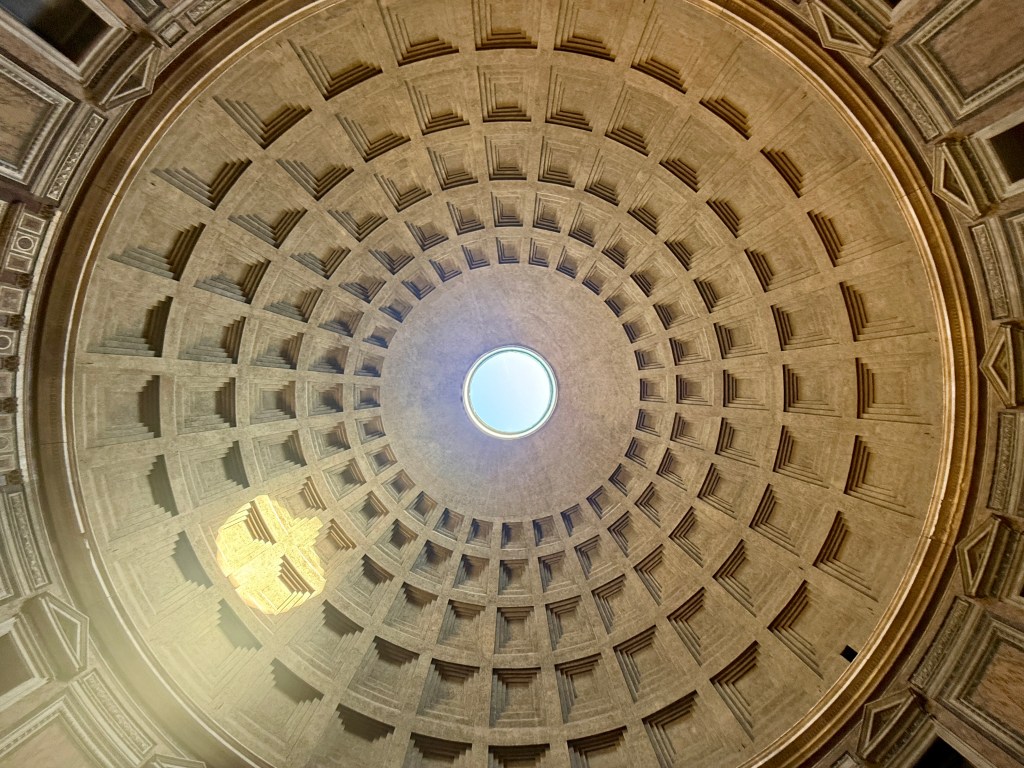
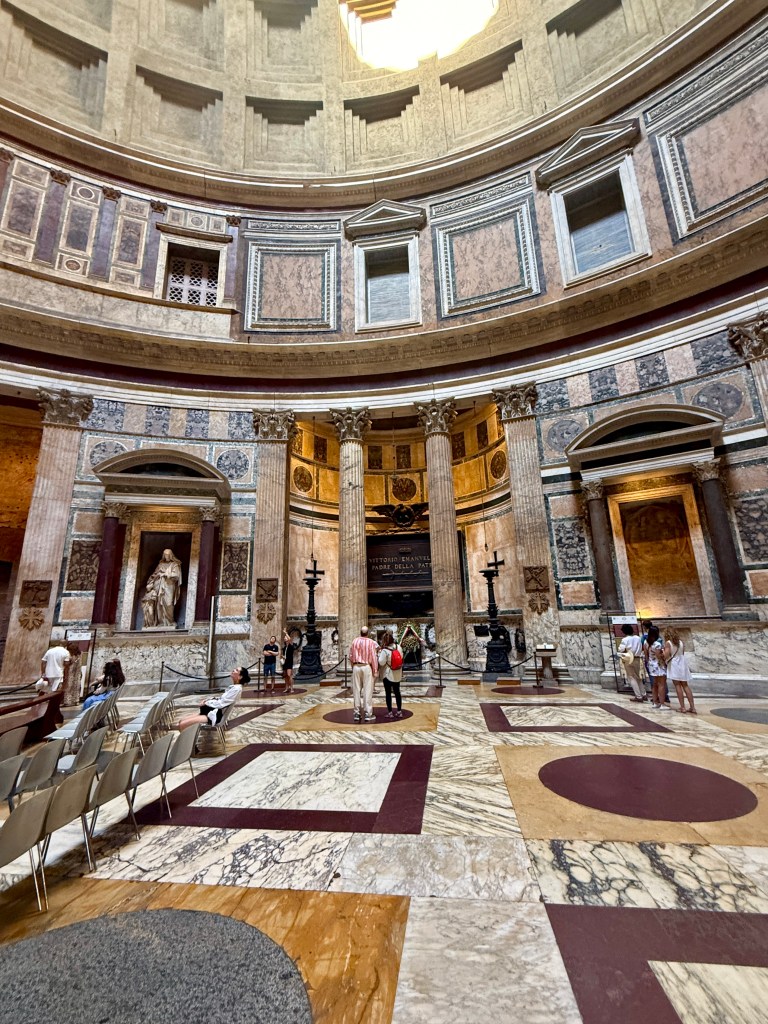
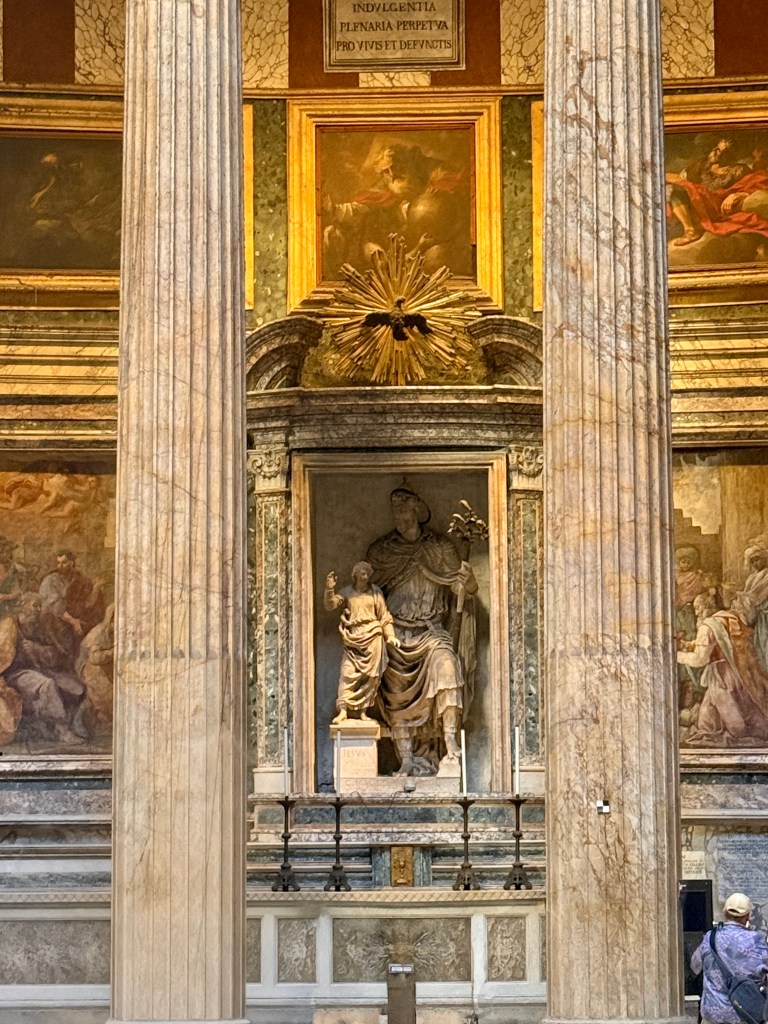
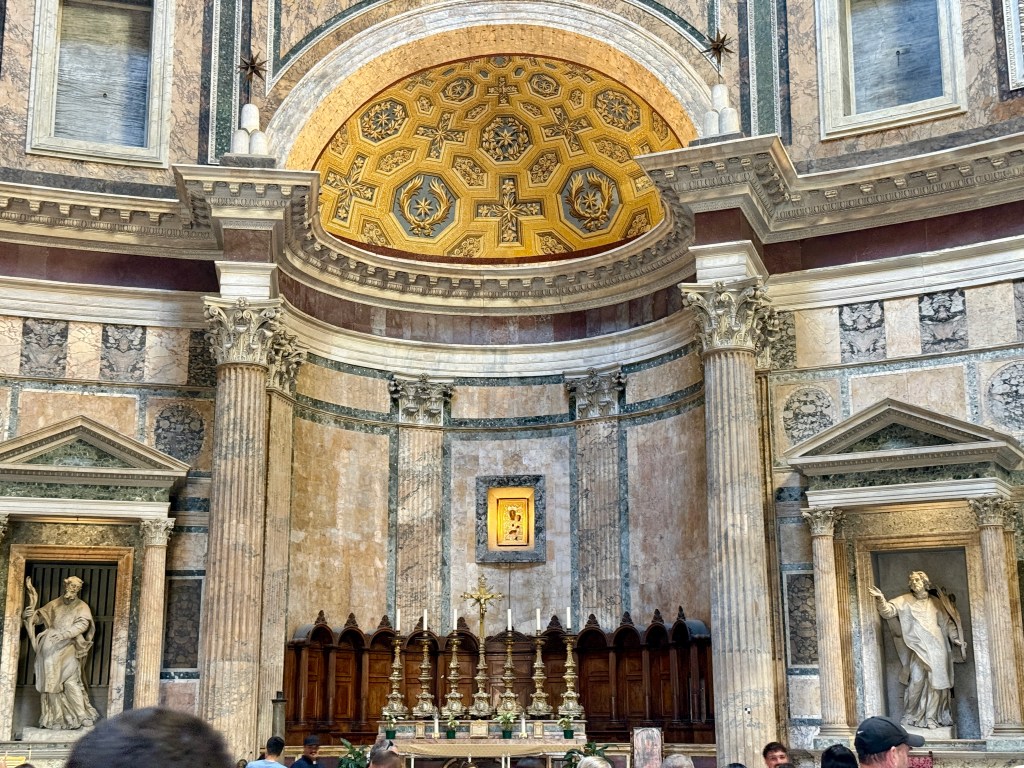
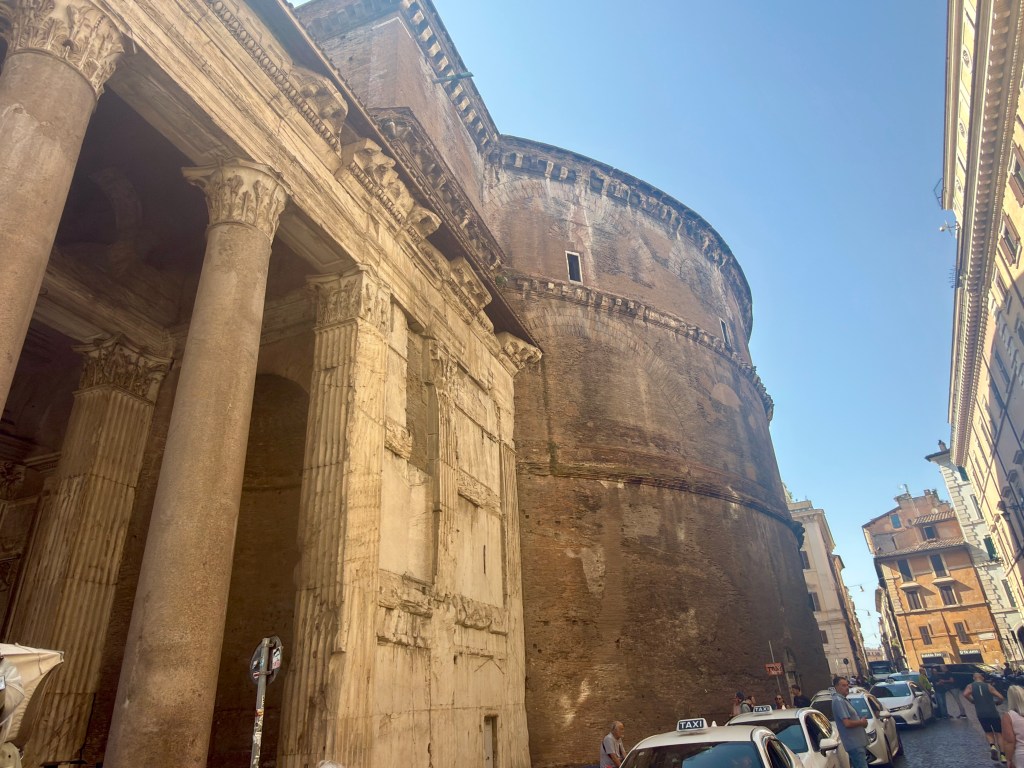
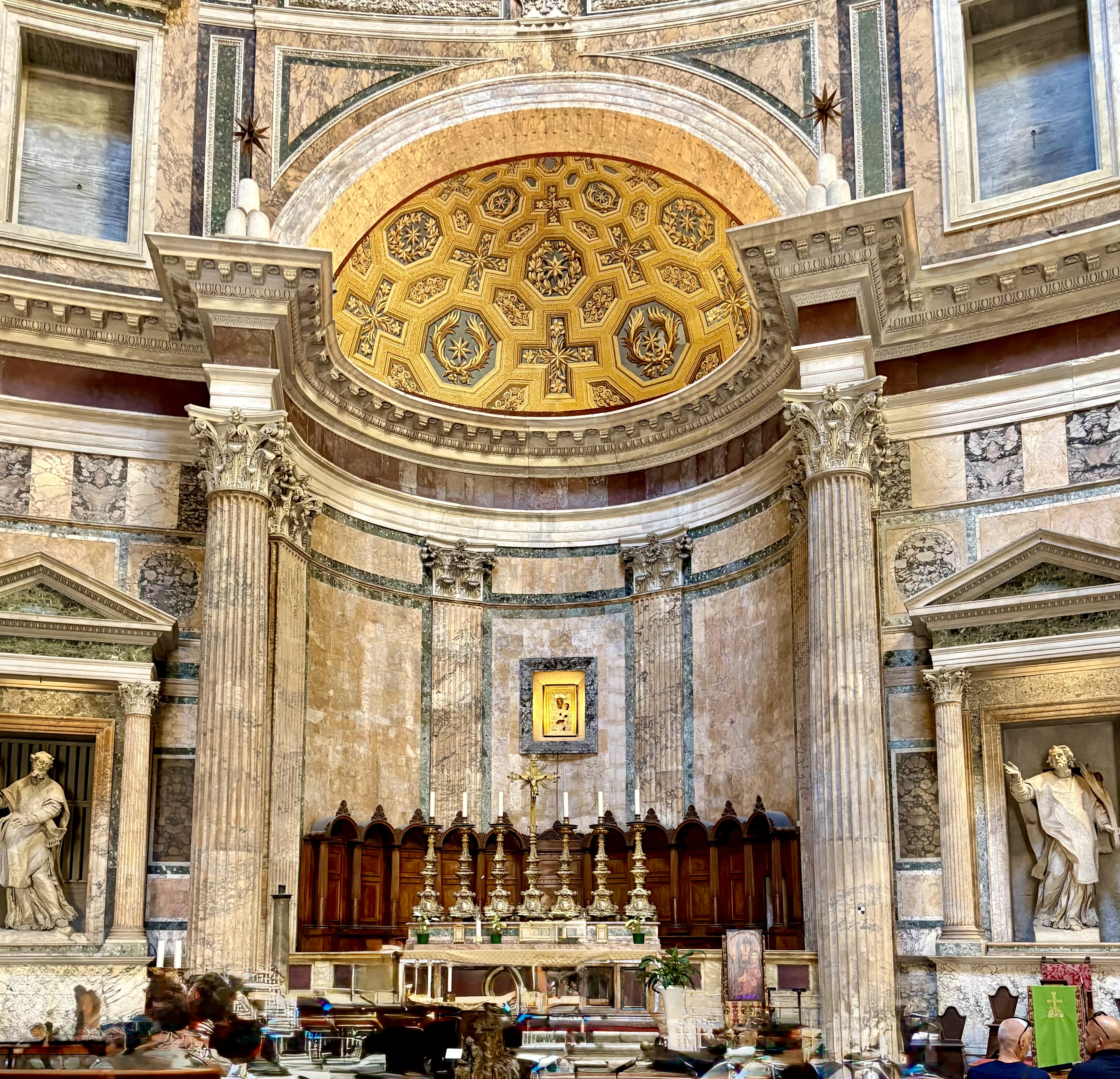
The Pantheon was built on top of a site where another church was burned down. The current building was completed by Emporer Hadrian between 113-126 AD. The Pantheon Dome is the worlds largest un-reinforced dome to date and is one of the best preserved of all ancient Roman buildings. In 609 AD pope Boniface IV consecrated it as a Christian church and by doing this the church was protected. So as the city around it fell into ruin, because the protection was on the church, it was preserved. Inside at the center of the dome is the oculus, a circular opening that’s nearly thirty feet across, and opens to the sky. It is the building’s only source of light. Rain falls through it onto a gently sloped floor with drains built to carry the water away. Through that opening, the sun moves across the interior through the day like a slow searchlight, serving as a kind of ancient sundial. You can watch the disk of light travel down the wall, this is how the Romans designed the room to do exactly that, and the effect is as moving today as it was 1900 years ago.
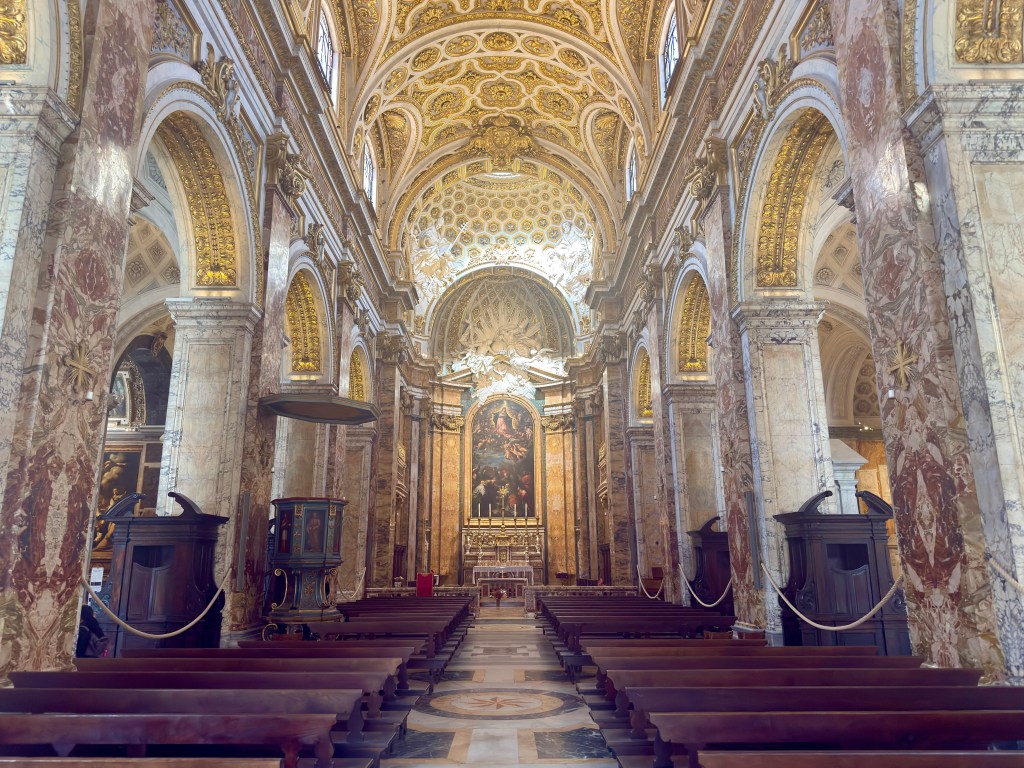
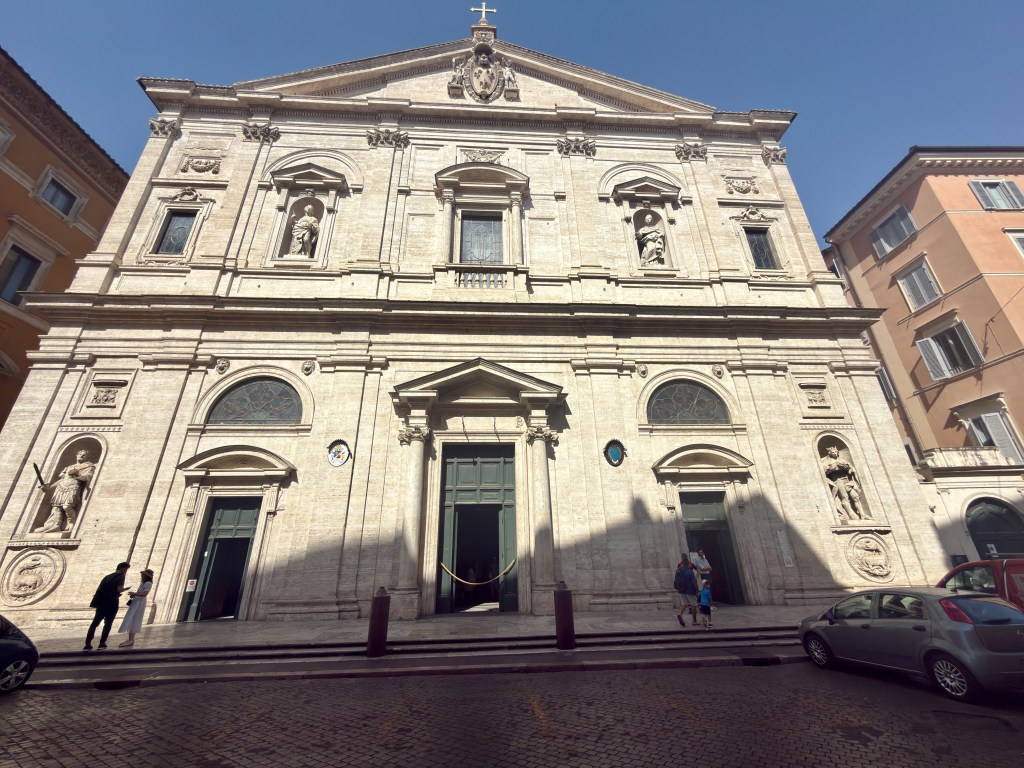
We then went to the church San Luigi de Francesi. Built between 1518-1589, this is the national church in Rome of France. The artwork in this church is beautiful. The Contarelli Chapel contains the artwork of baroqu artist Caravaggio about the life of Saint Matthew, The Polet Chapel contains frescoes by Domenichino portraying the Histories of Saint Cecilia. And several other artists works are also included in the walls of this beautiful church.
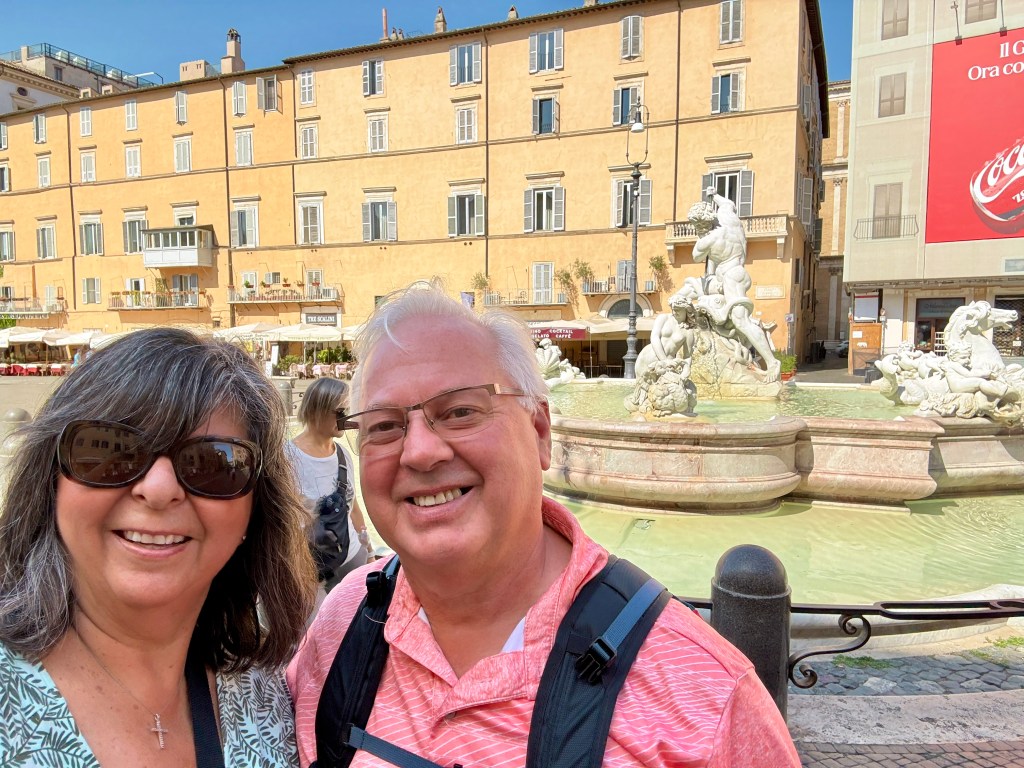
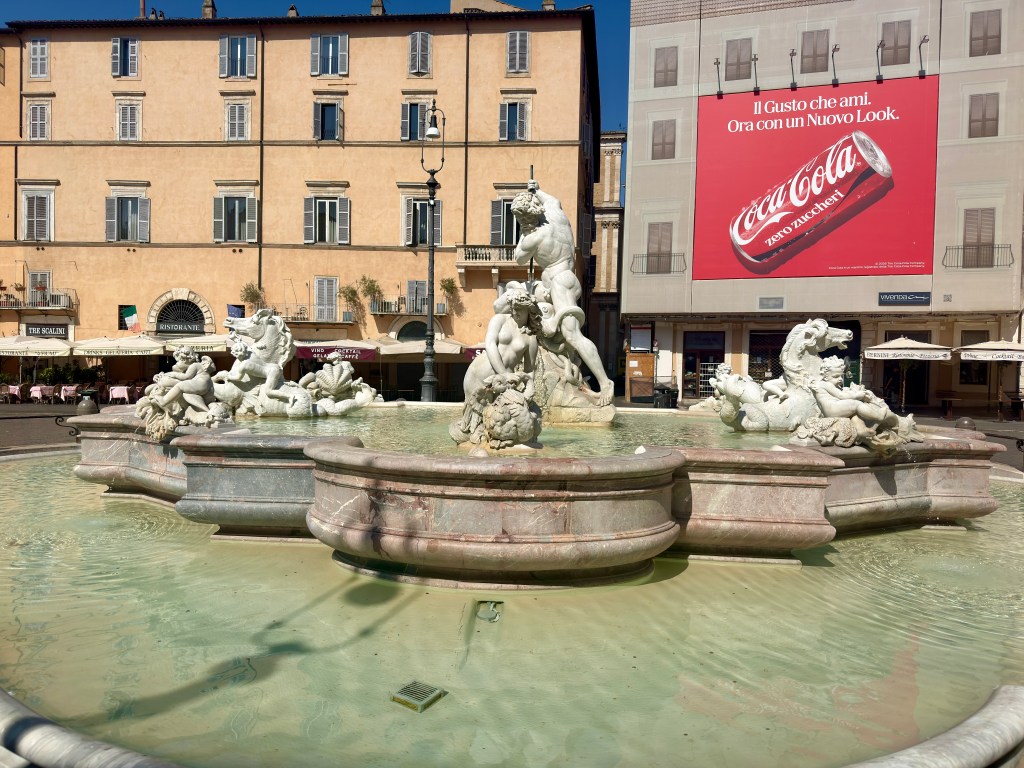
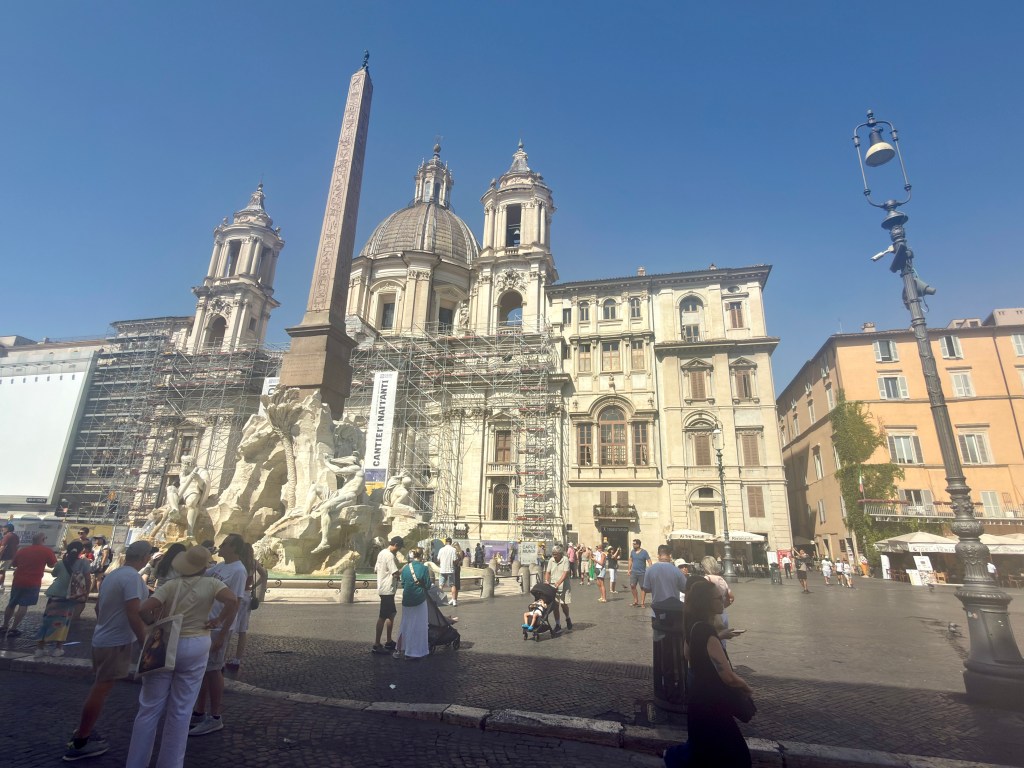
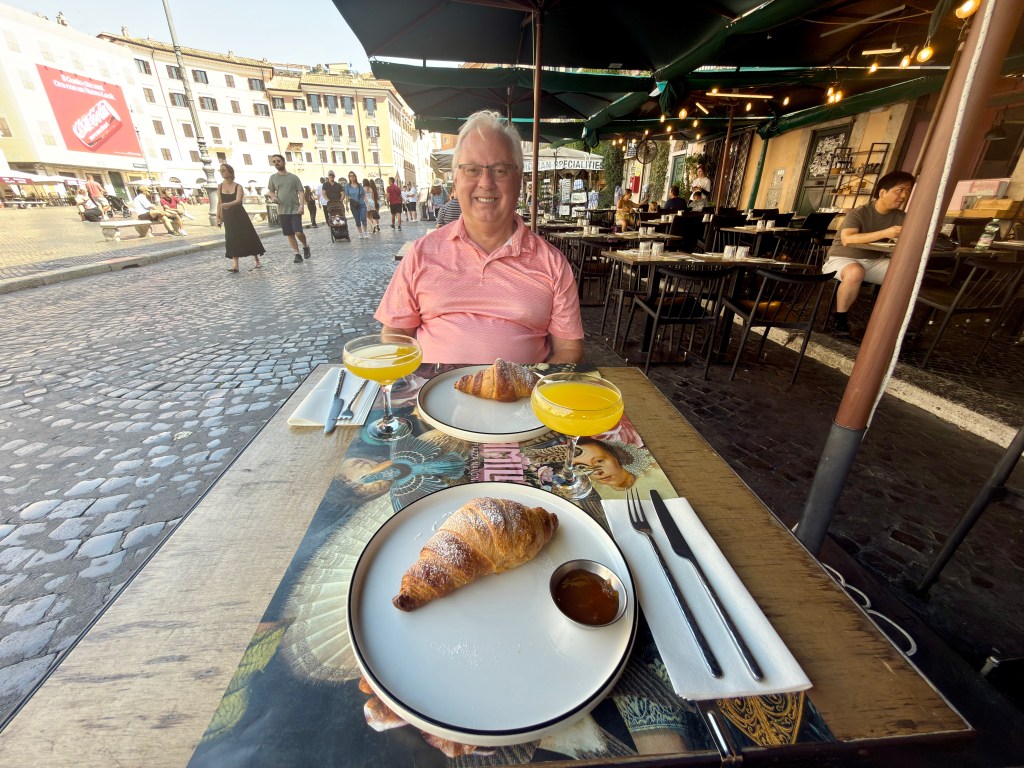
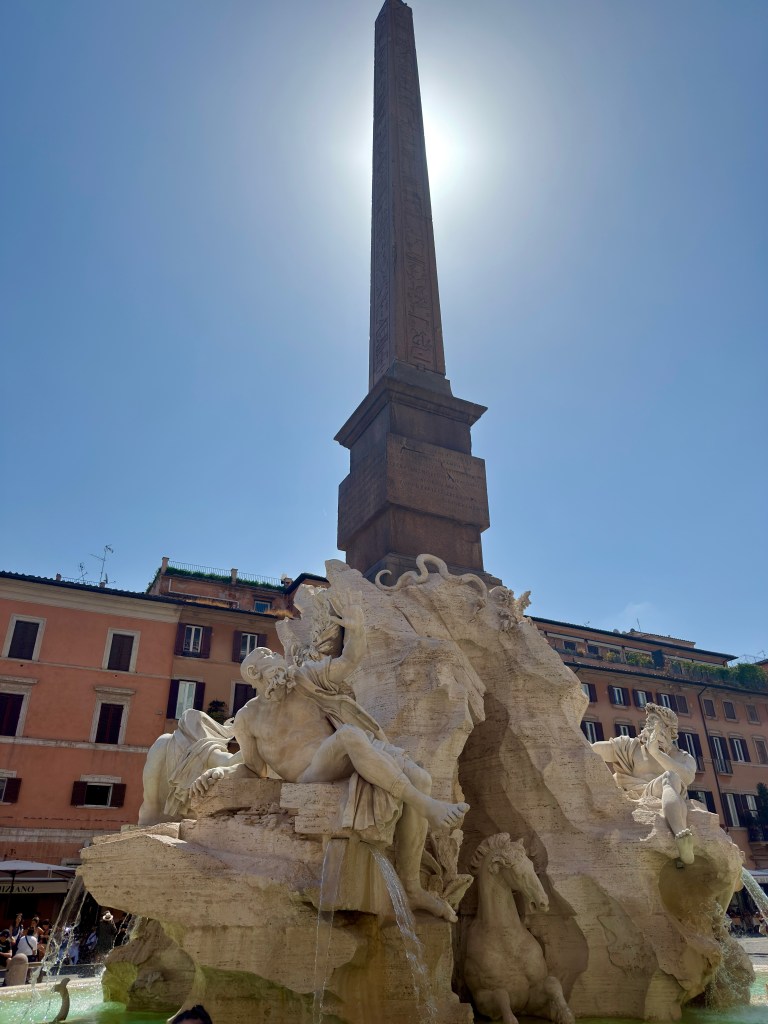
We then stopped in Piazza Navonna and got a crescent and mimosa and just took in the views of the fountains, the beautiful sites around us , and did a little people watching and enjoyed some time basking in where we were. We unfortunately couldn’t go into the church of Sant’
Agnese in Agone as it was undergoing some work and was not open the day we were there.
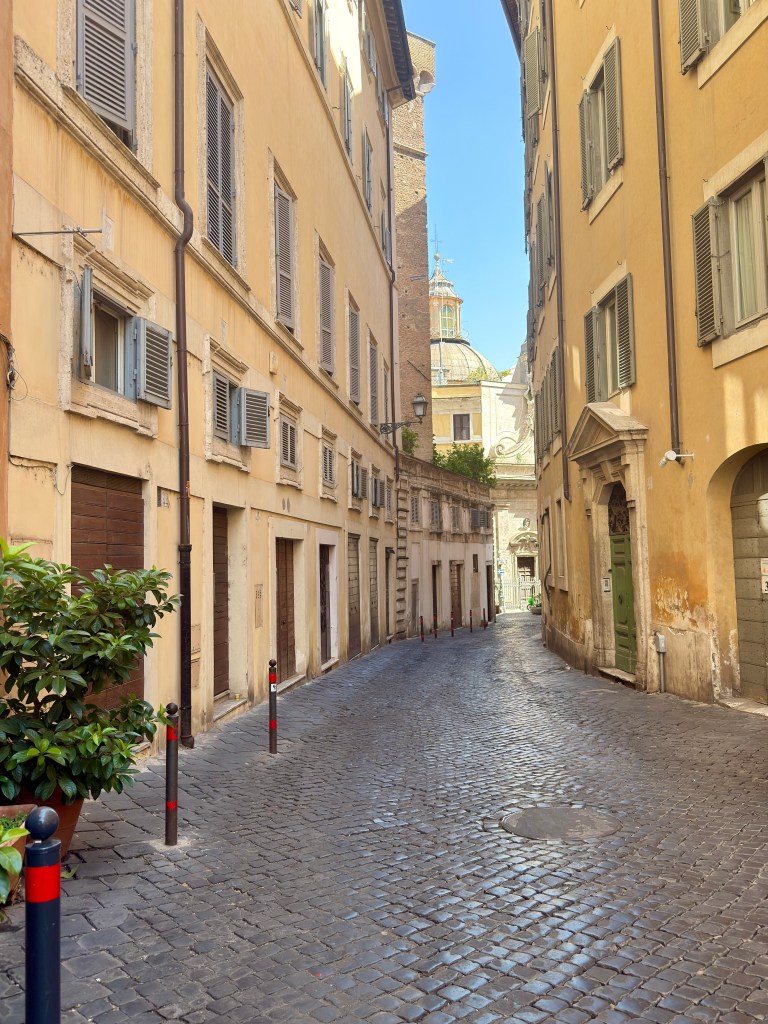
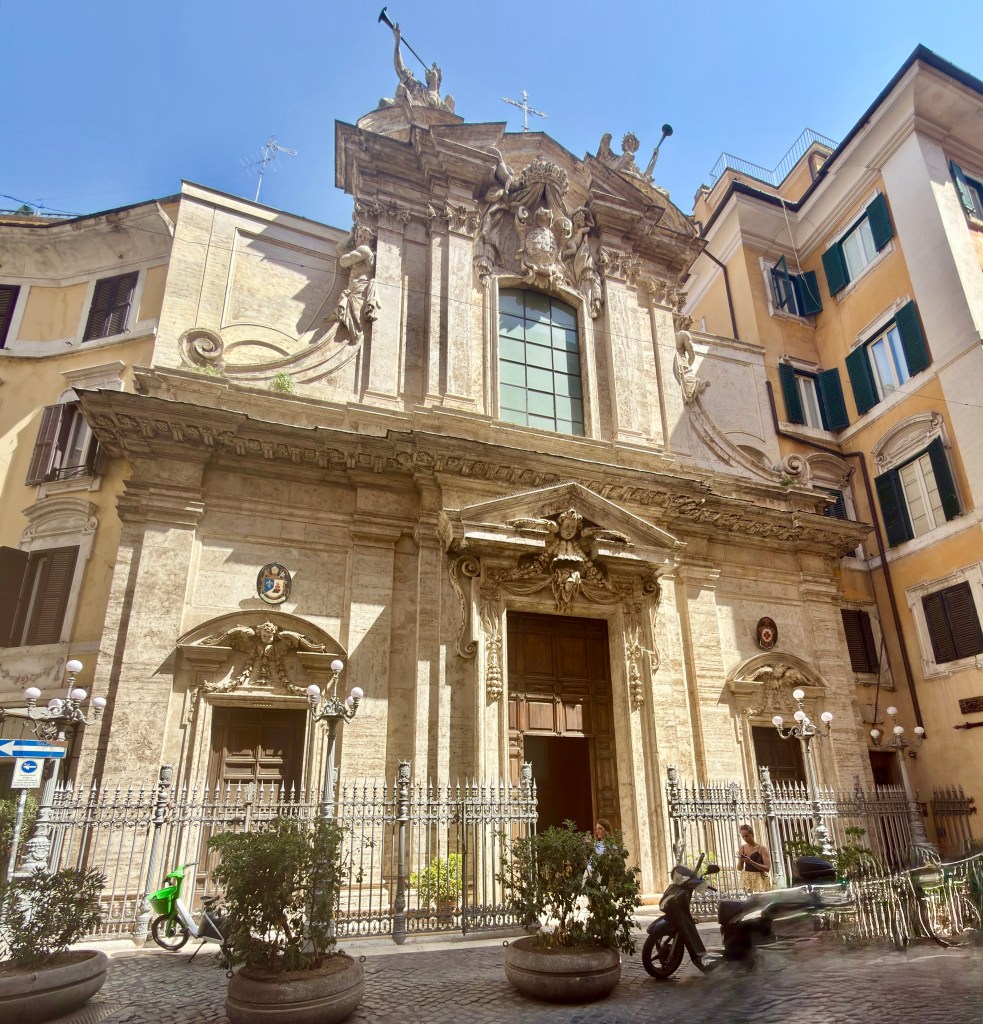
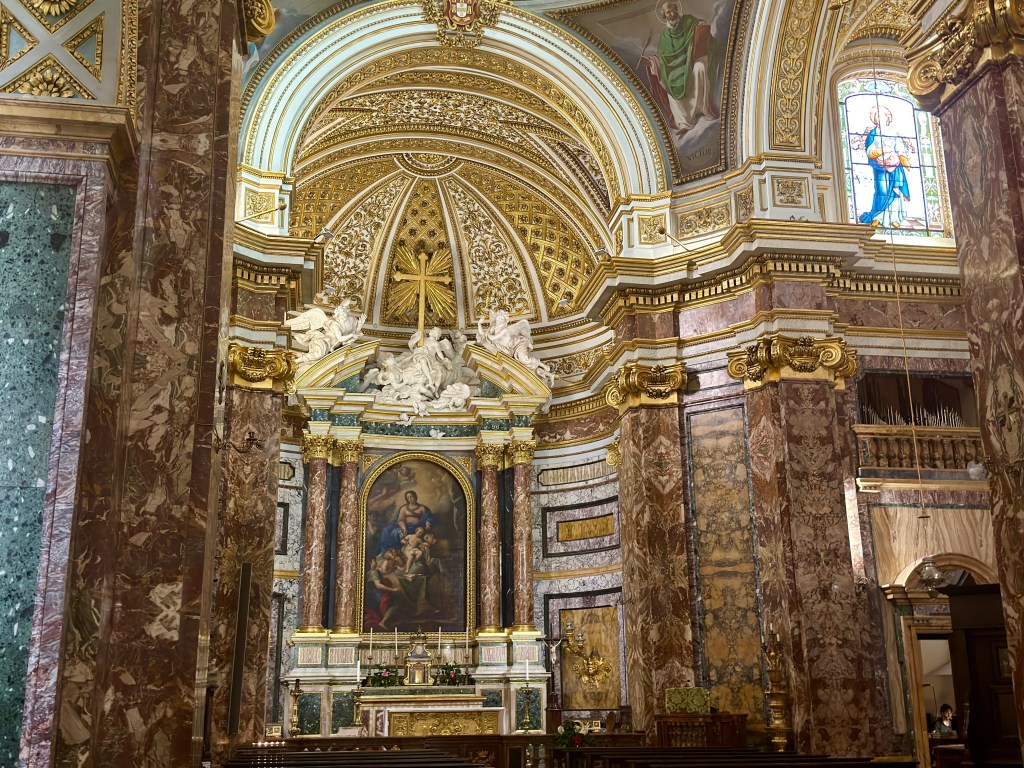
We then just walked around for a while enjoying the sites in the city and we stumbled across another church, we learned there are over 900 churches in Rome, and most of them have historical significance and we enjoy going in each one, this was a smaller church by comparison to some we had seen, called Sant’Antonio dei Portoghesi (Church of Saint Anthony of the Portuguese.
Founded in 1445, and rebuilt in the 17th century. This was another church that more resembled a piece of art.
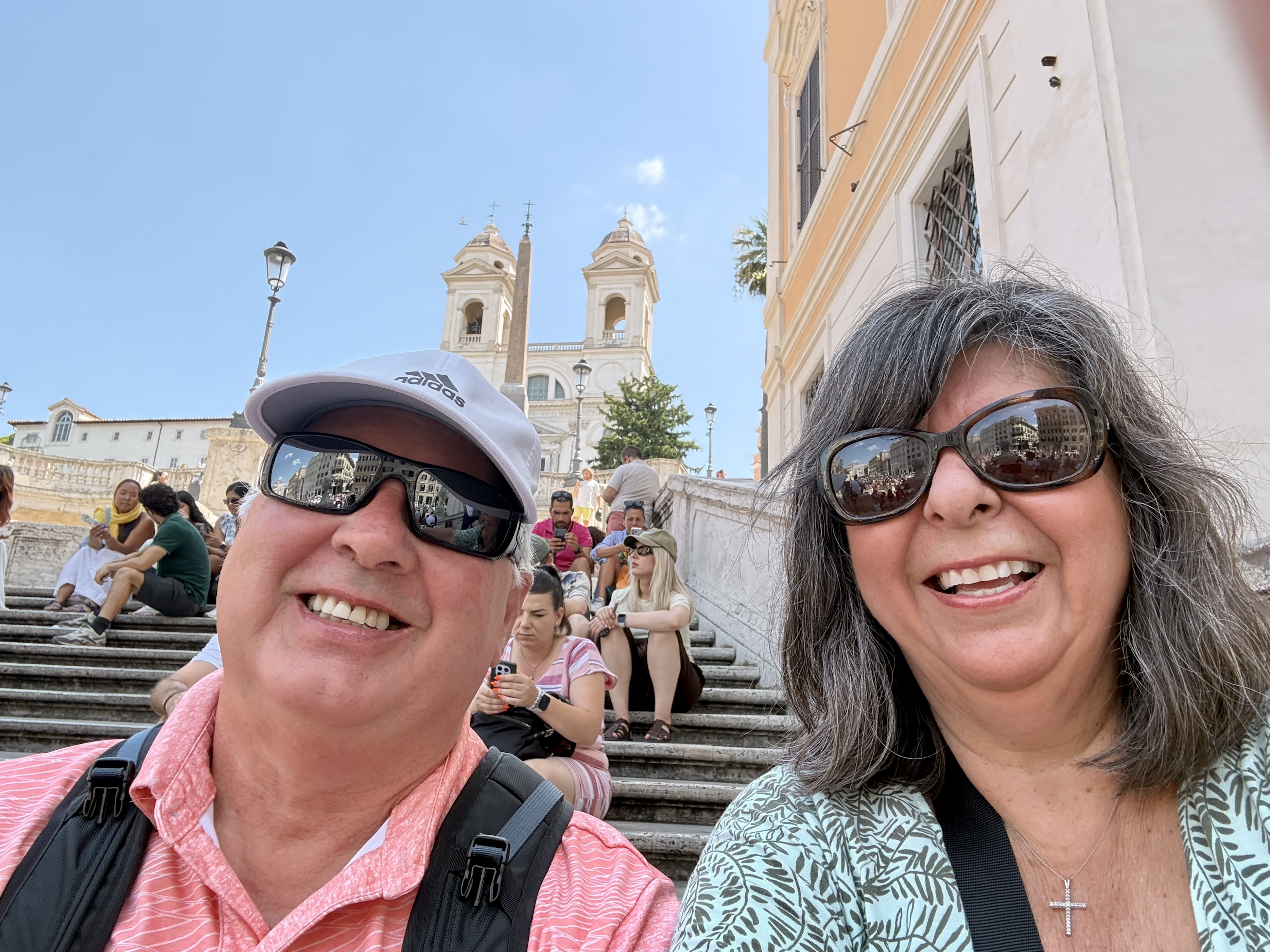
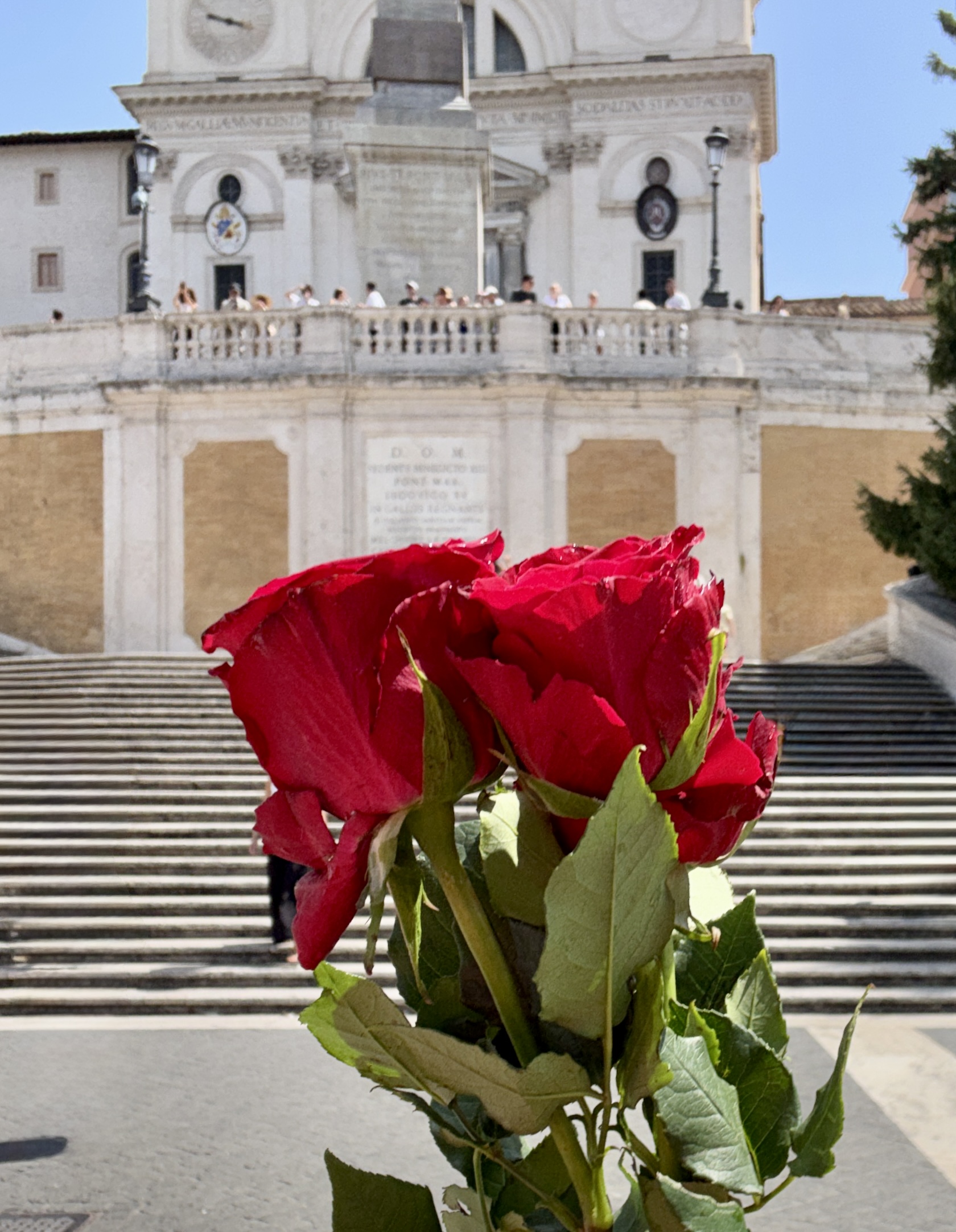
And we finally made our way to the Spanish steps and the Villa Borghese. The Spanish steps were constructed between 1723-1725 Is linked to the Trinita dei Monte Church looking down to Piazza de Spagna. There are 135 steps made of Travertine. At the base of the steps in Piazza di Spagna is the Fontana della Barcaccia this fountain is actually about a century older than the iconic steps it sits below, built between 1626-1629 and was Commissioned in 1627.
We spent time at the Spanish steps and fountain and then decided to walk up to the Villa Borghese, we enjoyed the views and walked just on the edge of the park grounds but due to the heat and our exhaustion we didn’t make it any further.
We took a tour which included the Capuchin Crypts, Catacombes of Domatilla and Basilica de Santi Silvestro e Martino ai Monti
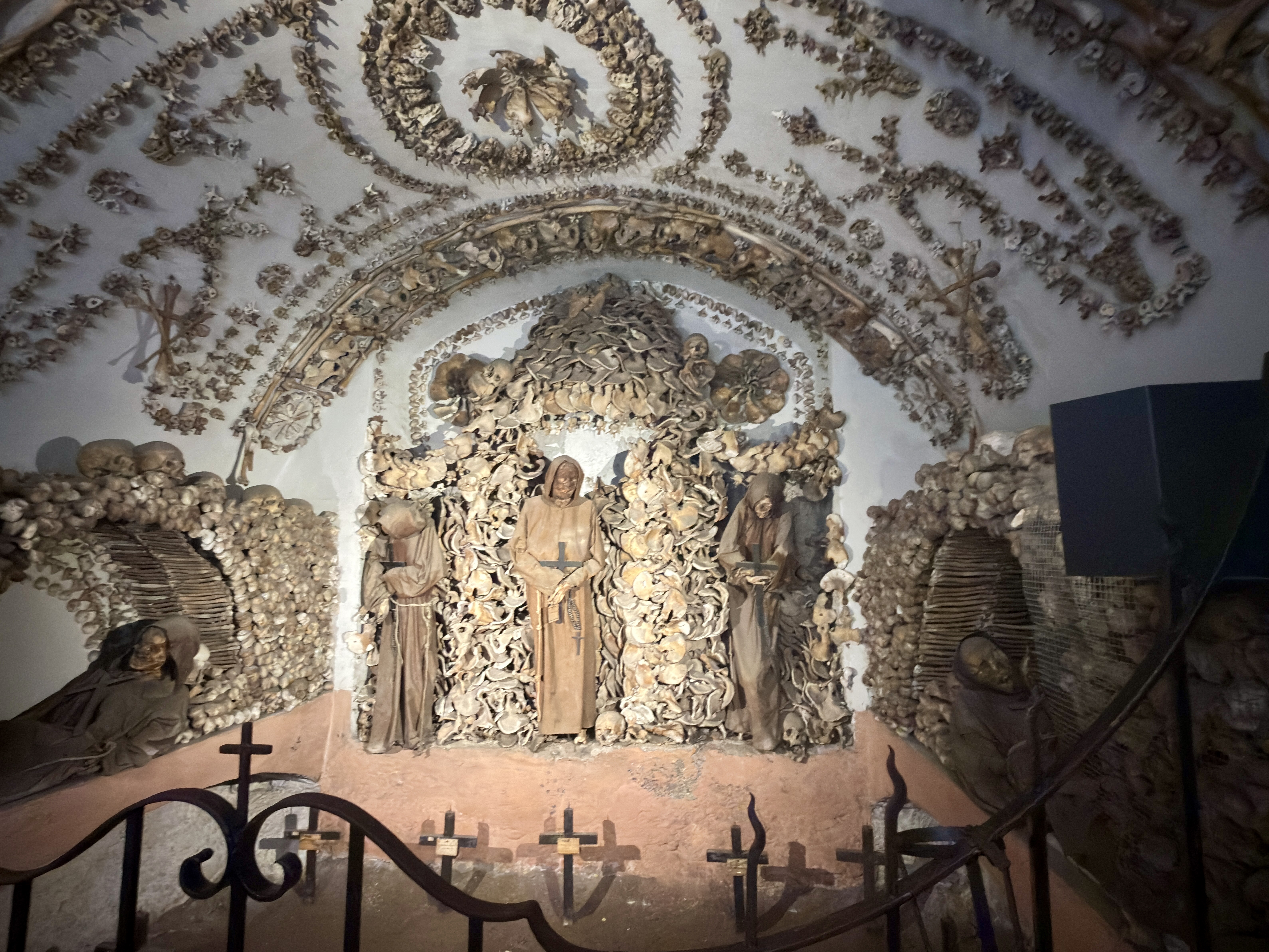
The Capuchin Crypts
Located in a small space comprising several small chapels located beneath the church of Santa Maria Della Concezione dei Cappuccini located near the Piazza Barberini. This for us was an odd and uncomfortable display containing the remains of over 4000 Cappuccin monks displayed in a decorative style. Upon entering you’ll first go through a small museum devoted to Cappuchin history, and after the museum you’ll walk through the crypts each crypts having a specific label according to the bones displayed. There are five crypts in total, the crypts of the skulls, crypt of the pelvises, crypt of the three skeletons, crypt of the leg bones and thigh bones and crypt of the resurrection. The final space we come to is the mass chapel. The bones are displayed throughout the crypts and used in a decorative fashion. The capuchins seen this as a representation of the passage between life to death and not as a sinister or morbid thing. Again, we found it to be uncomfortable and a little disturbing for ourselves. We then went into the church of St. Mary of conception of friars minor Capuchin. This was right next door and free to enter.
Catacombes of Domitilla
An underground Christian cemetery one of largest catacombs in Rome spanning approximately 10.5 miles done by the Domitalla family, this cemetery is Laid out on four levels with approximately 15000 bodies and Created between the second and third century. This is also the only catacombes to have an underground basilica and are only one in five catacombs to be open to the public. The tunnels wind around for miles and it would be very easy to get lost with all the branches of tunnels going in a variety of directions.
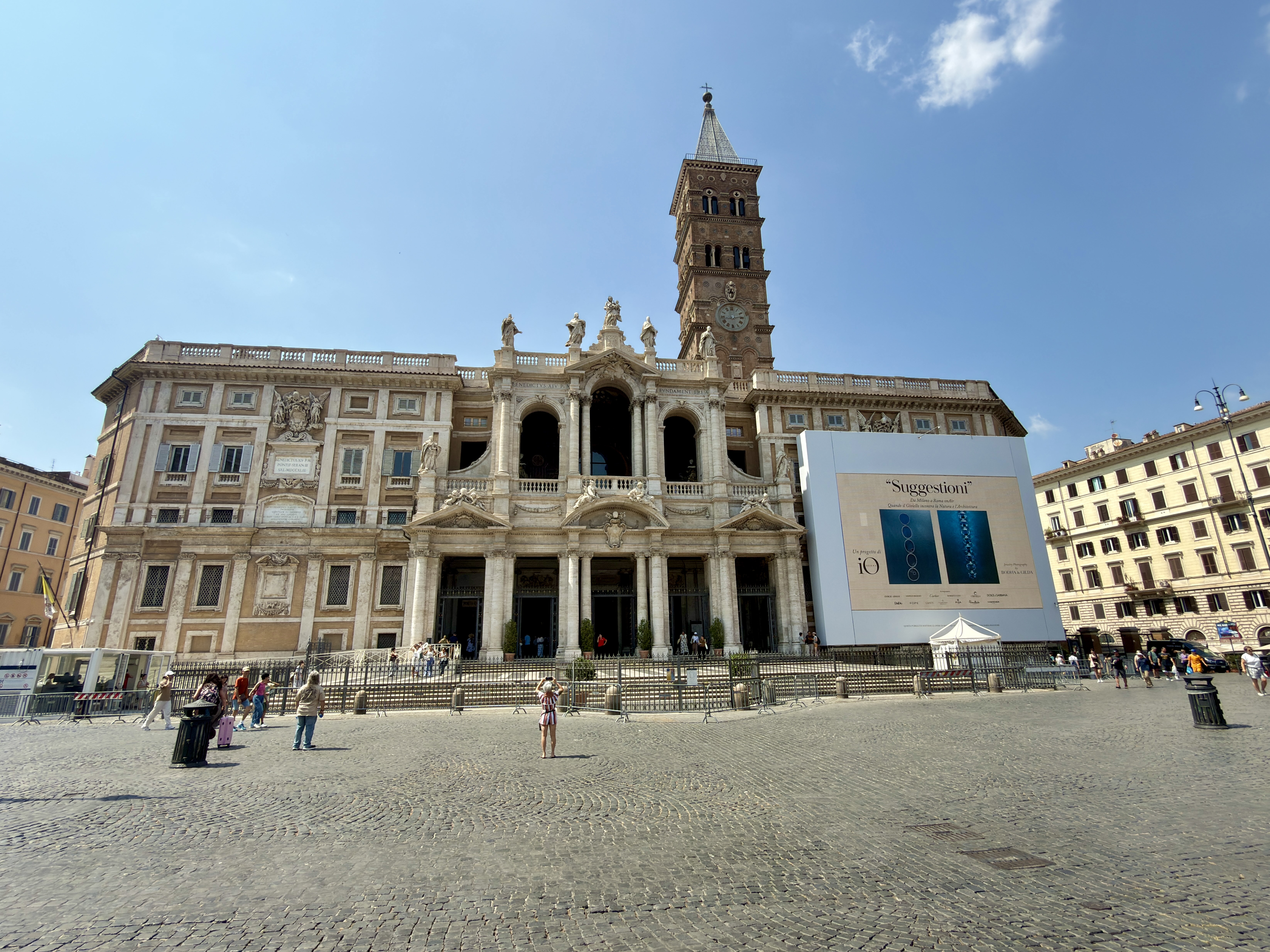
And then finally we went to the Basilica di Santi Silvestro e Martino ai Monti
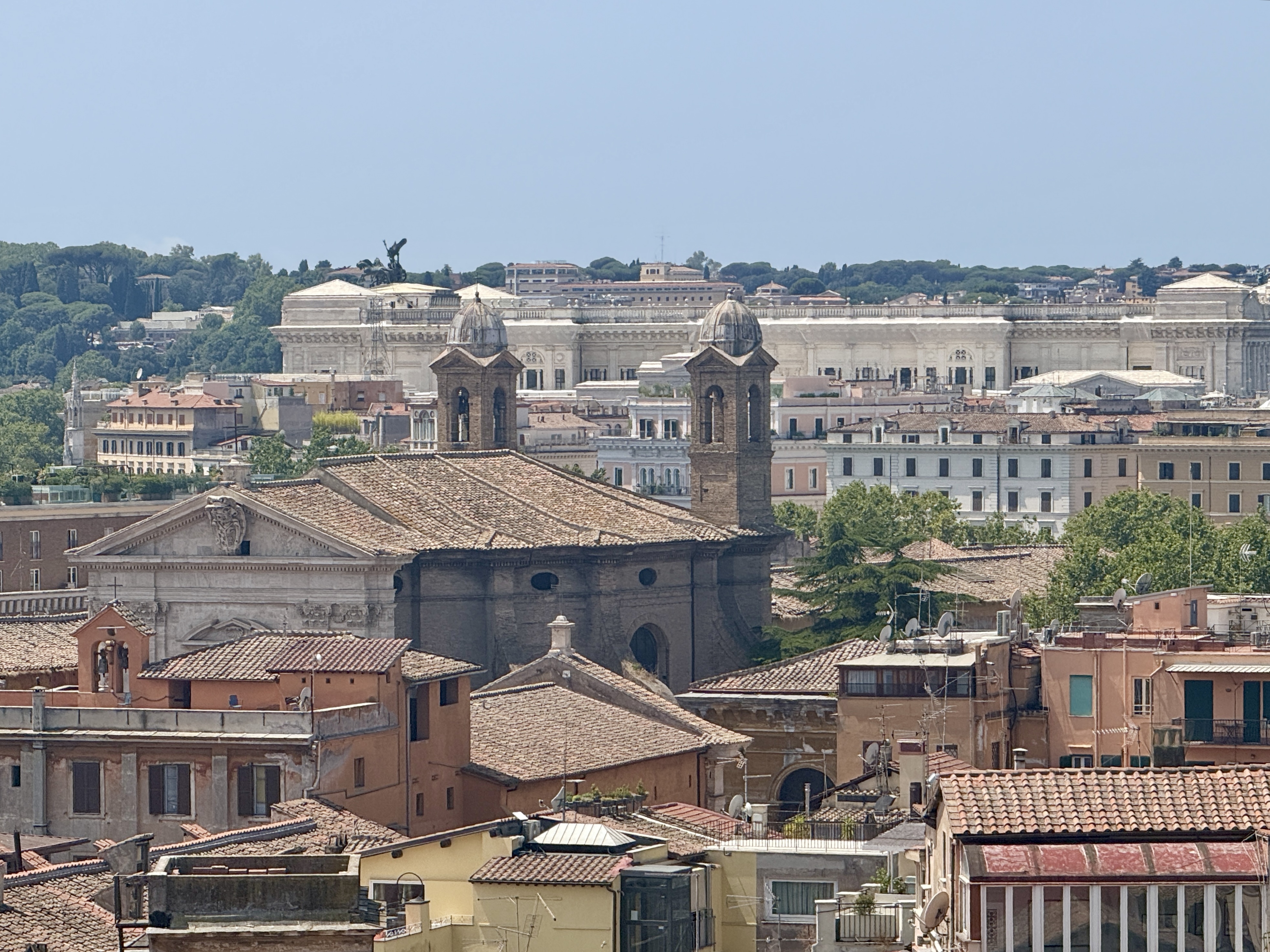
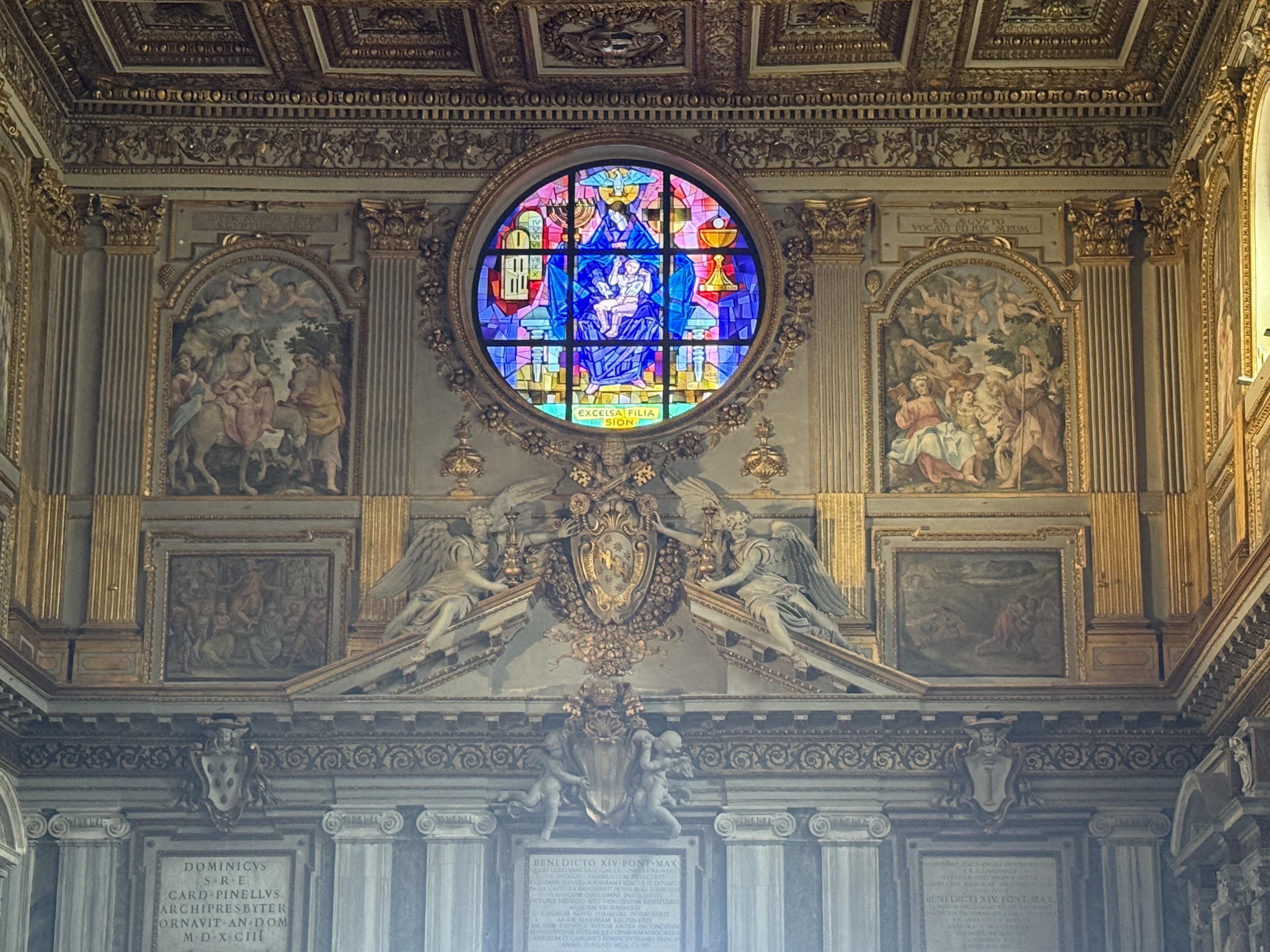
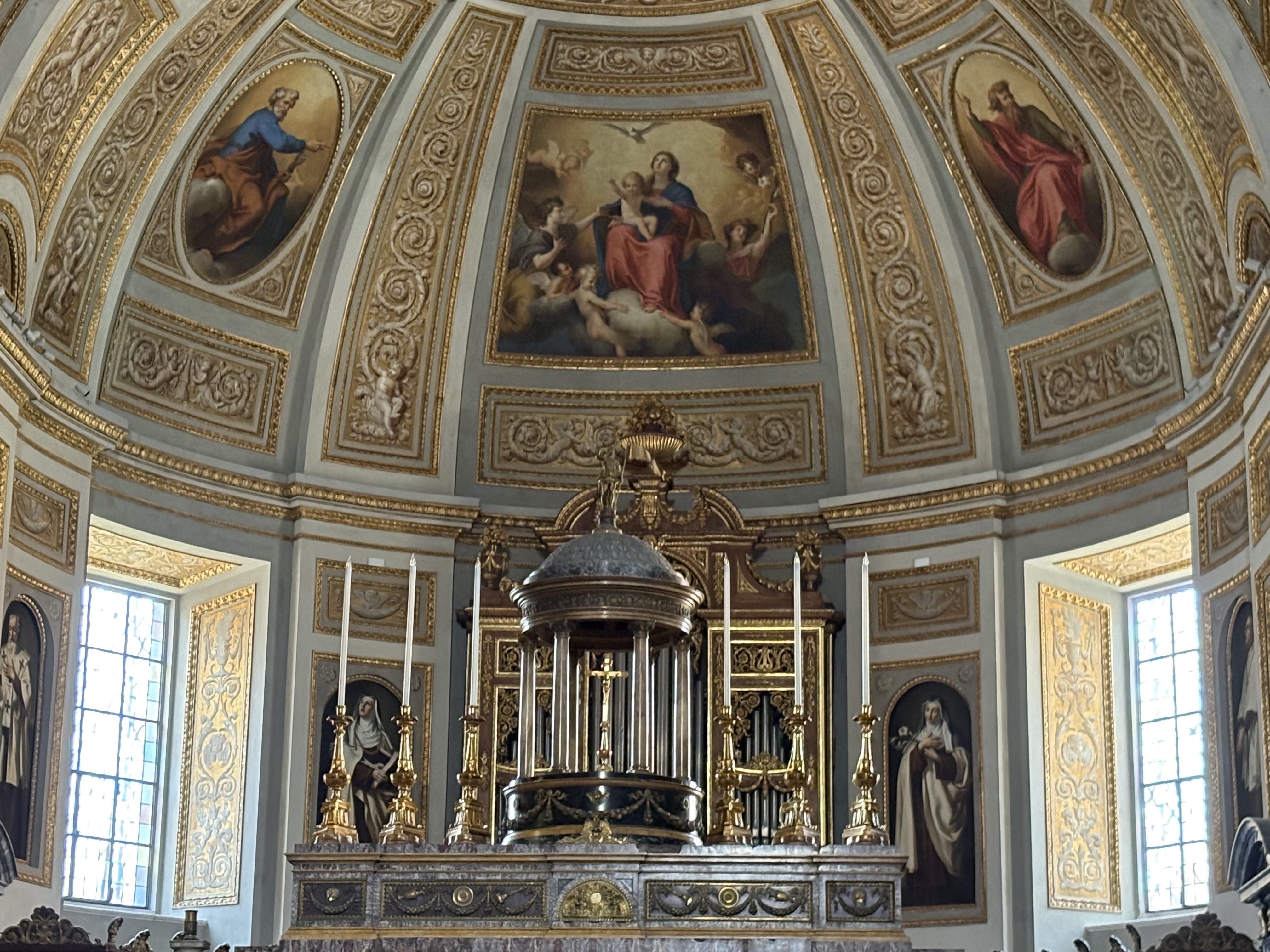
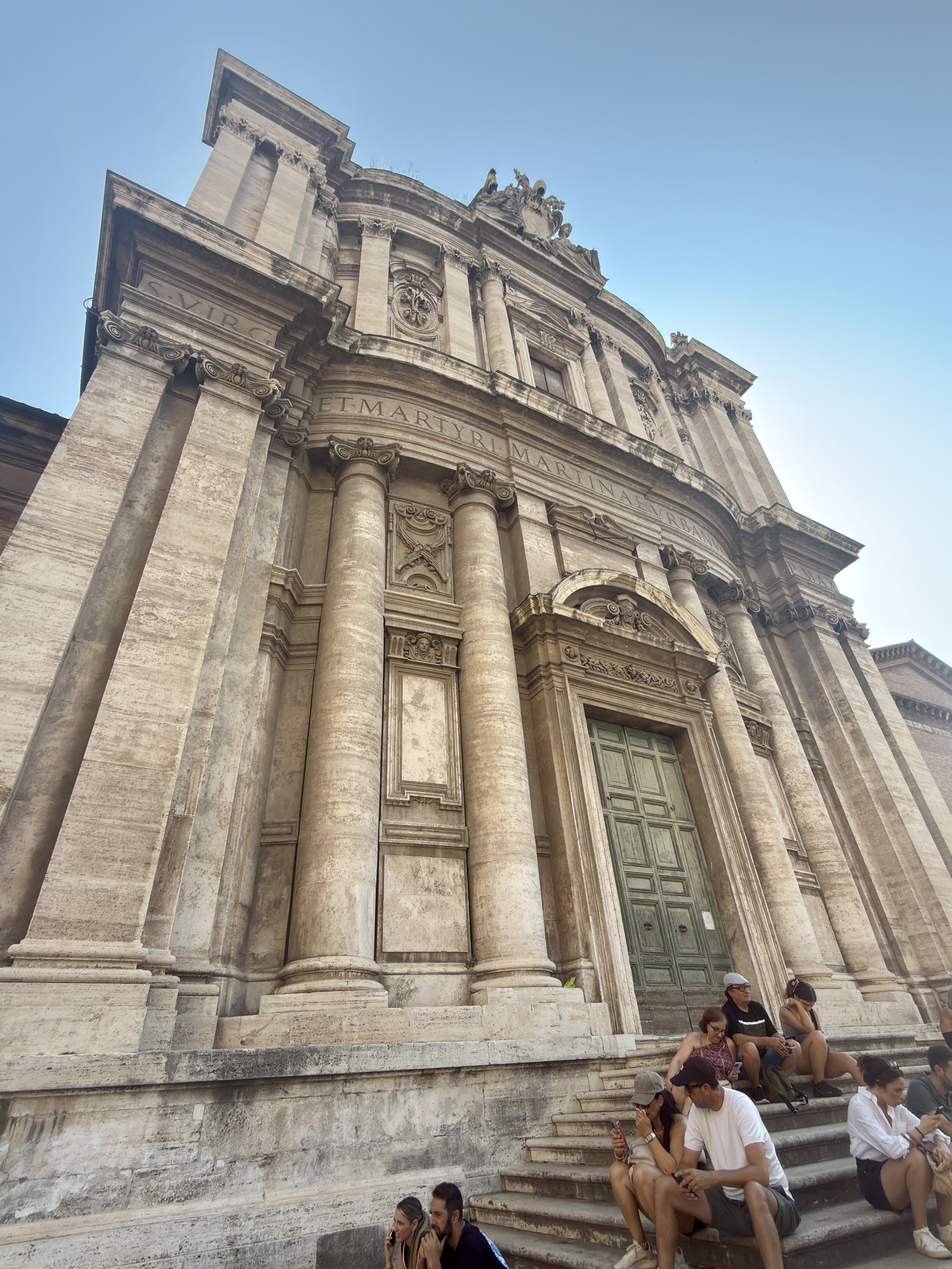
This is one of the oldest churches in Rome dating back to the 4th century between 314 and 347 AD in the house of the equizio family. Then in 498-514 pope Simmaco builds a basilica above the previous house and dedicates it to St. Martin of Tour. And then somewhere between 771/795 Hadrian I restores the basilica and then dedicates it to St Sylvester. And then in 844/847 Sergius II has the church completely rebuilt. He then has it embellished with Mosaics and builds a crypt containing relics from the catacombs of st. Priscilla and then pope Leo IV completes that work. Then In 1229 the church and the monastery is entrusted to the friars by Boniface VIII. Between 1635/1657 Father Giovanni Antonio Filipini has the church transformed into its current form.Then in 1714 the current bell tower is built. There was a previous bell tower built in 1555 but was destroyed. Over time there have been numerous changes in the church, access doors added, facade was redone, marble and brick flooring etc.
And Pope St. Martin I who died in the 7th century is buried there and people still come today to pay their respects.
The church has three levels one built on top of the other.
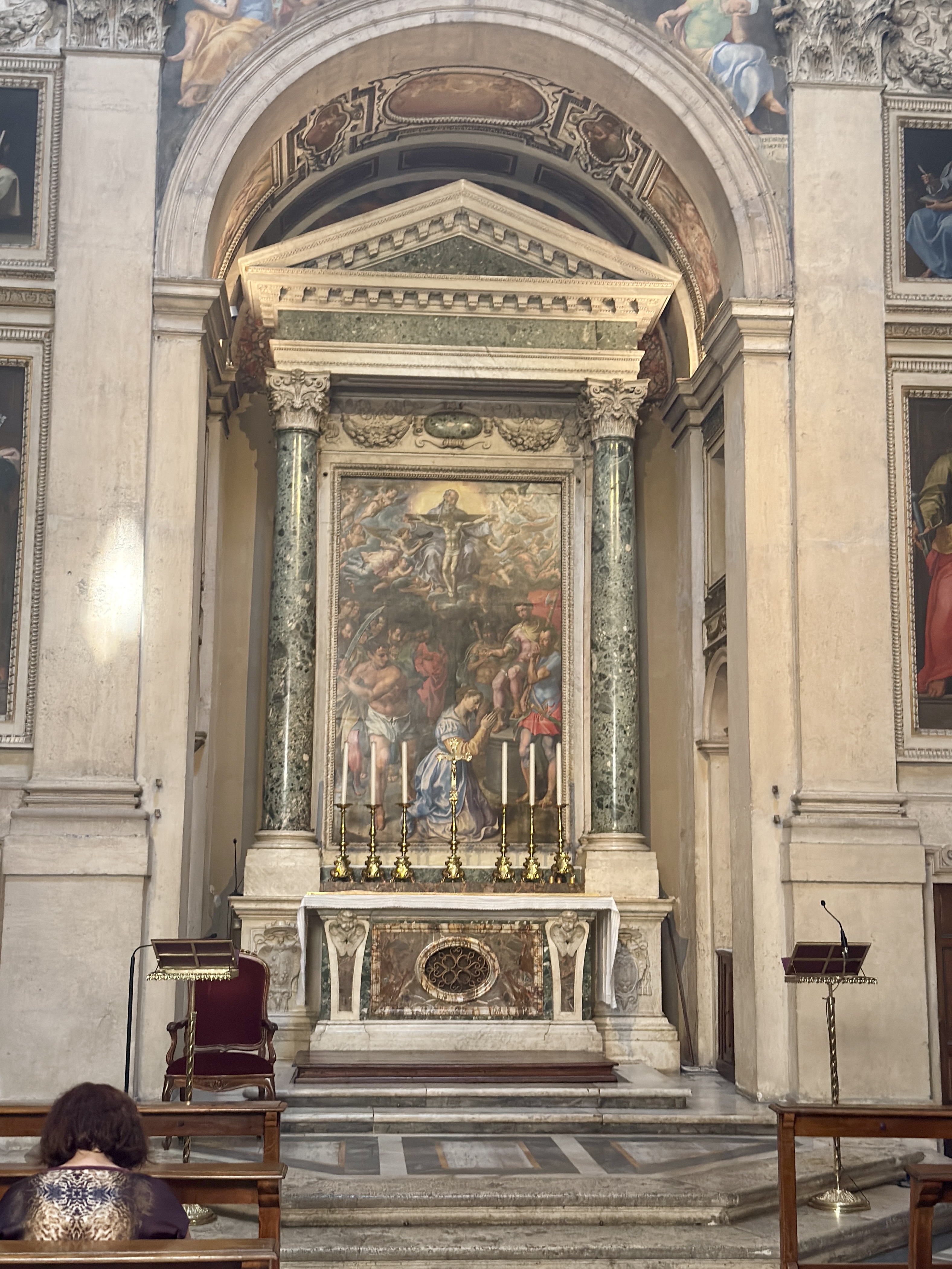
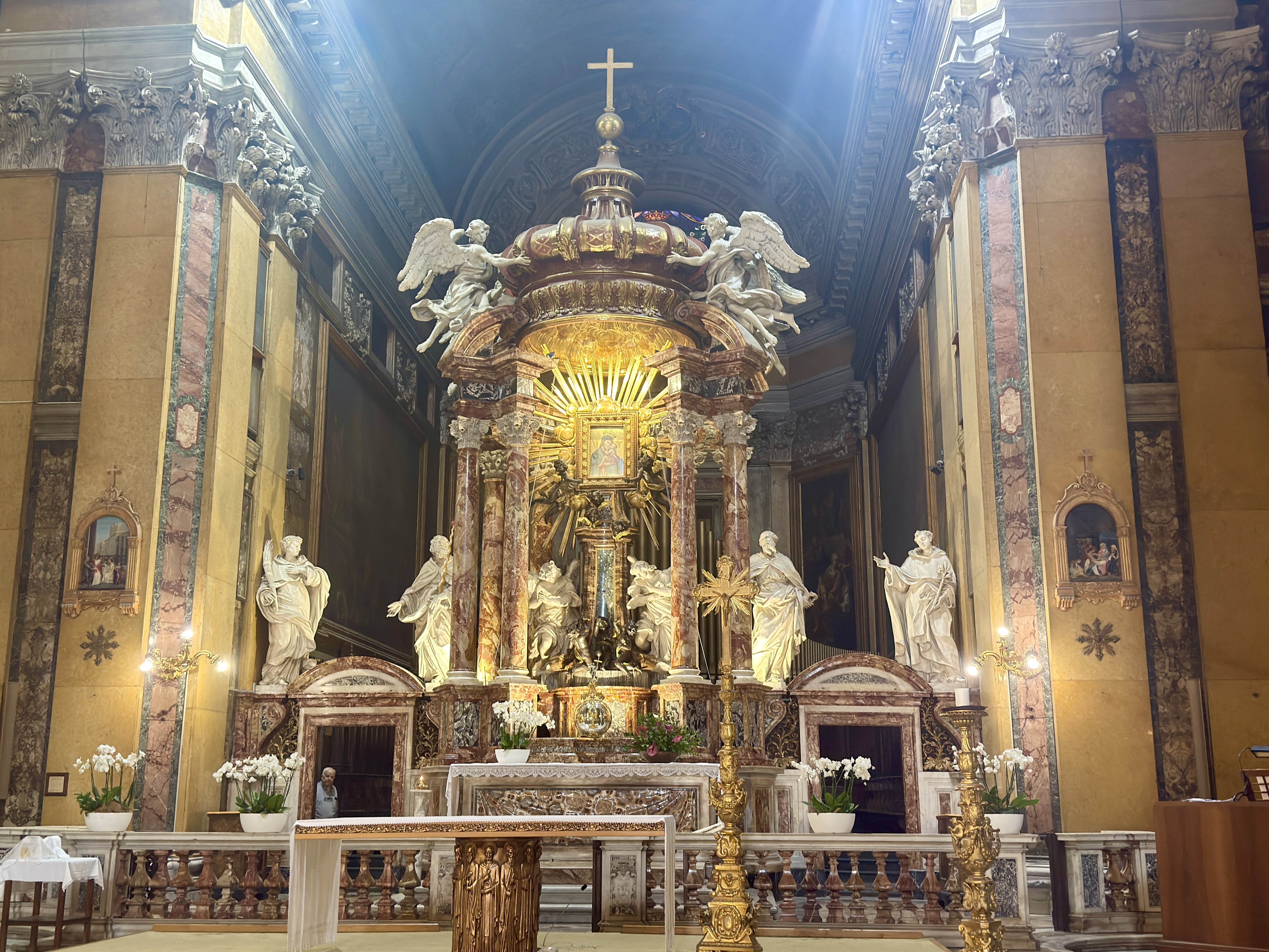
The next day we went to Castle Sant’ Angelo
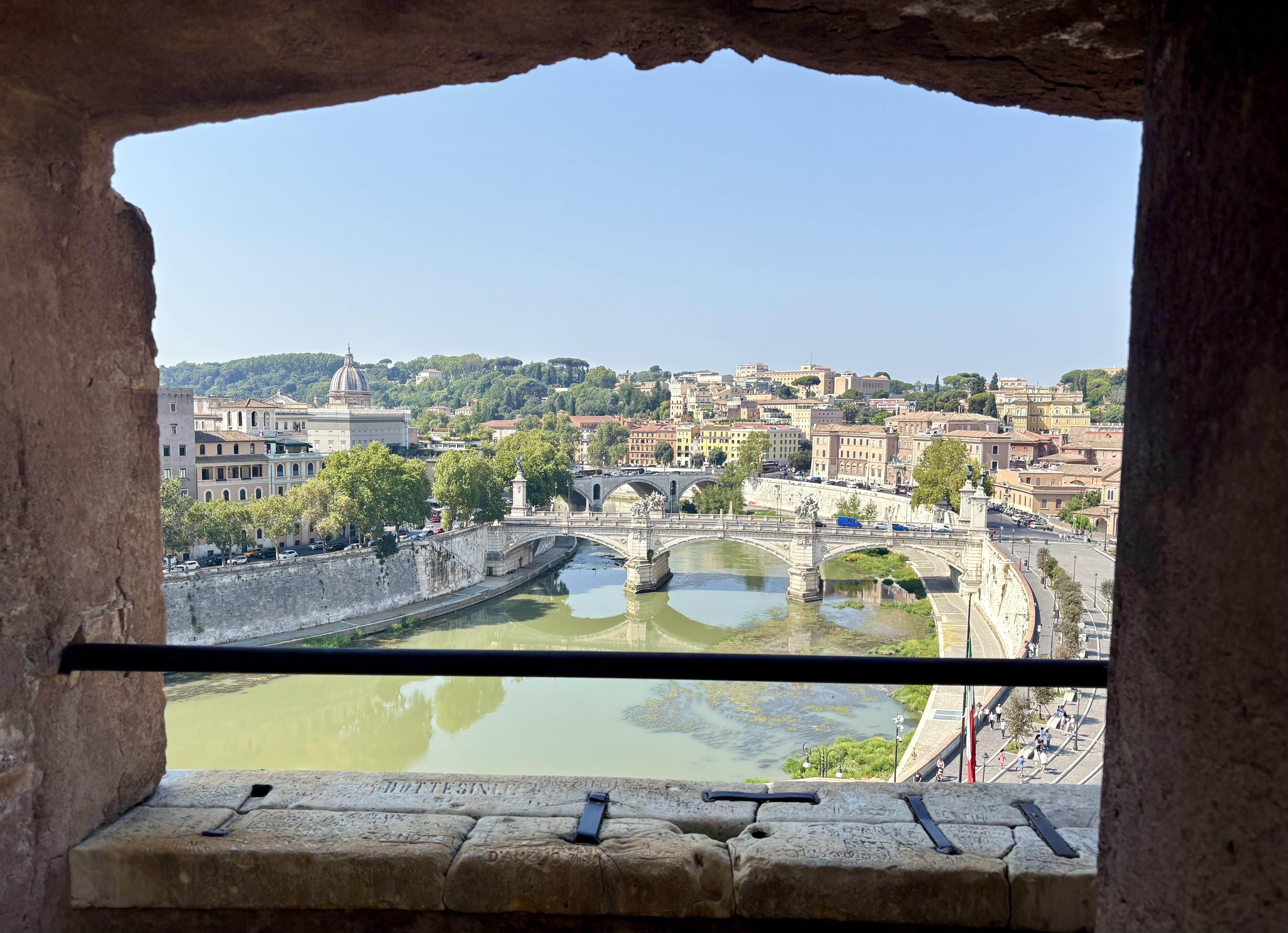
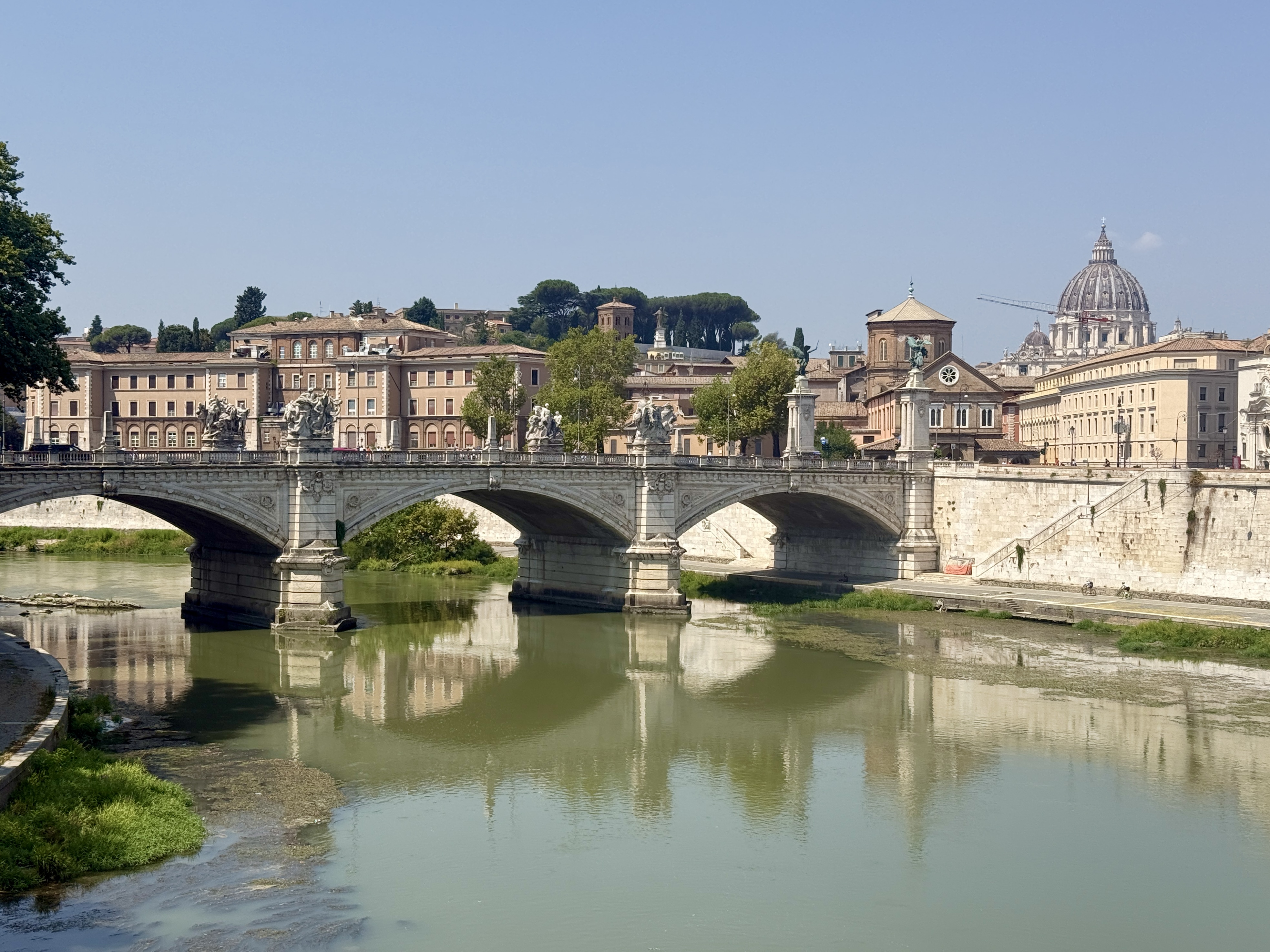
This is a towering rotunda in Parco Adriana built between 123-139 AD, on the banks of the Tiber river, commissioned by the Roman emperor Hadrian to be used as a mausoleum for himself and his family. Later the popes used it as a fortress and a castle dedicated to Saint Michael the Archangel. And today it is used as a museum. At one time this was the tallest structure in Rome. Hadrian’s ashes, together with his wife Sabina and his stepson Lucius Aelius who died in 138, were placed in the treasury room deep within the building as well as succeeding emperors until 217 AD.
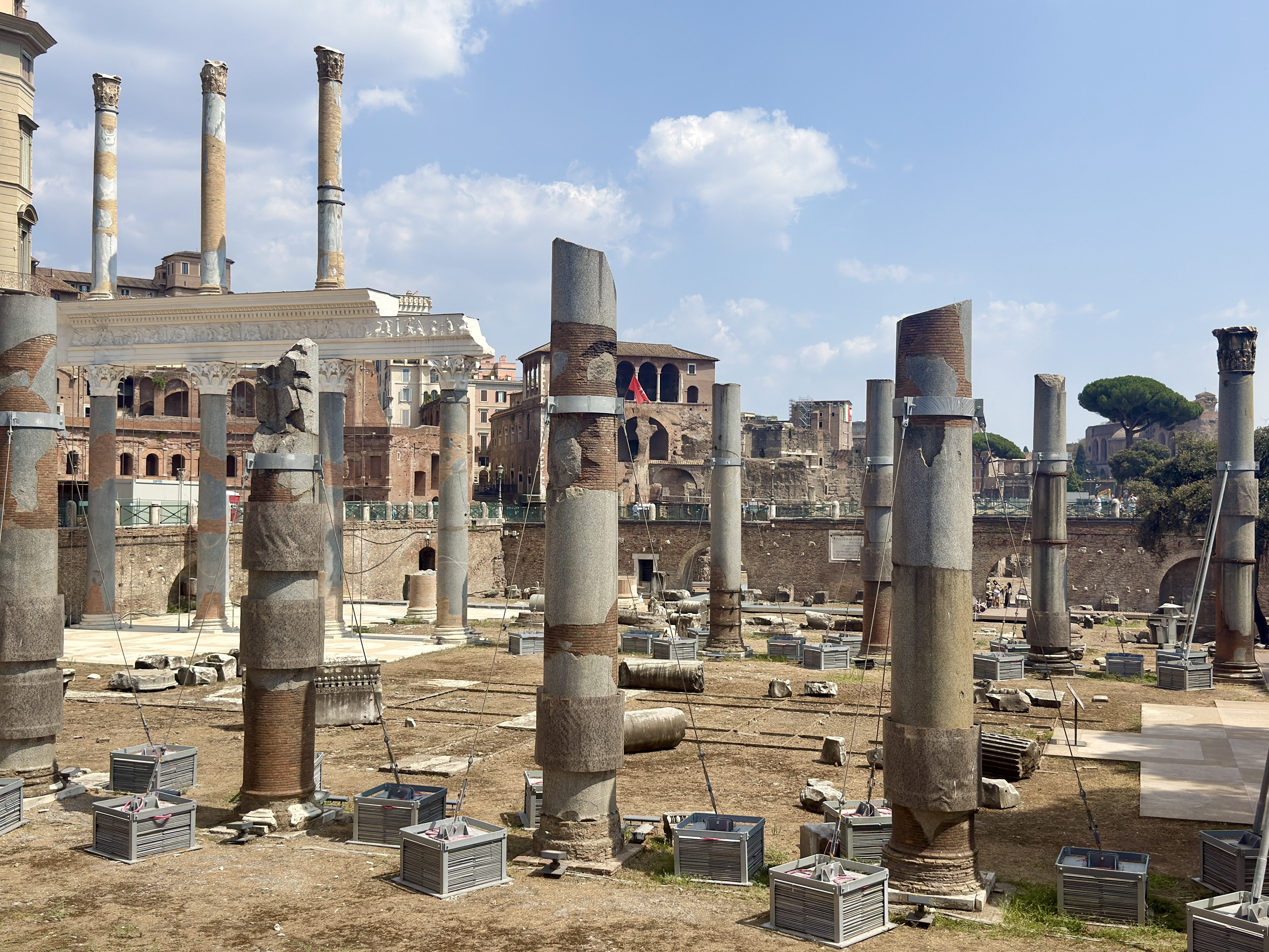
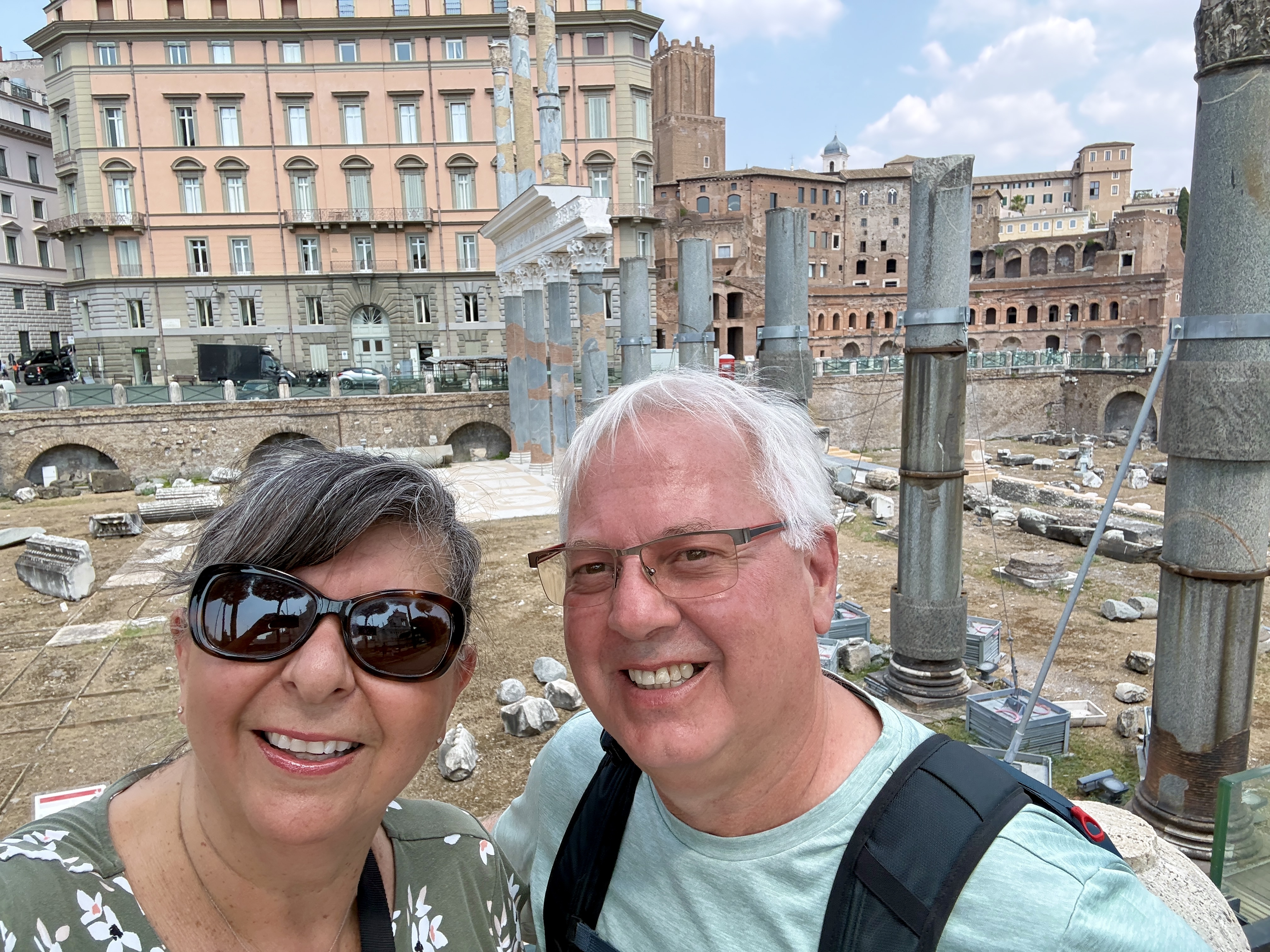
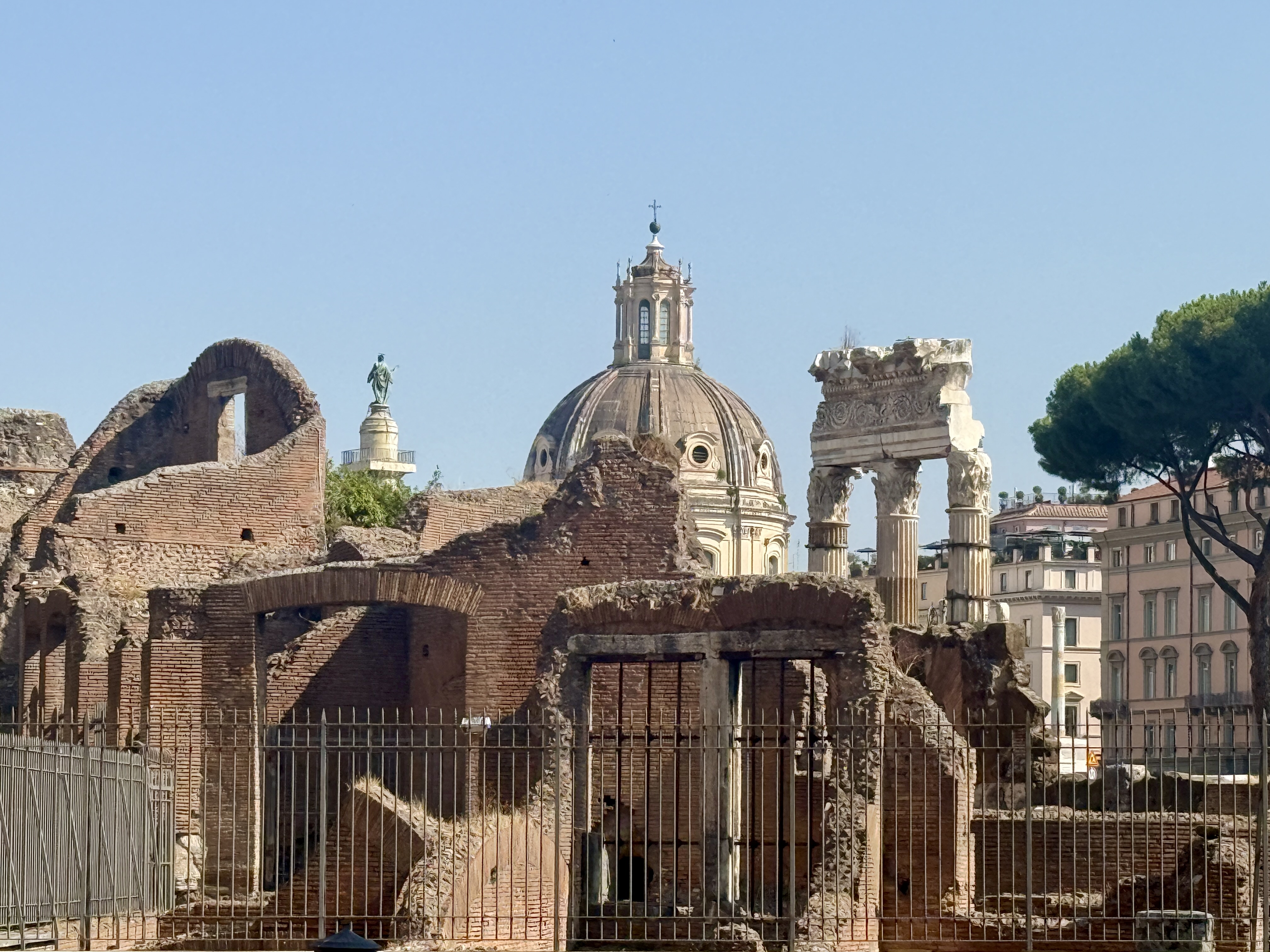
Then we walked down to the Roman Forum area to see the Mamertine Prison, where Pauls spent his last days in prison, but by the time we got to the forum it was 100 degrees that day, we were so hot and so tired that we looked around a little bit at the ruins and decided to go get early dinner and call it a day. So we walked over to Piazza San Lorenzo in Lucian and found a cute little restaurant and had a fabulous meal and caught an uber home.
Then the next day we signed up for a coliseum tour, however we still hadn’t seen the Mamertine Prison and our coliseum tour was in the afternoon, so we decided to head out early to go find the Mamertine prison. And we did.
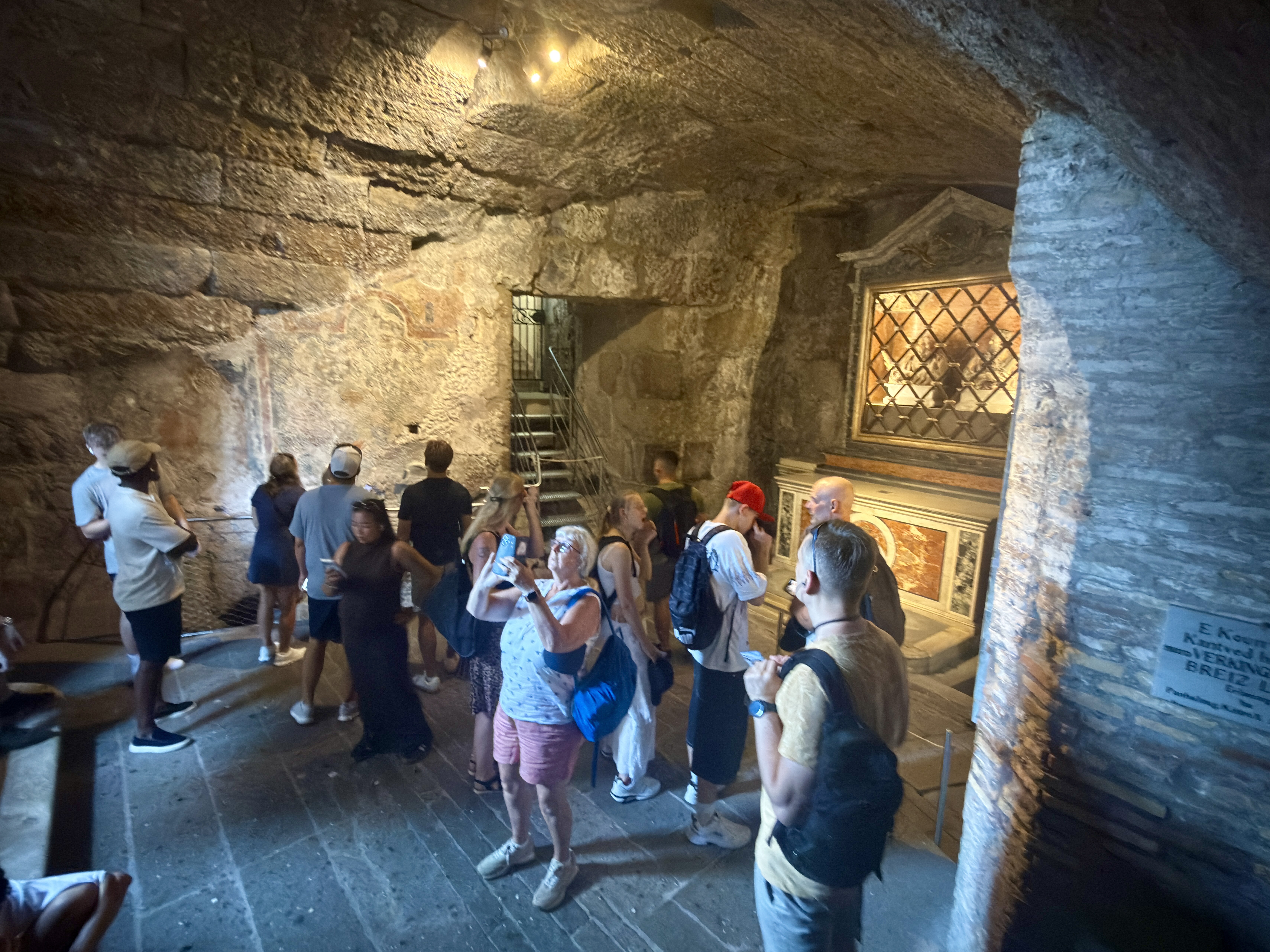
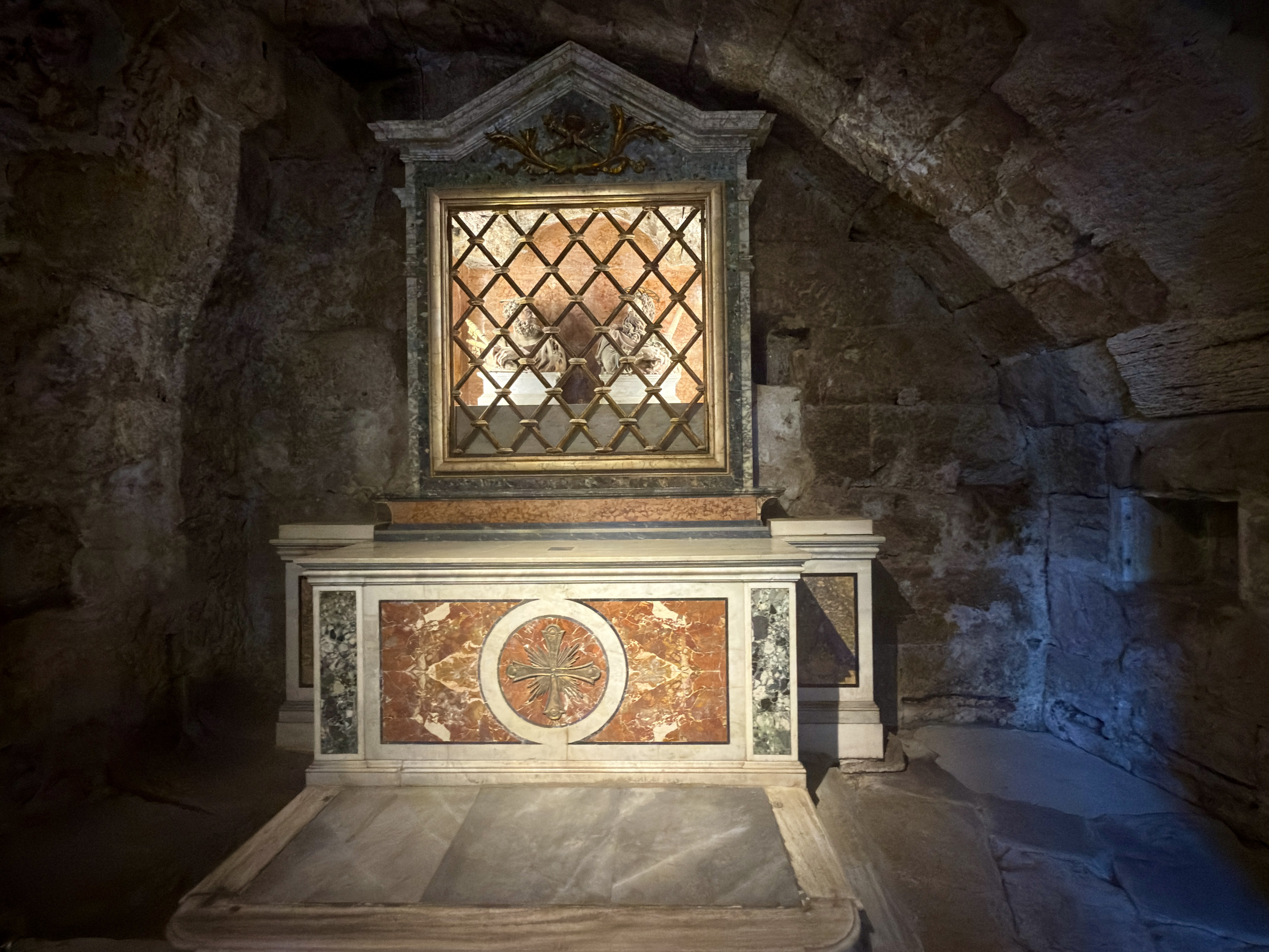
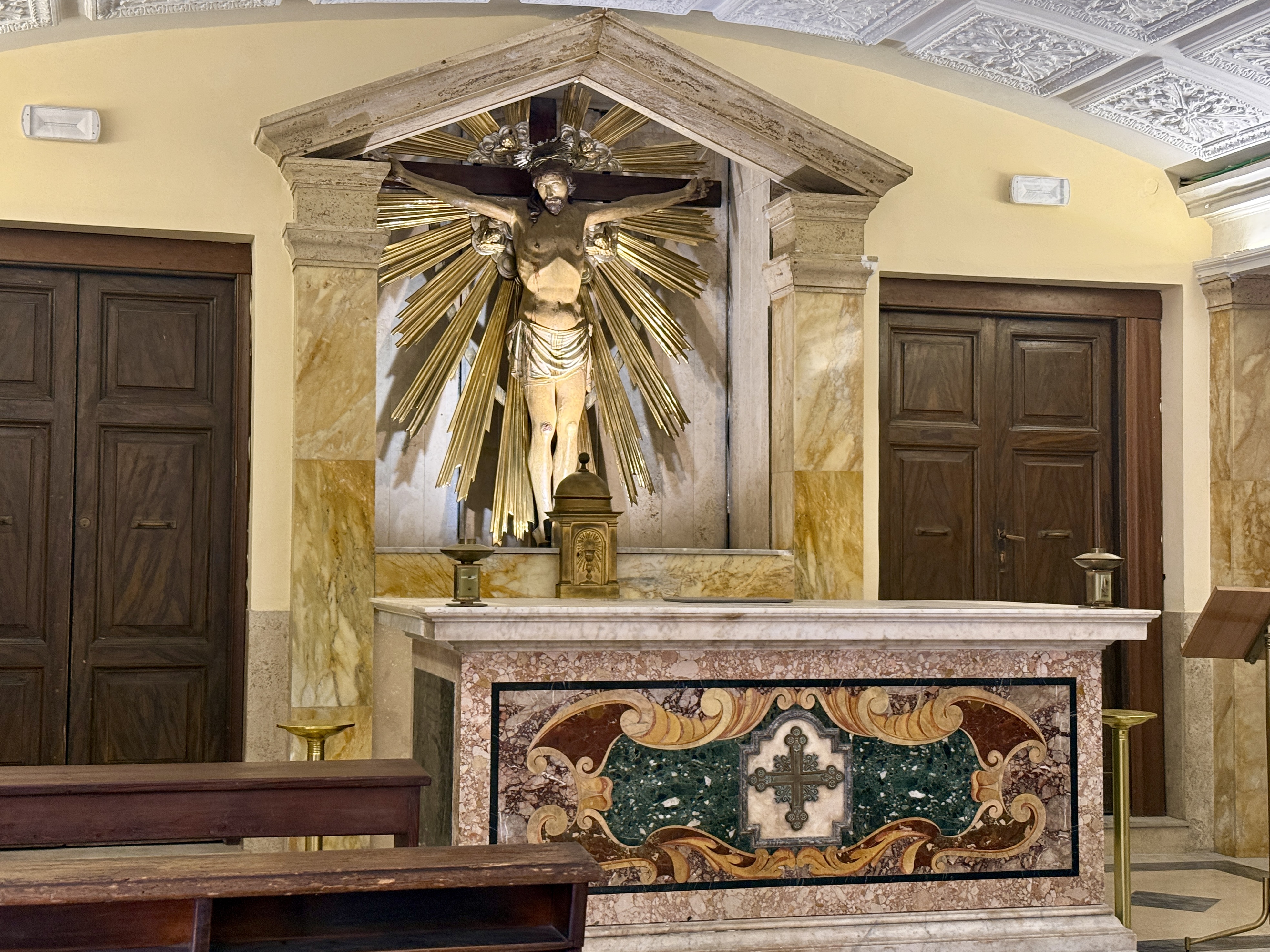
Built in the 7th century BC, originally built as a cistern but turned into a prison, it served as a holding cell for high profile prisoners awaiting execution. It is known that Paul was held here before being executed and wrote 2 Timothy here, it is also believed that Philippians, Ephesians, Colossians and Philemon were also possibly written during his time here. This prison is also said to be the place where Peter was held before his execution. As you exit the prison there was also a small chapel that sits above the prison itself.
We then headed over to our Coliseum tour. We signed up for the Arena floor and Belvedere Access tour that included:
- Arena Floor Access
- Paletine Hill
- Roman Forum
We really enjoyed this tour, our guide was thorough and I felt like he gave us enough time in each area and really explained the history.
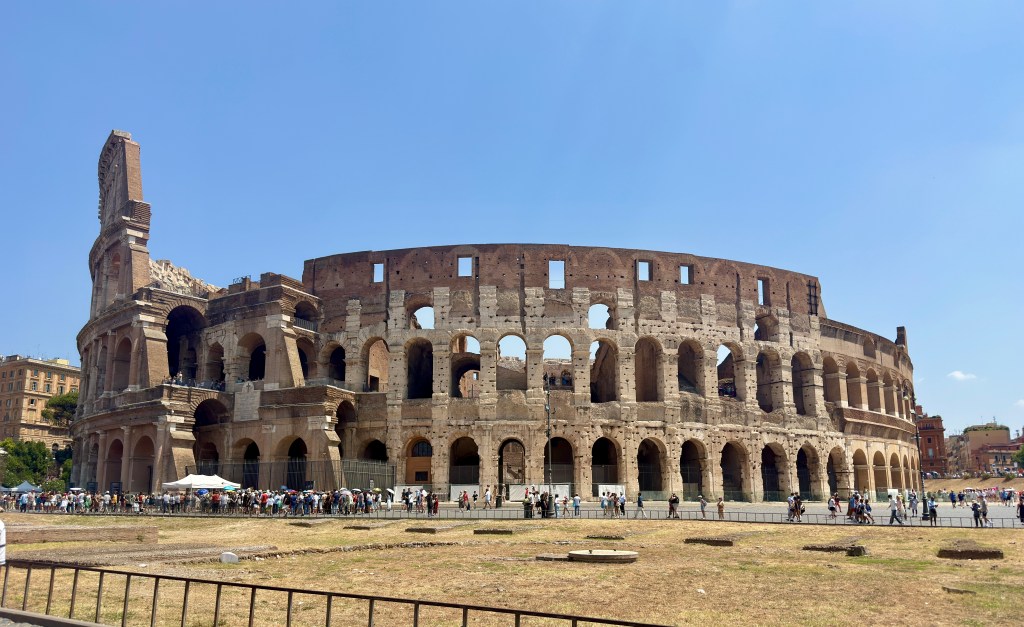
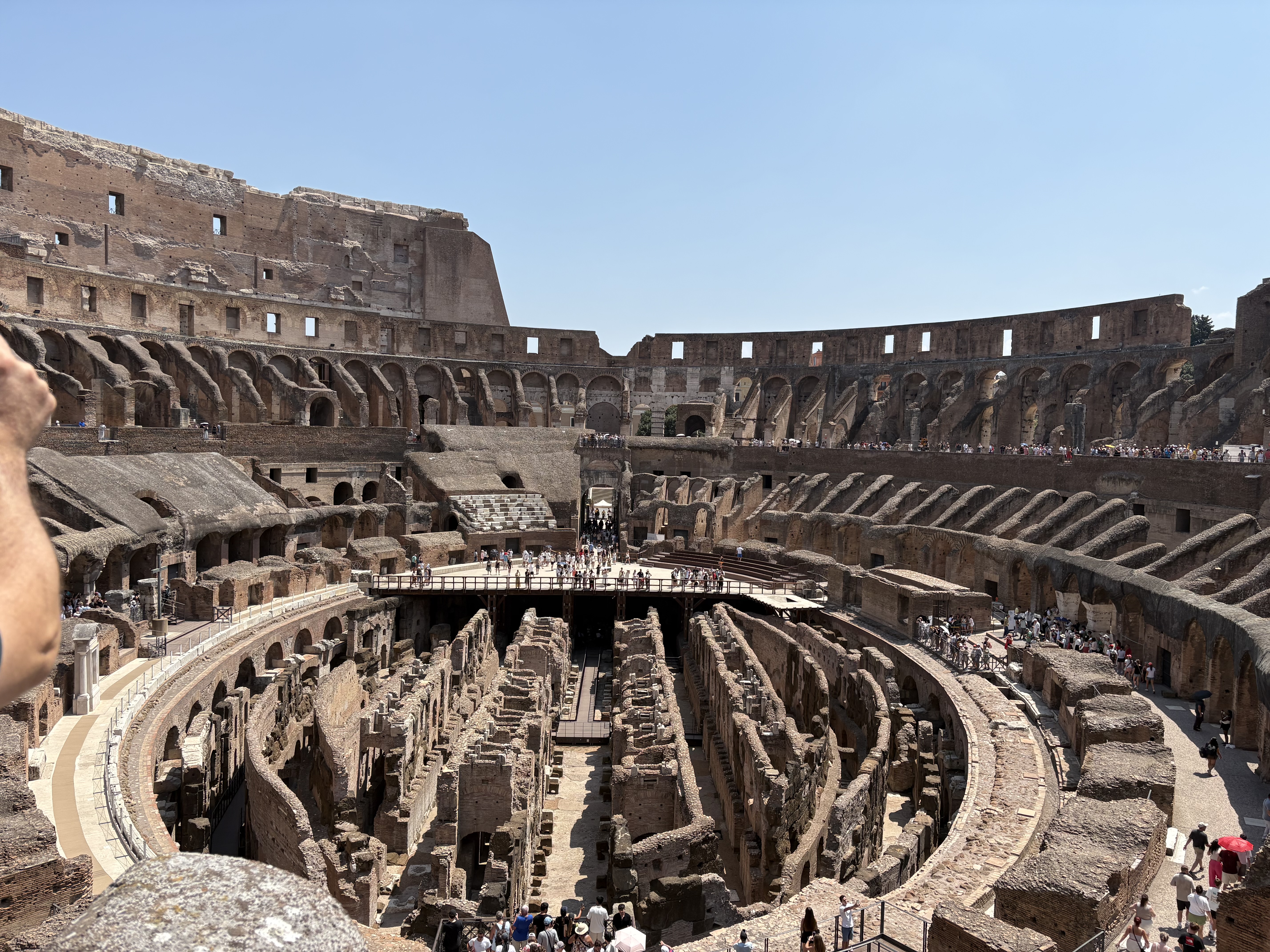
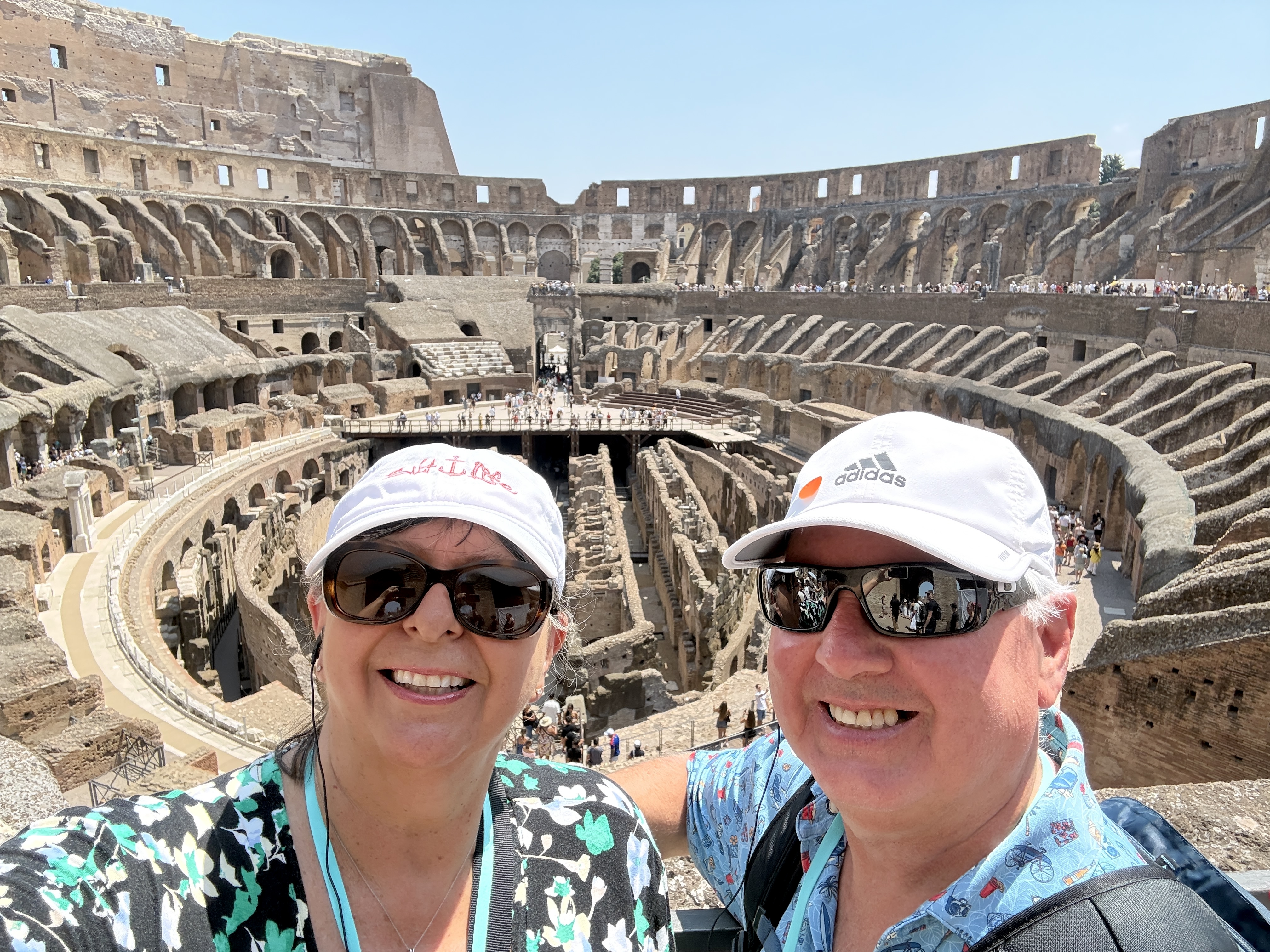
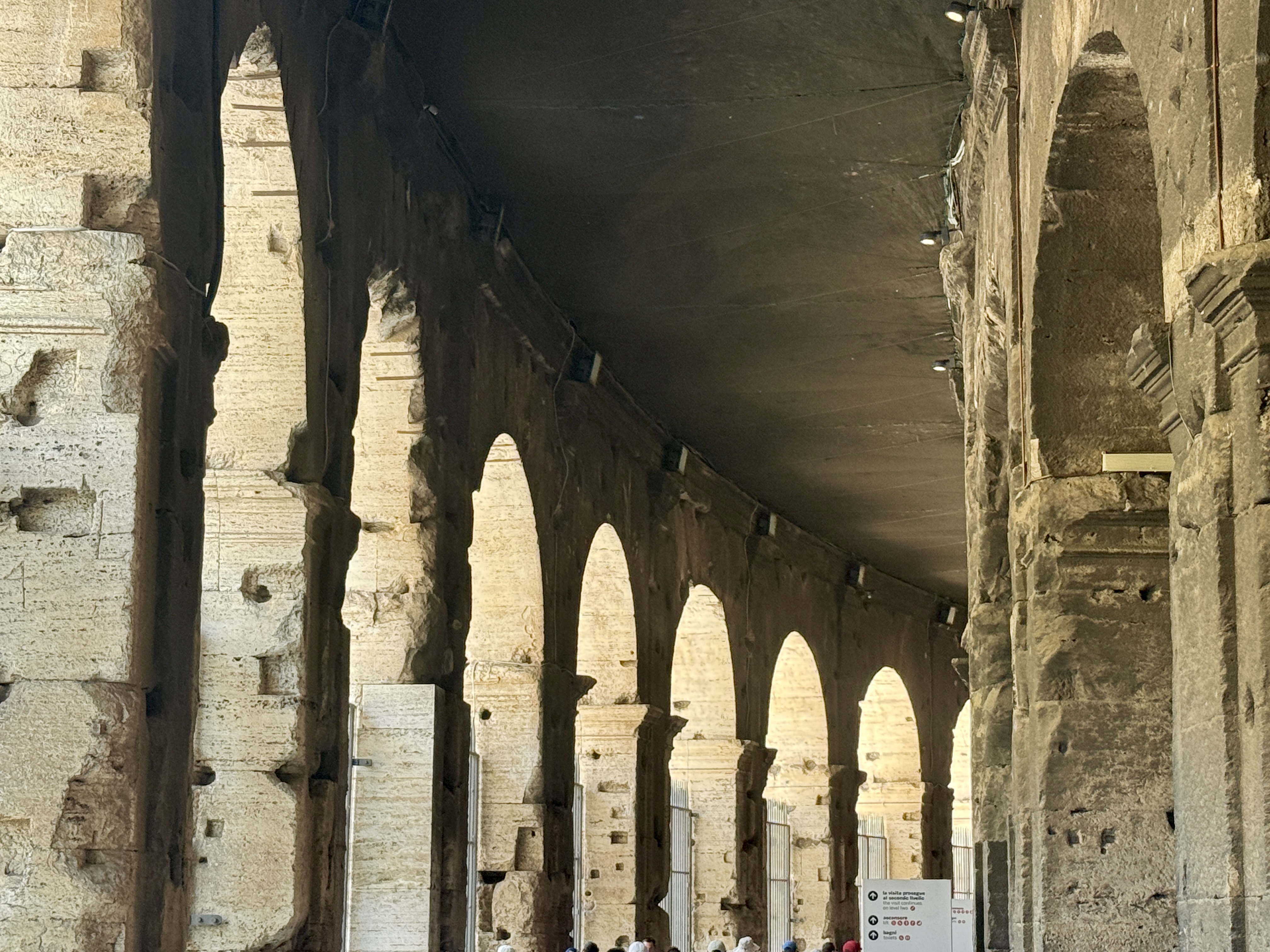
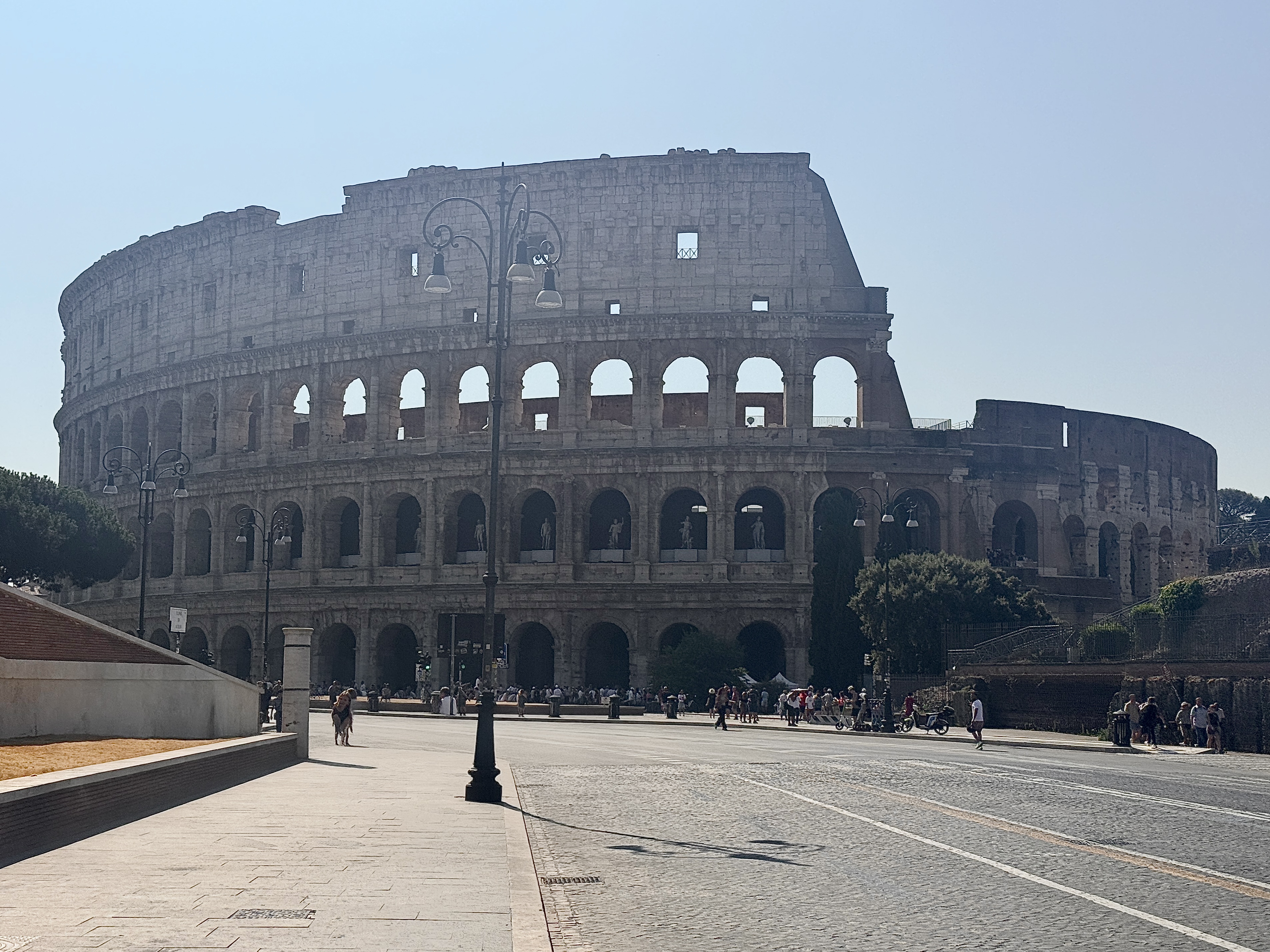
The Colliseum is the largest ancient amphitheater ever built and the largest standing amphitheater in the world. Construction began under the Emperor Vespasian in 72 AD and was completed in 80 AD under his successor and heir, Titus. Besides the well known gladiatorial contests it was also used for executions, animal hunts, and staged performances. There is also written recordings that they also used it for simulated sea battles however there are questions from historians about how they would have achieved that. Our tour started on the ground level where we were able to view the cells in which the lions and other animals were held before they were released into the arena. There is an underground tour that is separate which we did not do. We also toured the Belvedere level giving you elevated panoramas of the coliseum. As you walk through the upper level there are artifacts displayed of pottery, statues, figurines, mosaic art, and even some jewelery. This is an amazing sight to see and taking a tour is well worth it.
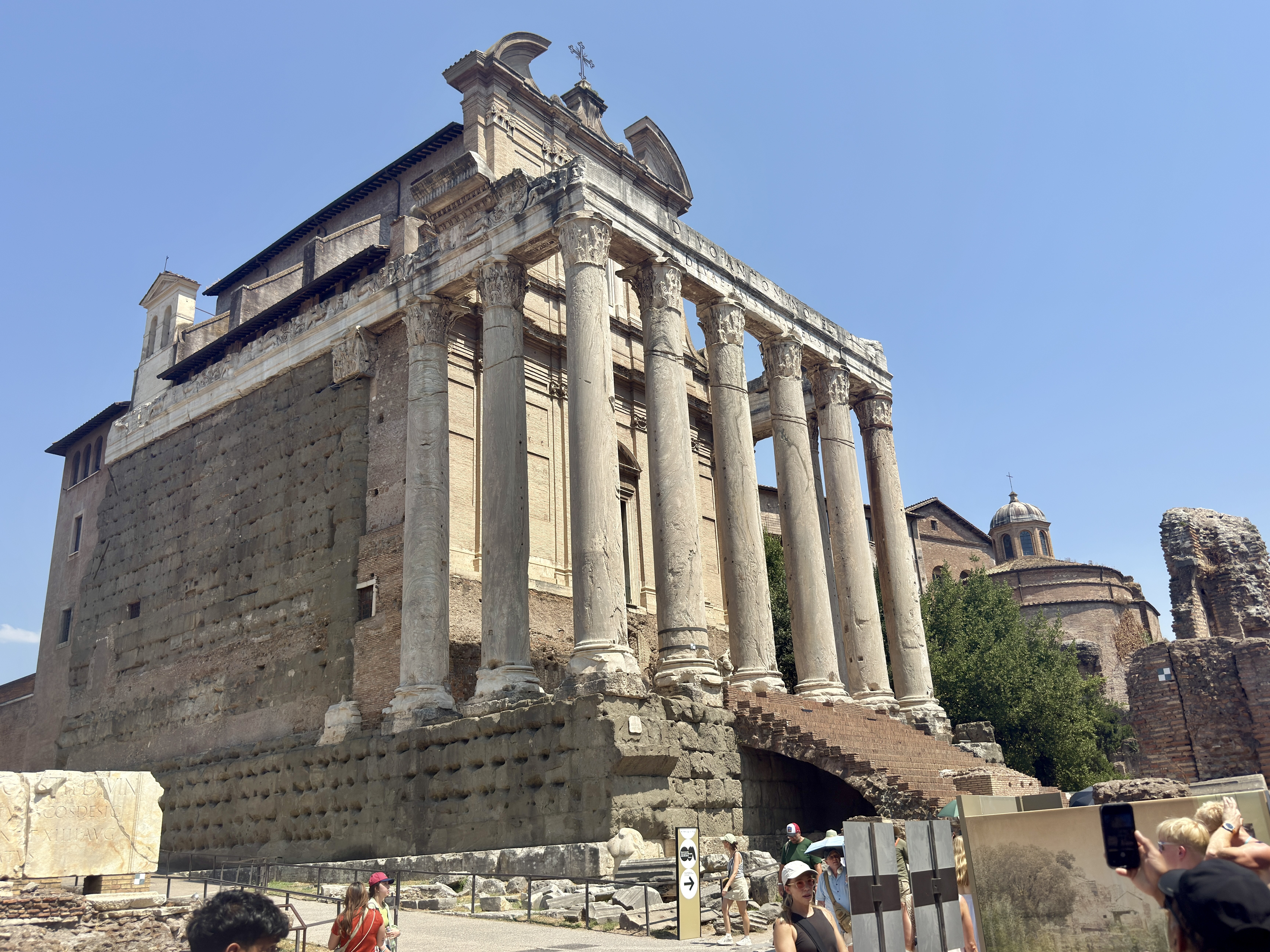
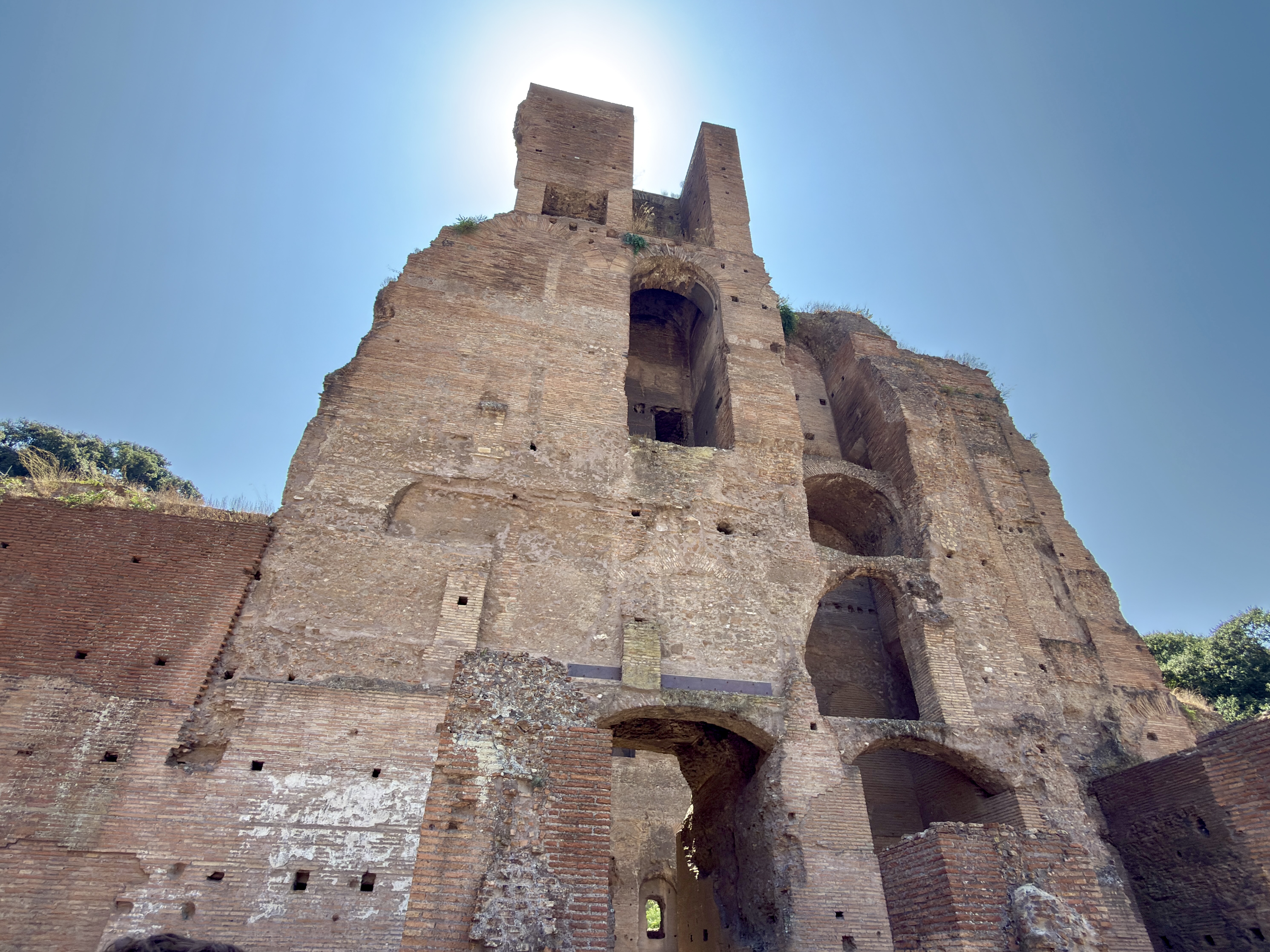
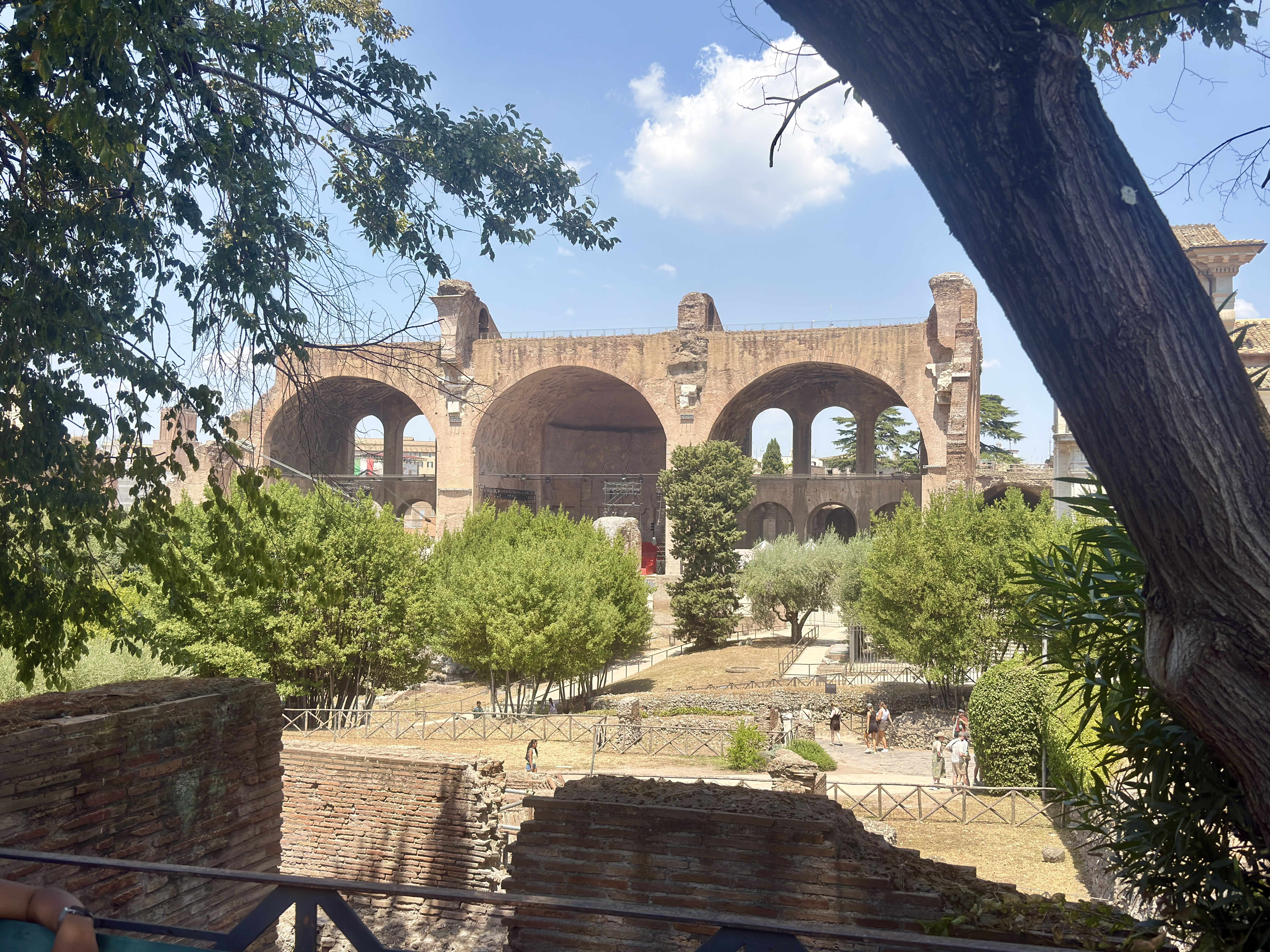
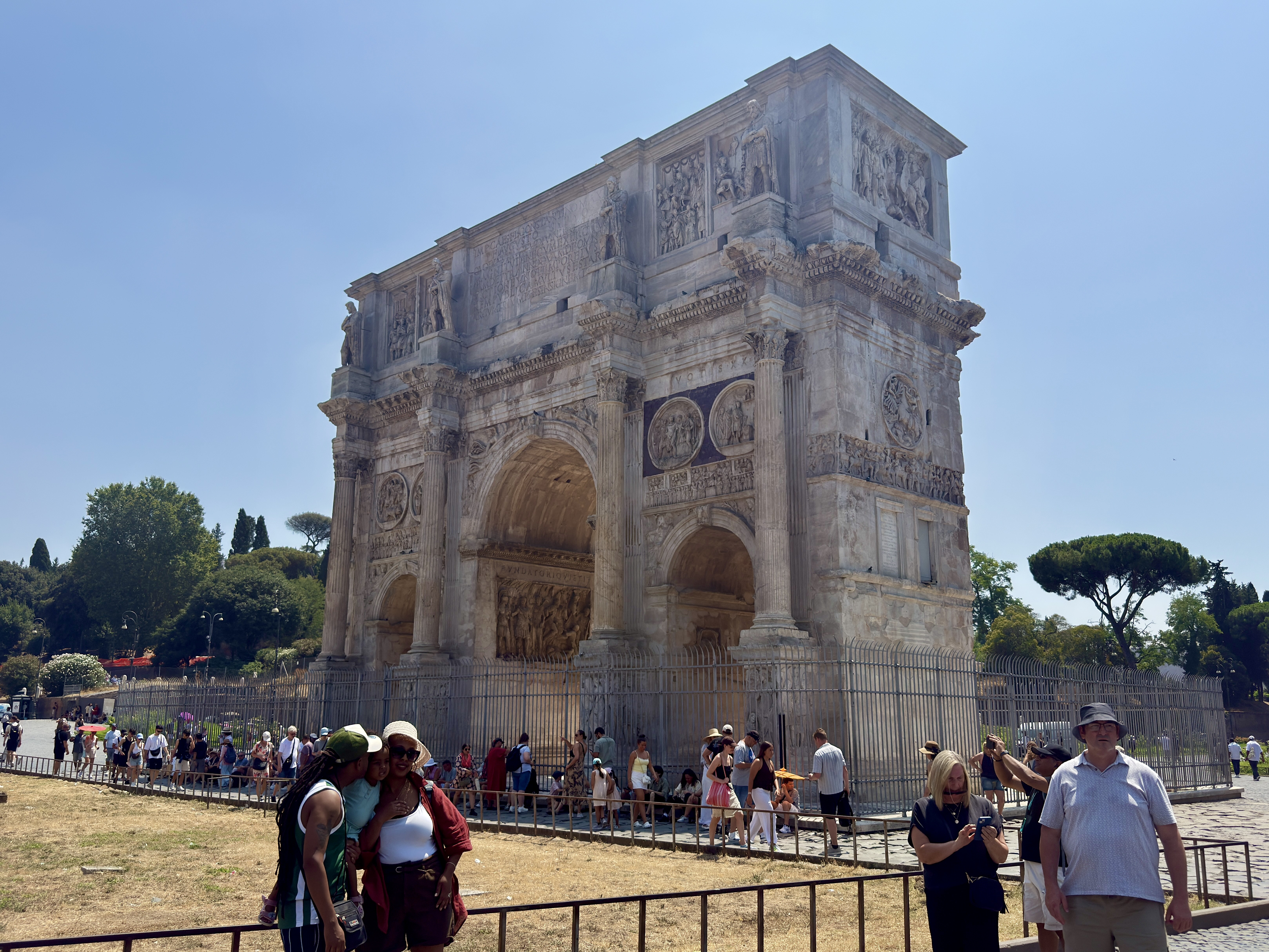
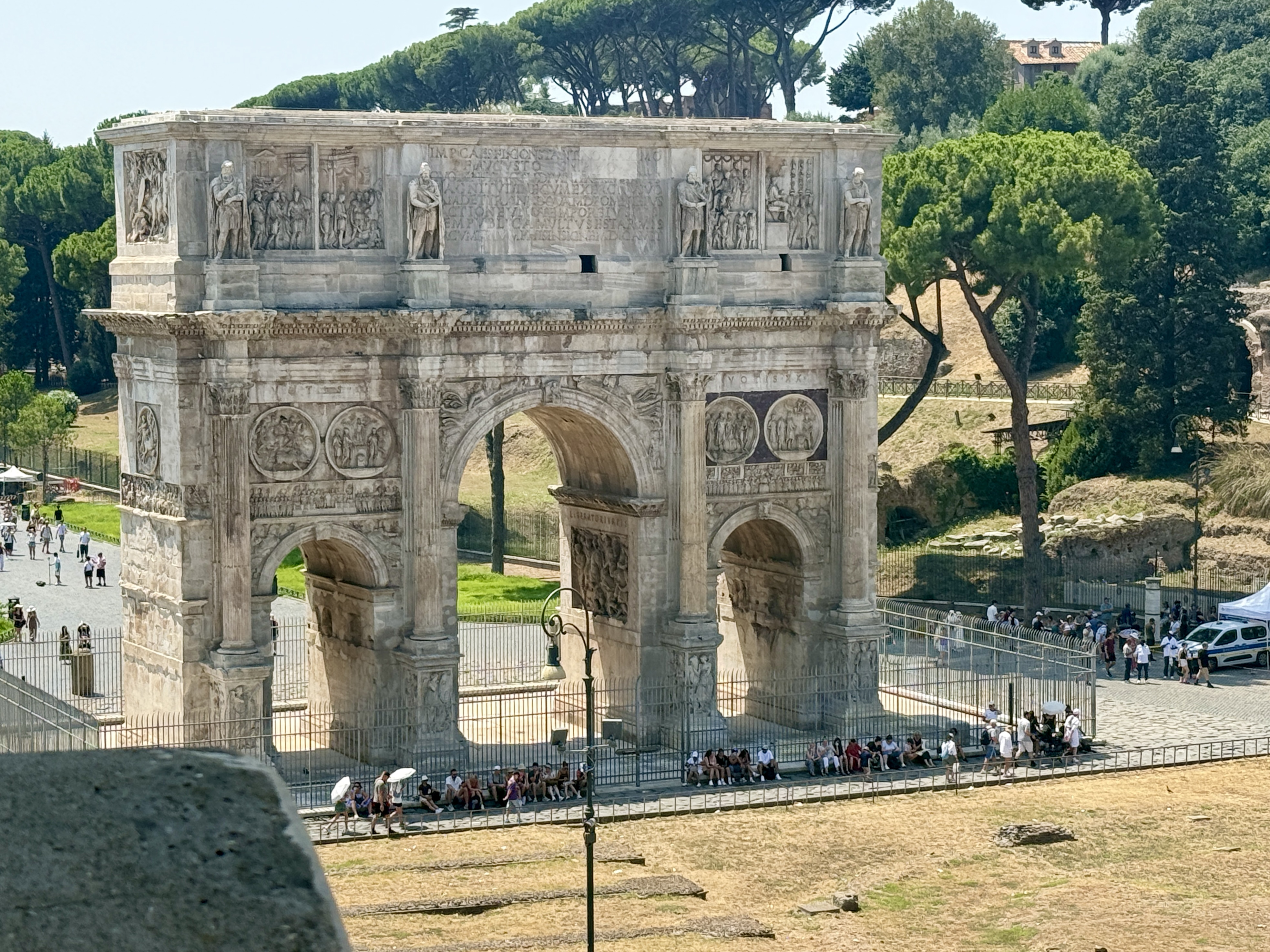
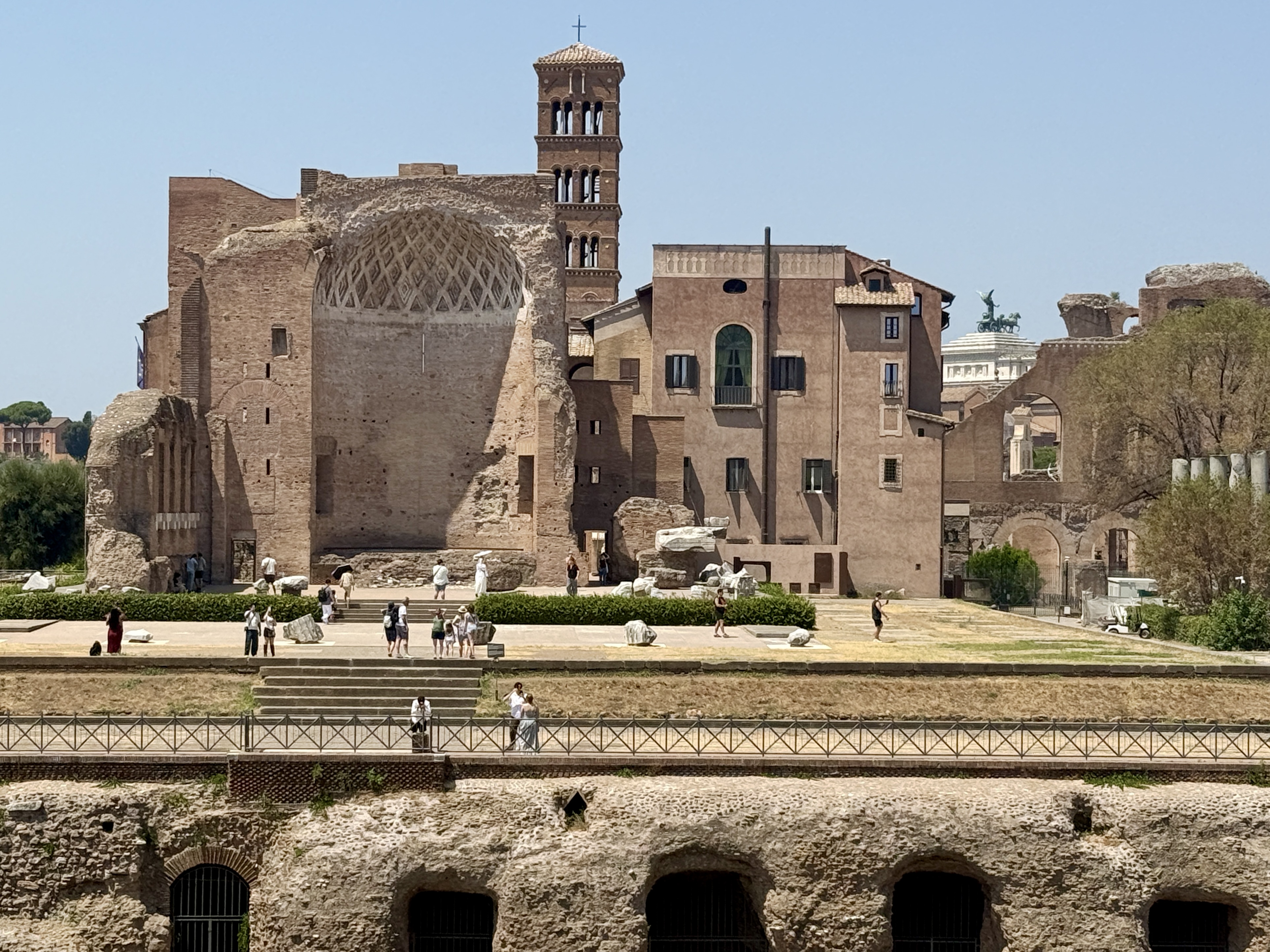
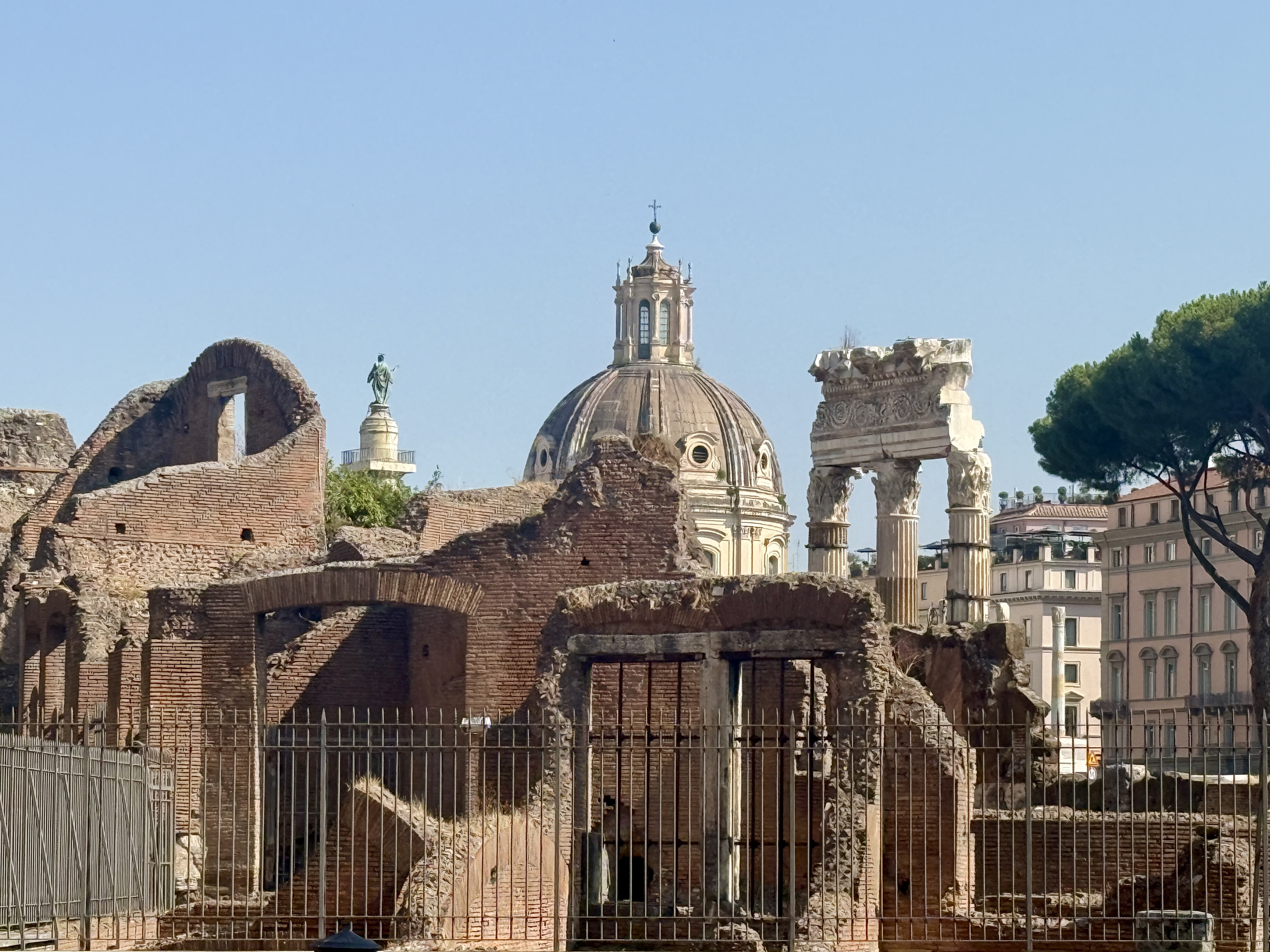
Our tour then headed to The Roman Forum and Paletine Hill, this is home to several important ruins, and the ancient ruins center of Rome. Once serving as a venue for public meetings, law courts, elections and triumphal processions. this was once the bustling center of the city. As we were walking to the forum we passed through the arch of Titus, built in 81 AD by emporer Domitian, and then we passed by arch of Constantine built by emporer Constantine the Great in 315 AD. These arches were built to celebrate Roman victories and the arch of Titus was also to honor Domitians late brother Titus. The Forum offers you a glimpse into the life of its citizens and its grand architecture. We walked on roads where you can still see the ruts from where the chariots drove, we visited the cremation site and grave of Julius Caesar, we also seen the Temple of Antonius and Faustina built in 141 AD, there is so much to see in this space and we just can’t mention every historical site by name, this is also an area where a guide was handy to explain what we were looking at. So we highly recommend a tour.
One of the things we have started doing is searching each city we’re in and seeing if they have a Hard Rock Cafe, so we searched Rome and found a Hard Rock and went and had dinner there. We’ve kind of made this a thing. We’ve visited hard rocks in several countries now. It’s been kinda fun doing this.
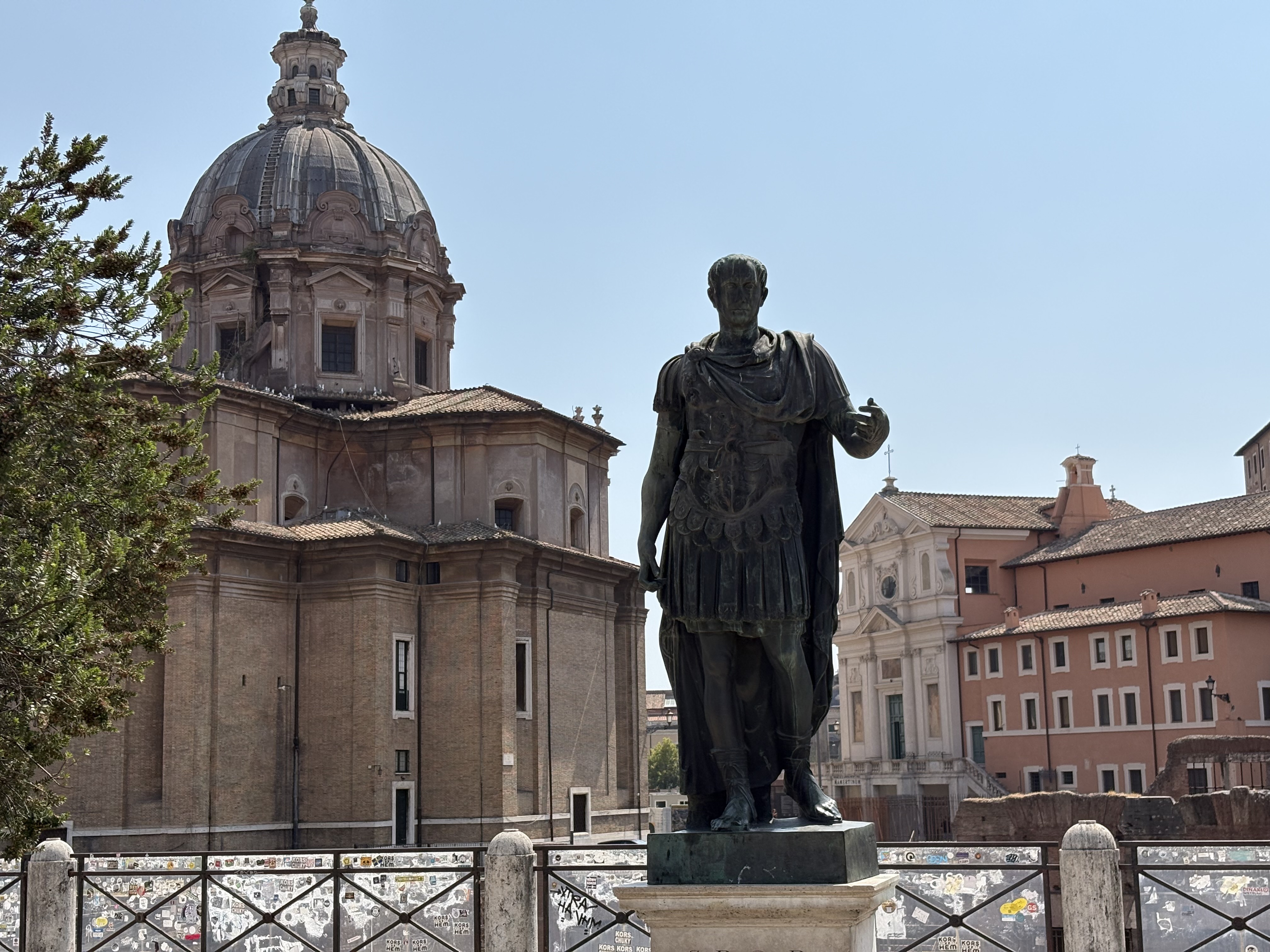
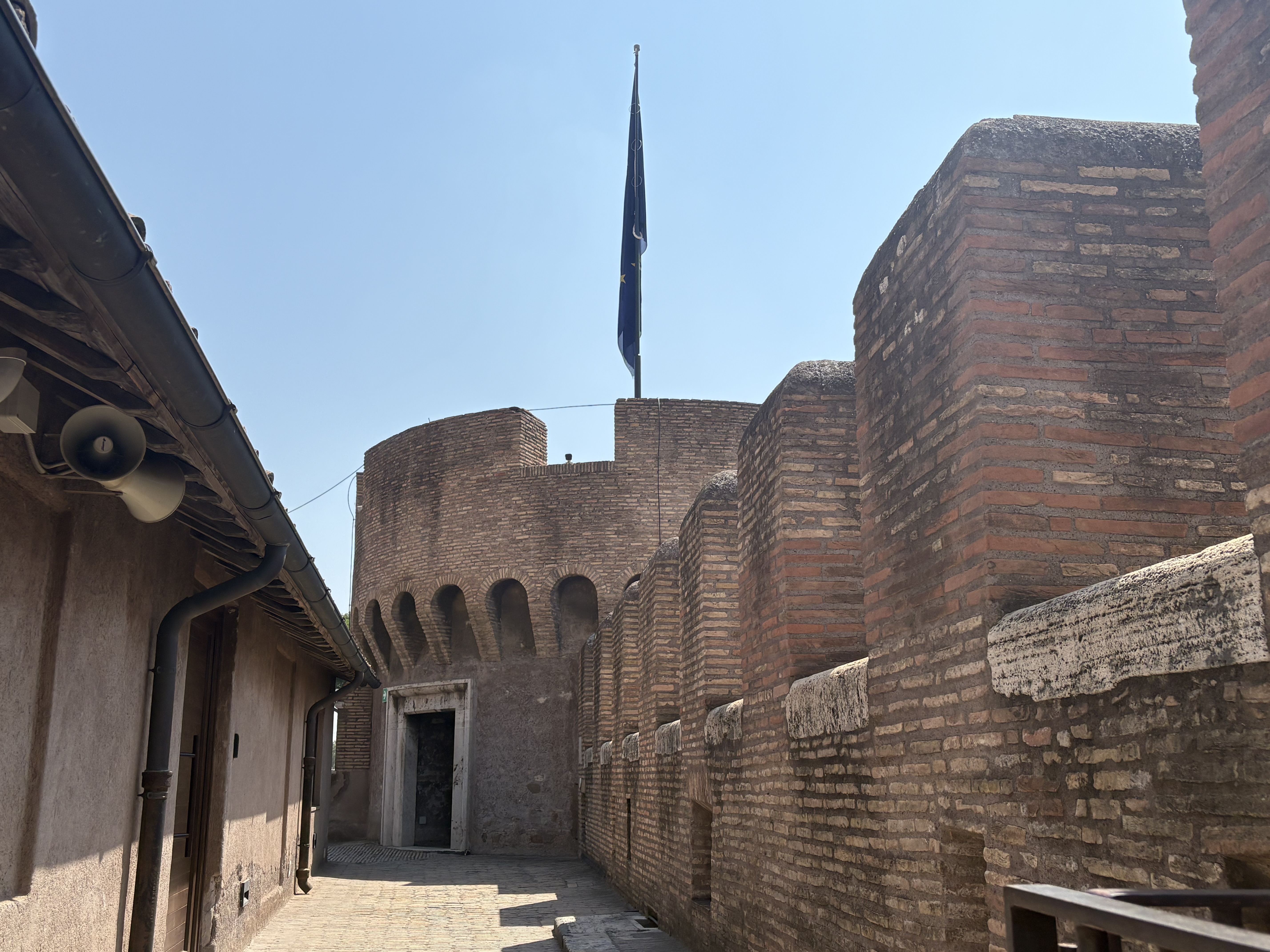
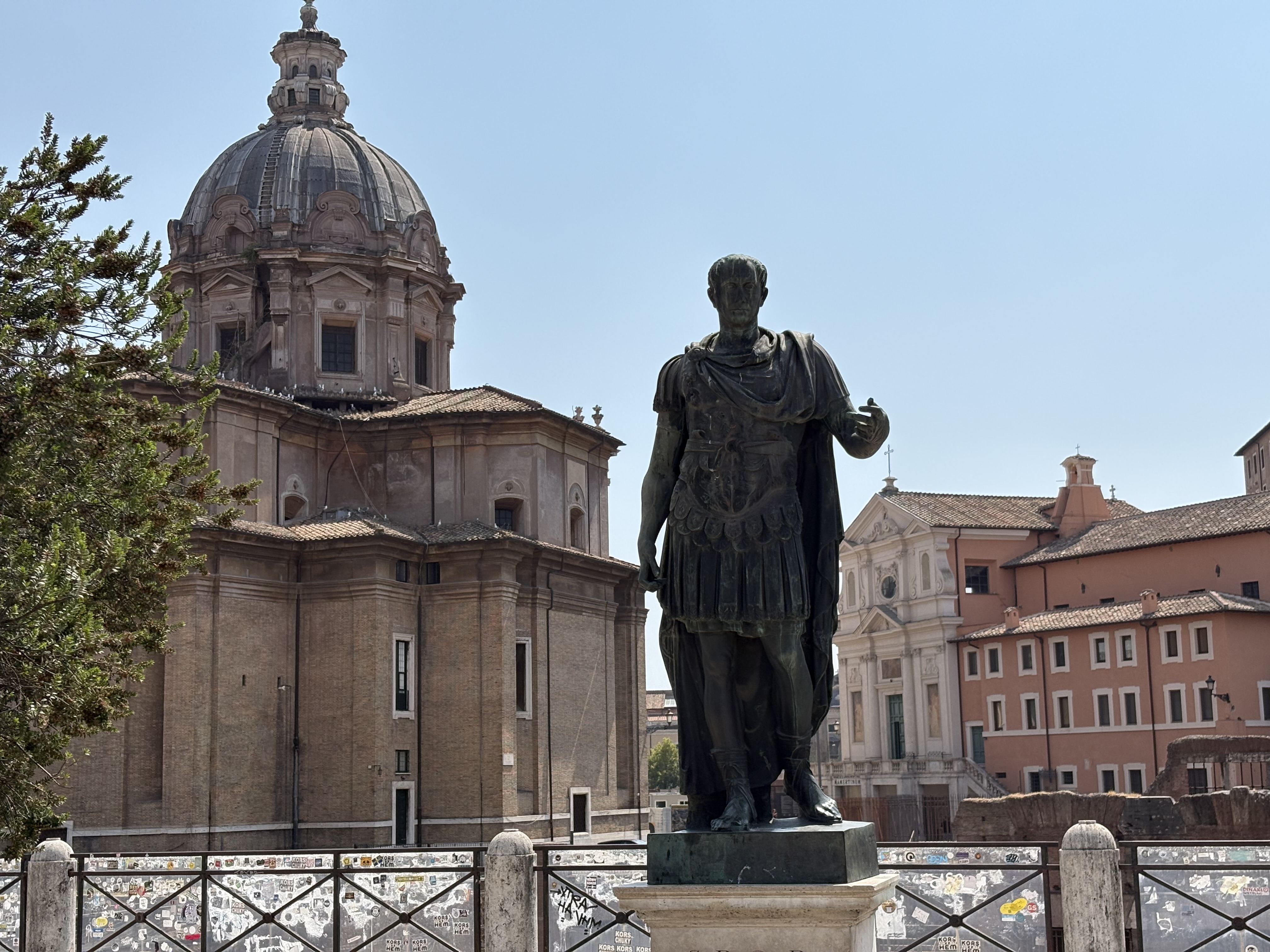
Then on our last day we went to the Vatican for the Papal Audience which we mentioned earlier and we did a previous video showing the address. So if you haven’t seen that we invite you to check it out under Pope Leo XIV leading the Angelus Prayer. Even though we aren’t catholic we thought this was a memorable experience and recommend you to go. Again, its every Wednesday unless the Pope is traveling, and get there early as it gets busy.