
Pécs
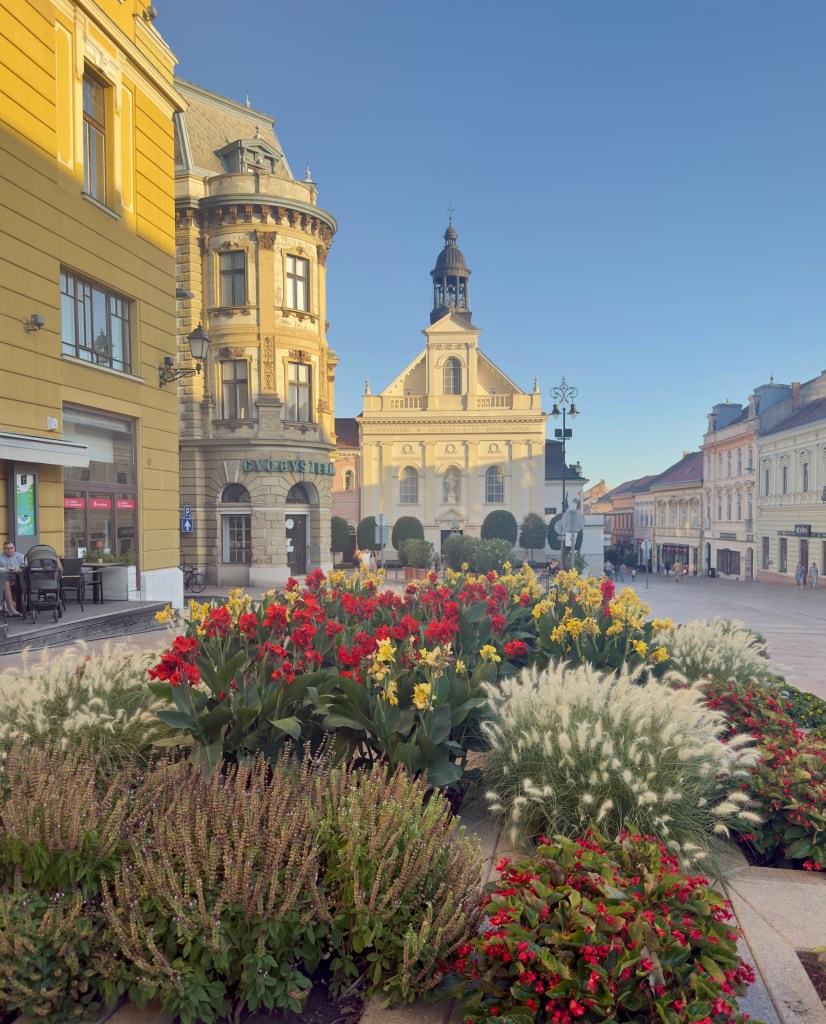
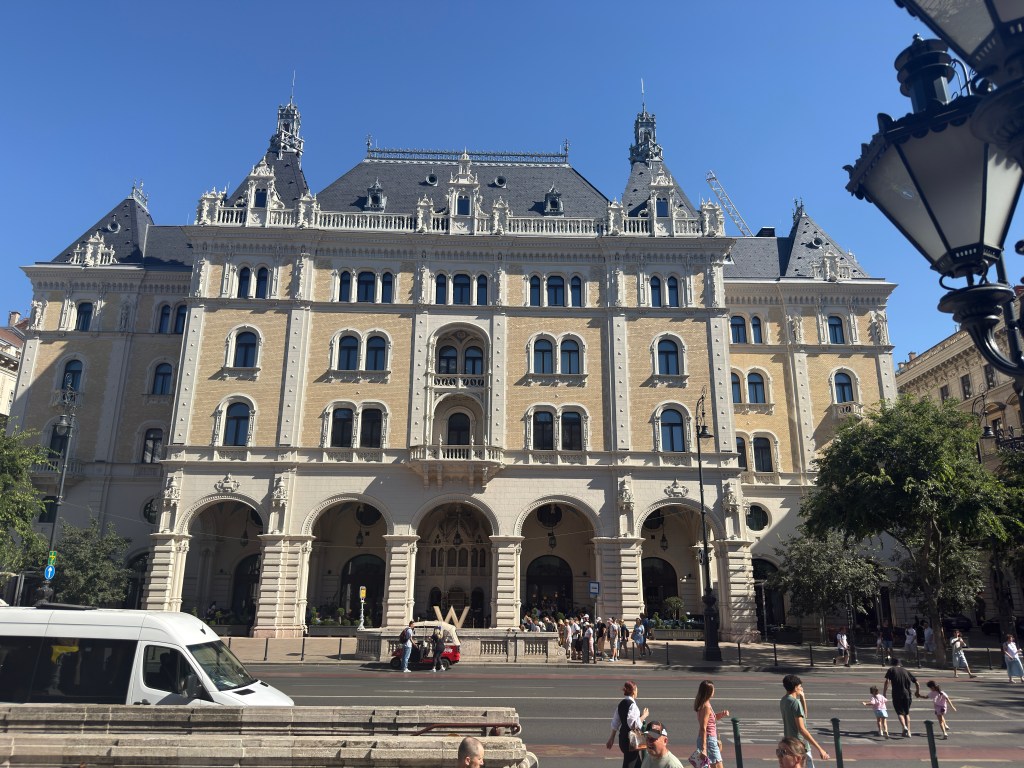
Pécs was a great Surprise for us, we made a last-minute decision to go and spend a week there and boy are we glad we did. We stayed at the Grand Palatinus Hotel (Palatinus Grand Hotel – Discover the new face of the Palatinus Grand Hotel.) just one block off the main Szechenyi Square and it was perfect. We were close to everything; we had a balcony that overlooked the courtyard entry as well as the main street called Kiraly Utca. We had a nice sixe room with king bed, walk in shower and our reservation included a big buffet breakfast which had a lovely assortment of fresh fruits, pastries, hot dishes and so much more. We really enjoyed our stay here and would highly recommend.
We thoroughly enjoyed spending time in the square as we were entertained by greet music and dancing on our first evening there. It’s a great place to people watch and feel the heartbeat of this charming town filled with fountains, statues, beautiful architecture, shopping, cafes and everything else you could possibly want in a town yet quiet and peaceful and so relaxing we wished we had stayed longer.
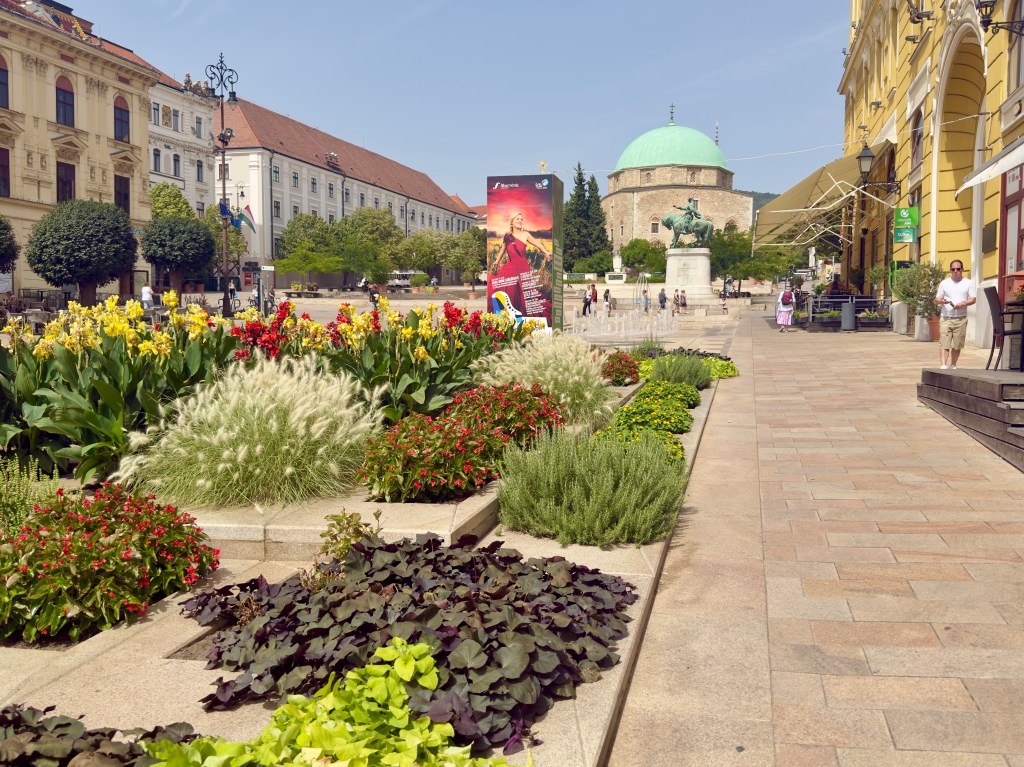
We visited the large Candlemas Church of the Blessed Virgin Mary standing at the highest point at the face of the square. This church was formerly the Mosque of Pasha Qasim during the 16th-17th centuries due to the ottoman conquest. The Mosque was later converted to the church in 1702 and in 1766 numerous conversions were made to the church between the 18th and 20th centuries. this church is a blend of Christian and Ottoman architecture with beautiful stained-glass windows, Islamic motifs, Turkish ogee arches and a mihrab alongside beautiful geometric frescoes.
In the basement is a columbarium and crypt which are modern family urn niches and a reminder this is a sacred place of burial and mourning.
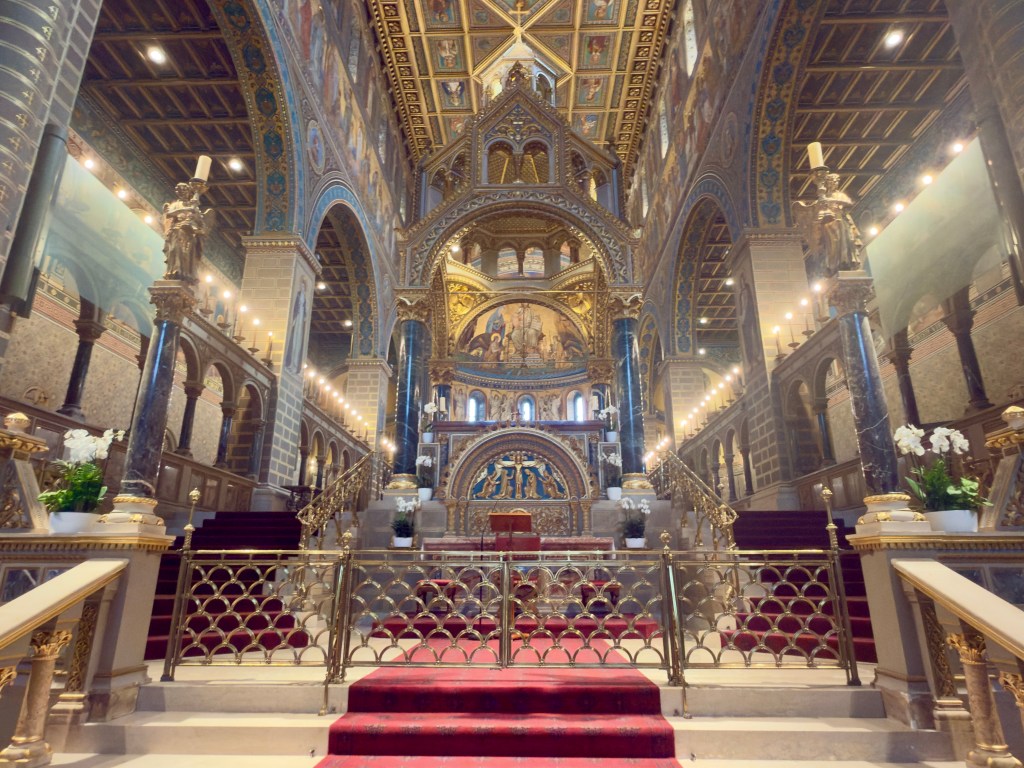
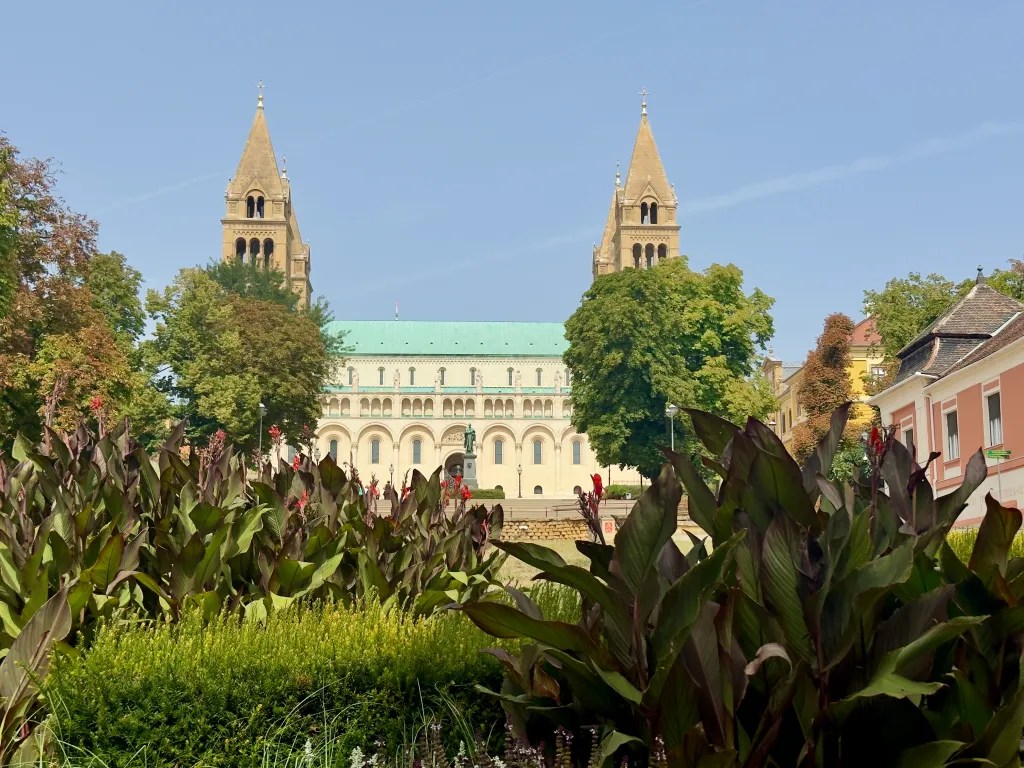
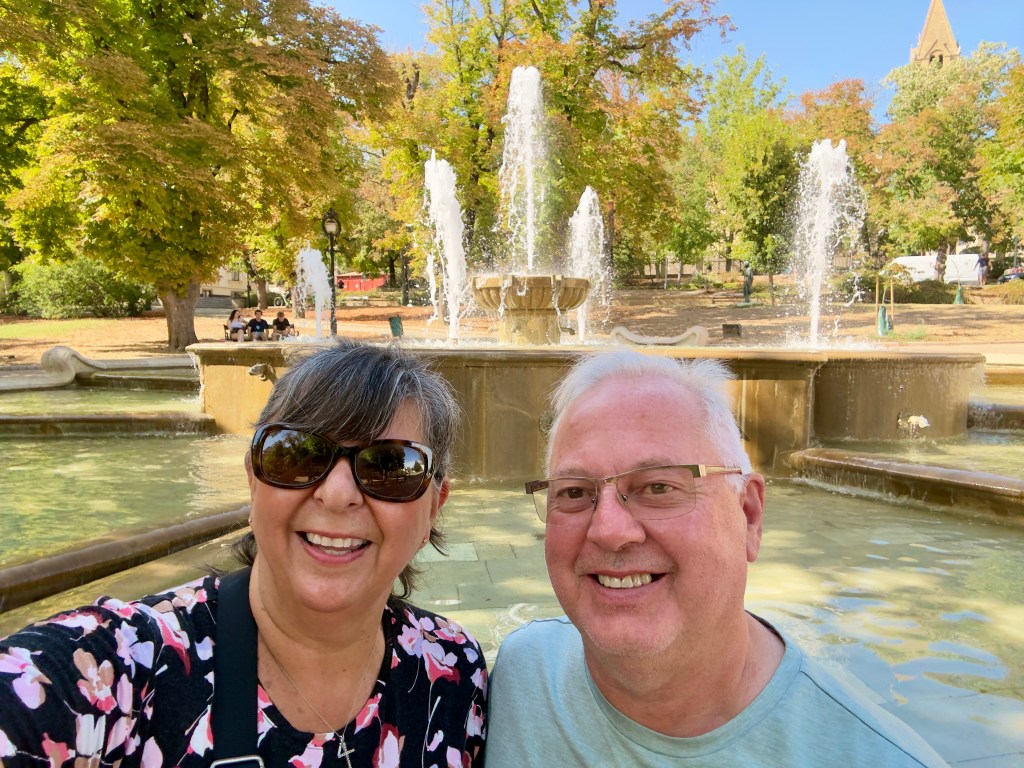
We also visited the Pécs Cathedral also known as St. Peter and St. Paul Basilica. Built in the 11th century and reconstructed in the 19th century this beautiful cathedral sits on Saint Istvan Square near the Bishops Palace and Old Treasury. The interior features stunning frescoes depicting scenes from the Old and New Testaments and displays of gold and green inlaid marble. The foundations of the cathedral are from the Roman period and feature a four-tower basilica characterized by the simple style of the Romanesque Revival. This church is magnificent; you can climb the bell towers and enjoy the views of the city, and we highly recommend taking time here.
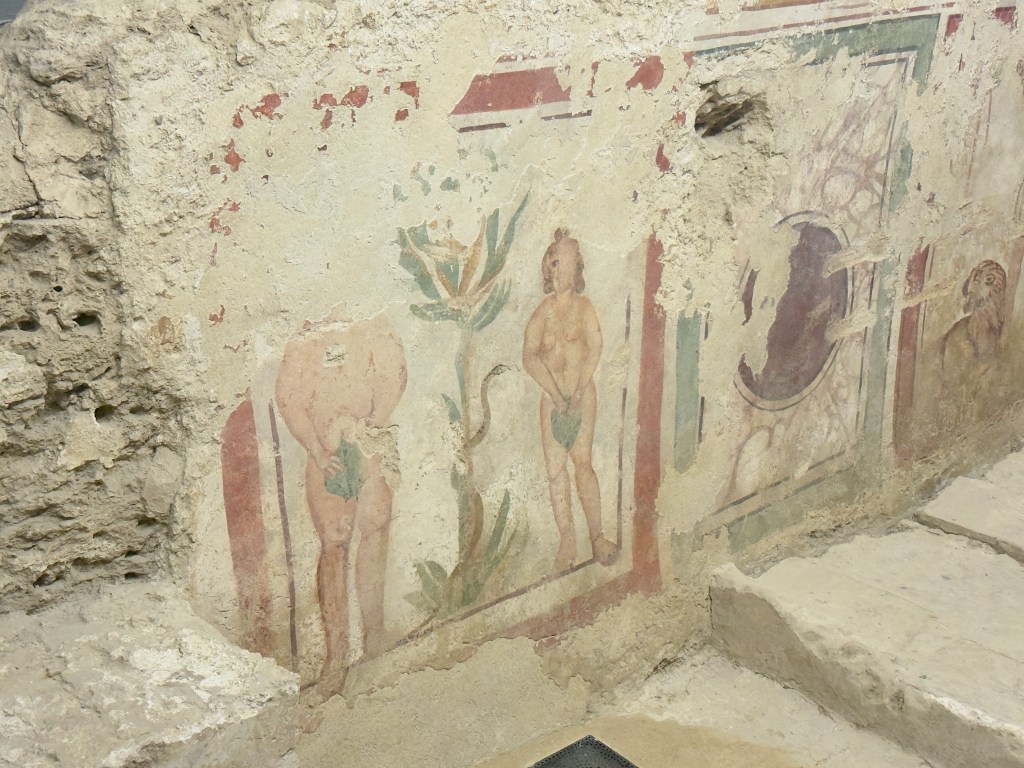
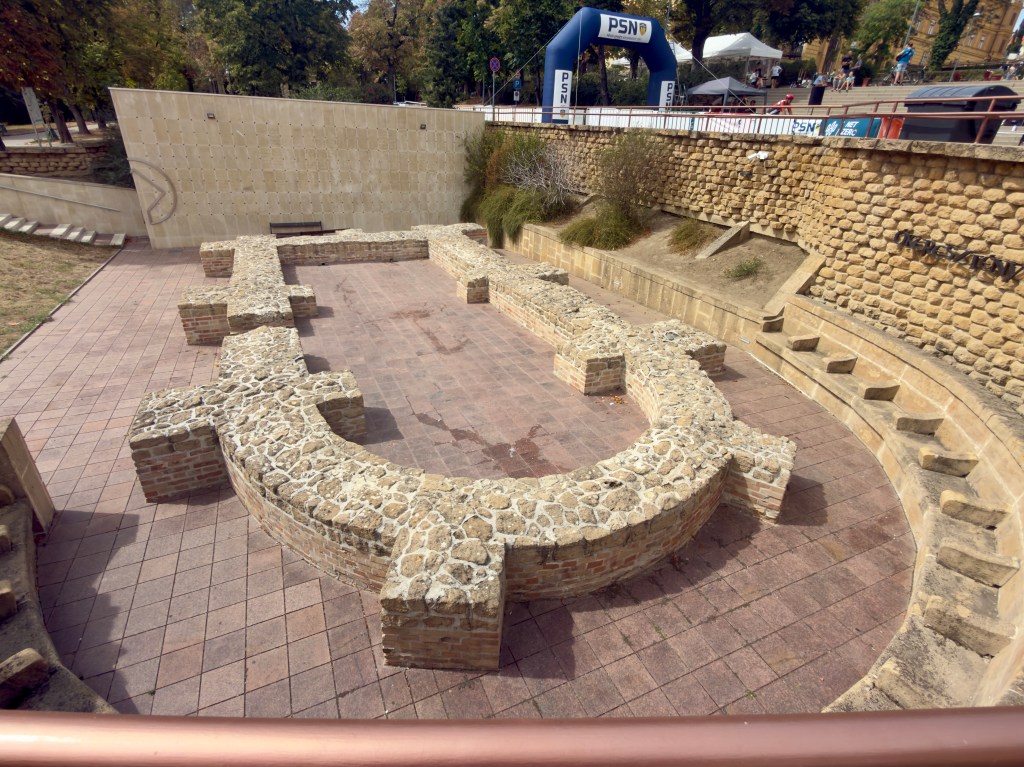
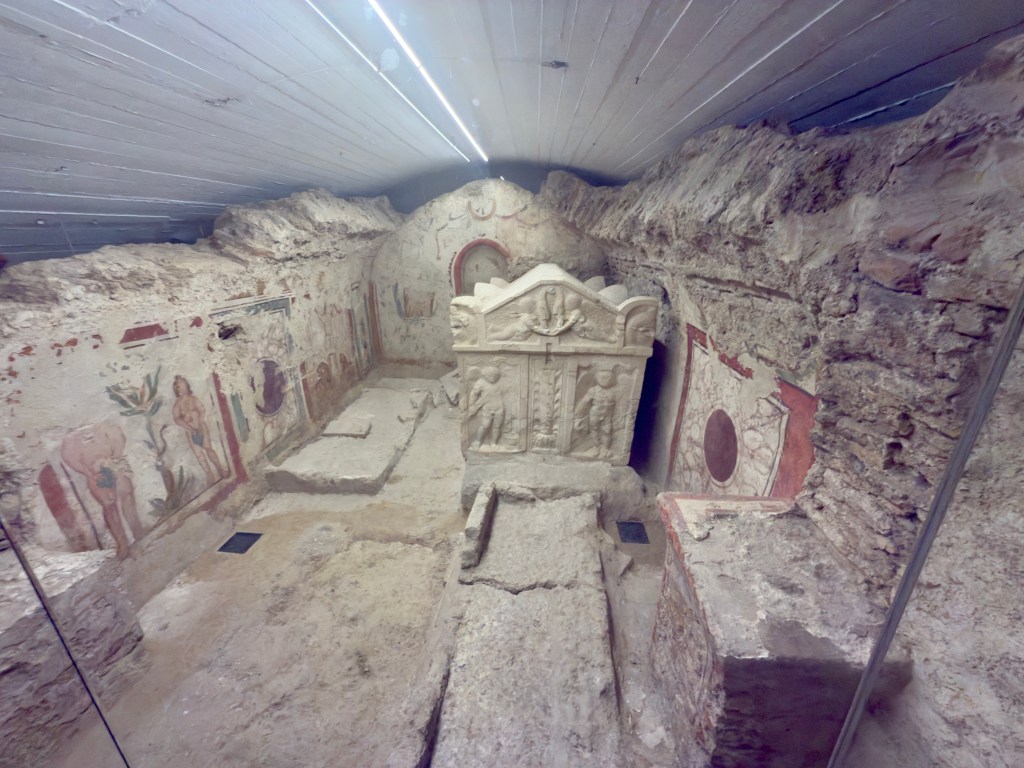
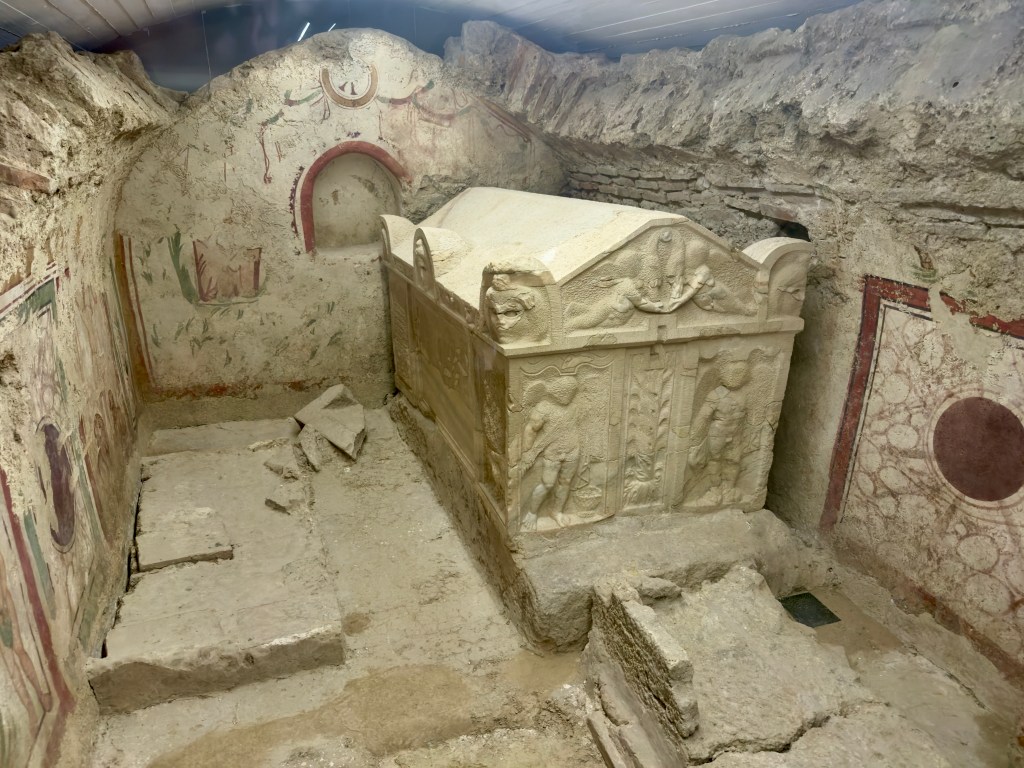
We also visited the roman ruins of the early Christian Necropolis. this is a Roman cemetery and archeological site dating back to the 4th century AD and contains many decorated tombs, mausoleums and burial chambers from the early Chrisitan period. This is a UNESCO world Heritage Site and one of the most significant Roman cemeteries outside of Italy. There are over 500 graves and 20 excavated monuments dating back 1600 plus years and the details are still defined and beautiful. It truly is a remarkable site to see.
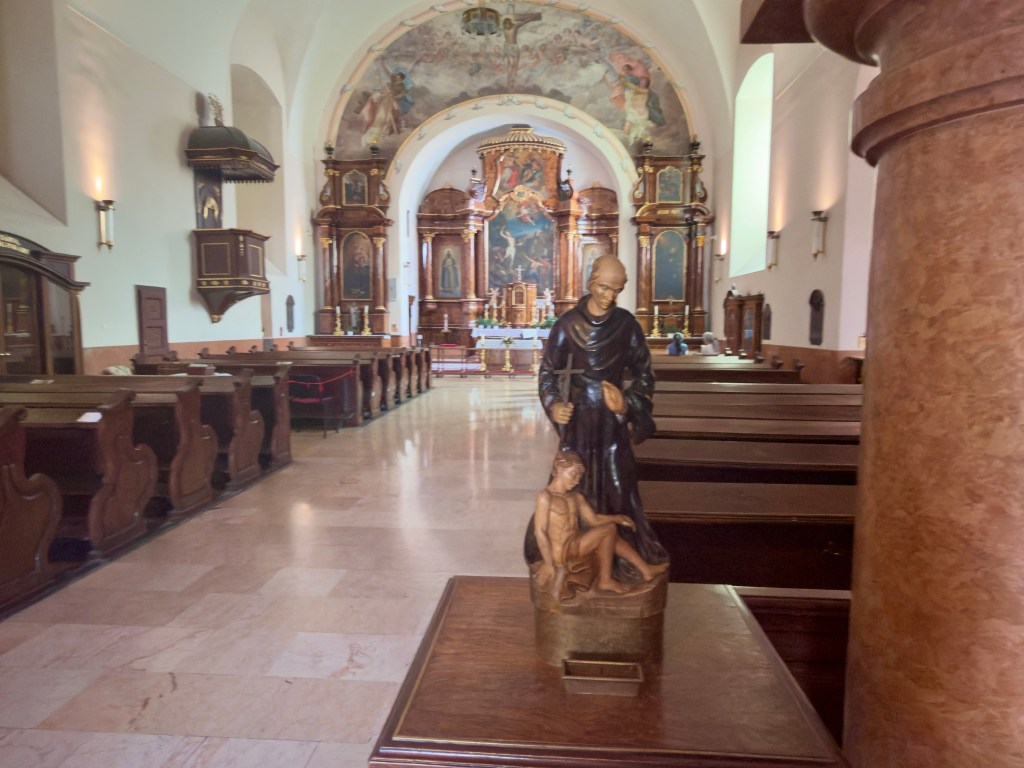
Another church we visited was the Saint Sebastian church. Constructed between 1700 and 1727 by the Capuchin order, this church is distinguished by it’s majestic architecture, exceptional wooden altars, stained glass and ornate tombstones. The most important feature of this church is the Italian Baroque main altar painting, depicting the martyrdom of St. Sebastian. This church is free to enter and a must see.
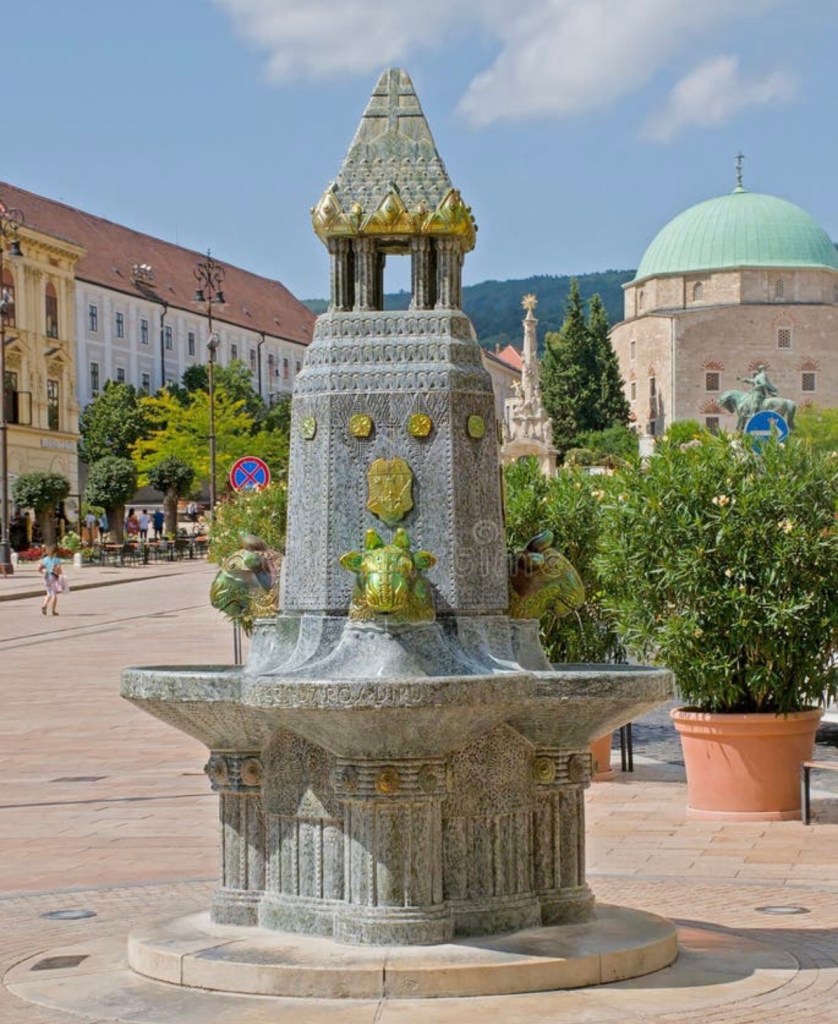
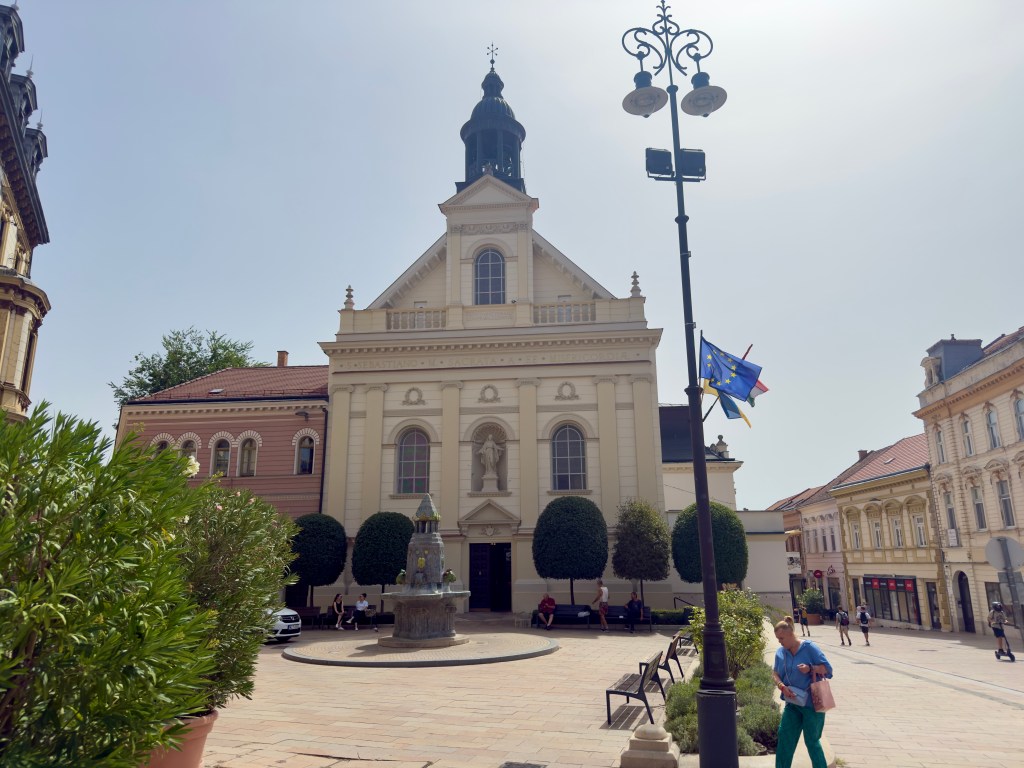
Just outside of St. Sebastian church is Zsolnay fountain. This is a beautiful example of art nouveau design commissioned in 1912 by Miklos Zsolnay. The fountain honors his father Vilmos Zsolnay a key figure in Hungarian ceramics. The fountain features eosin-glazed ceramics, a unique technique that was developed by the Zsolnay factory known for its iridescent finish.
This was a wonderful stop for us, we enjoyed every minute of our time in Pecs, we loved the slower pace, and the beauty abounds in this exceptional place. We hope to return someday as it has been one of our favorite stops on our journey so far.
Budapest
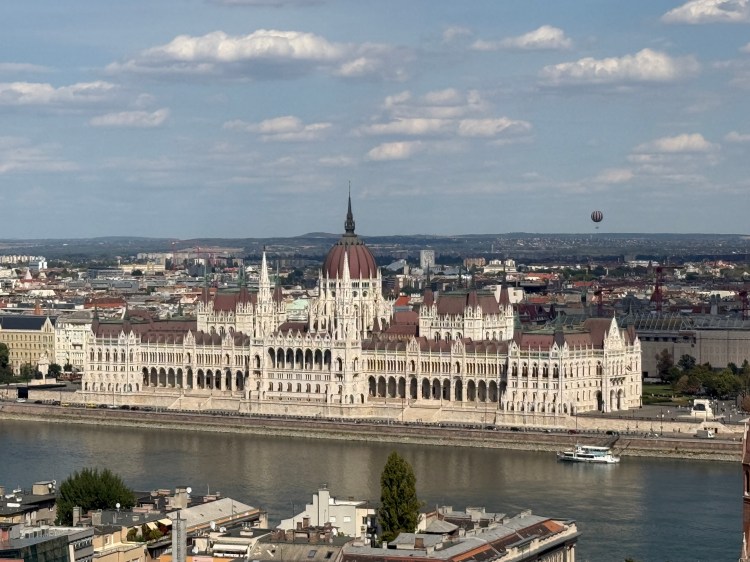
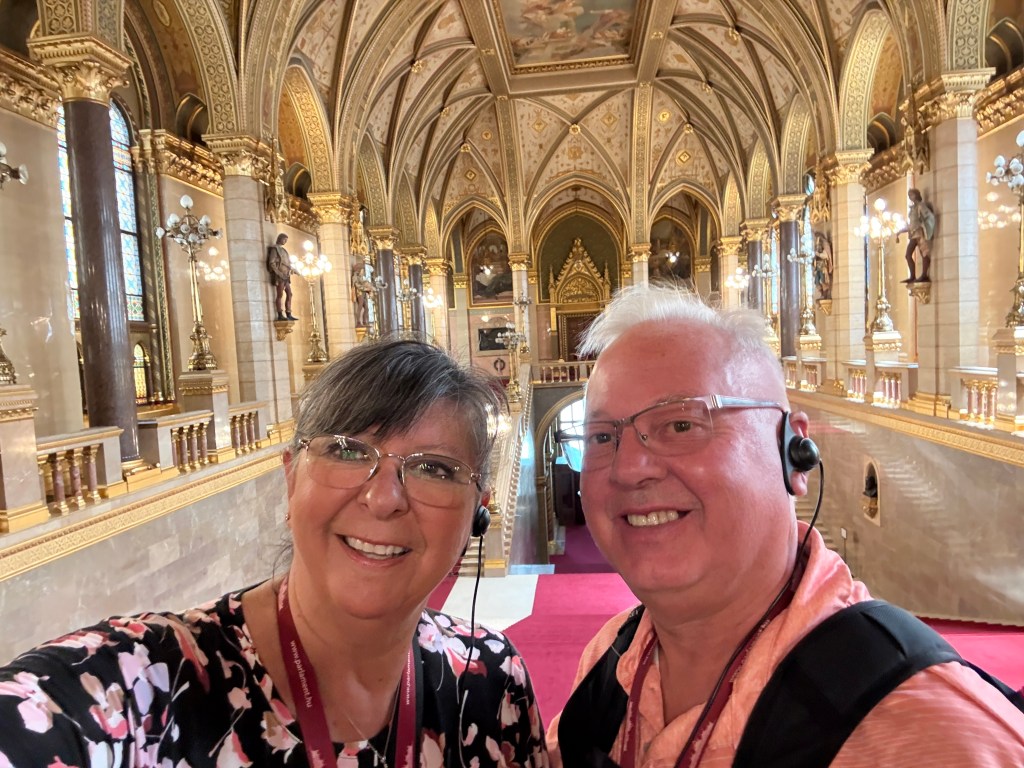
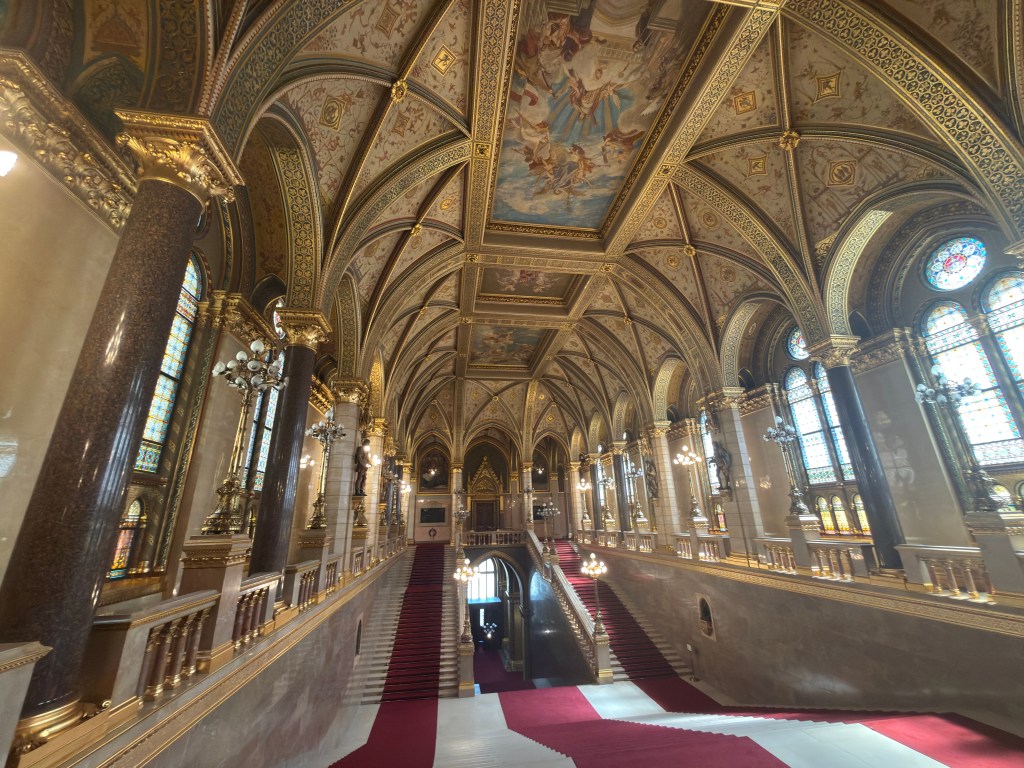
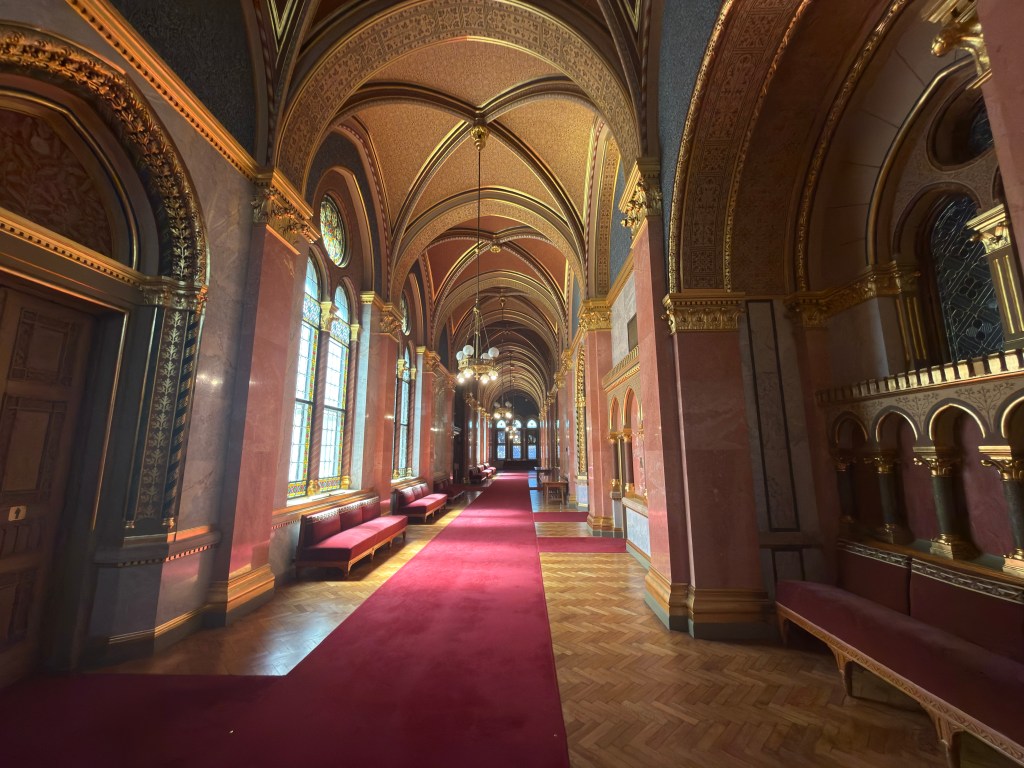
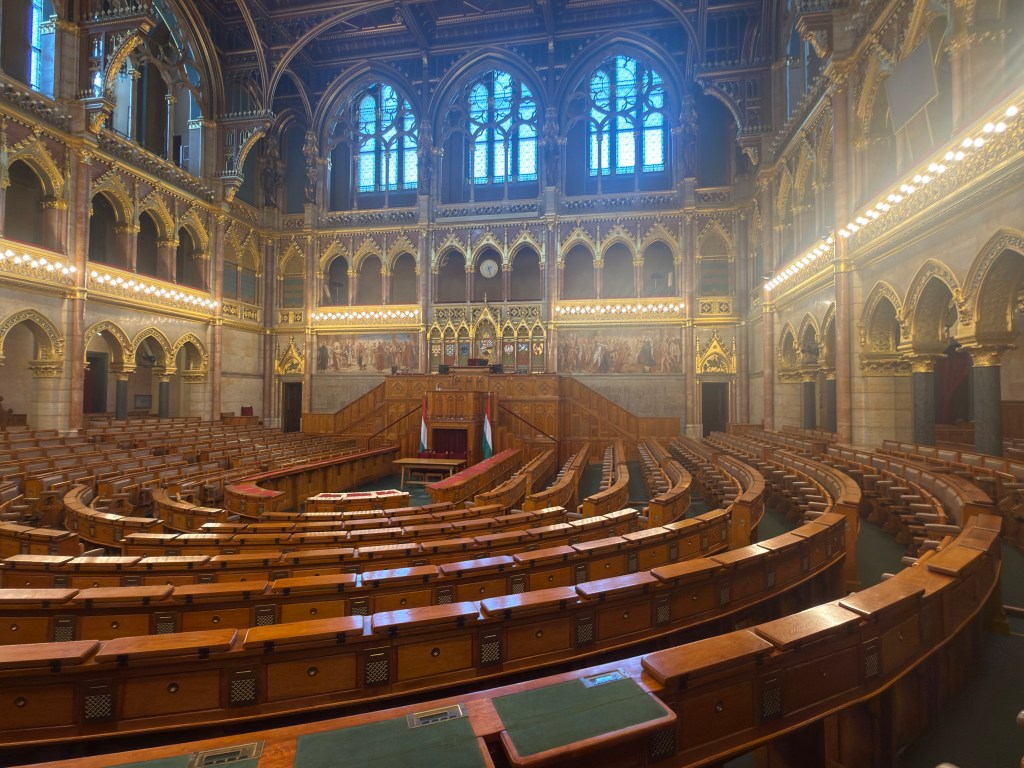
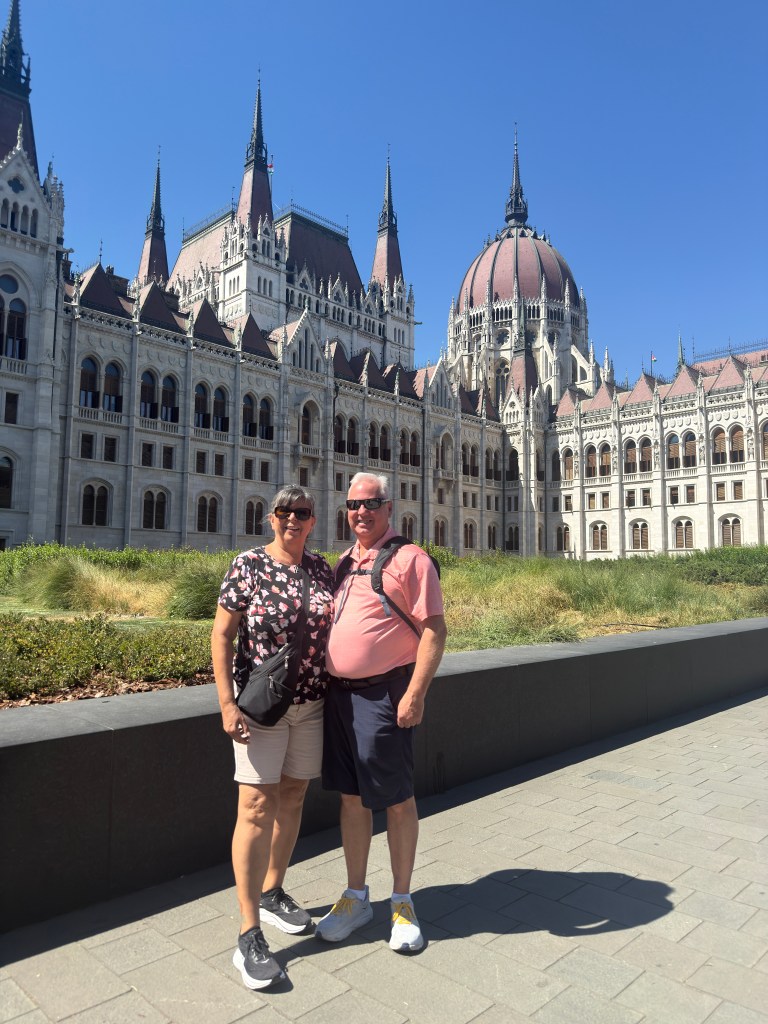
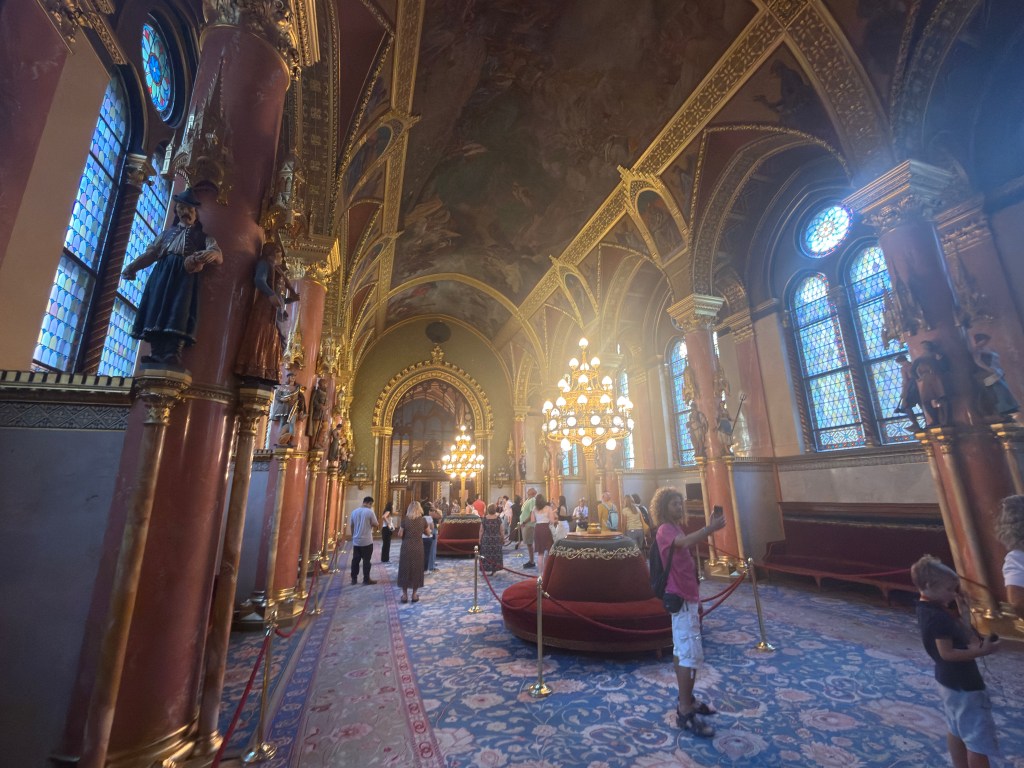
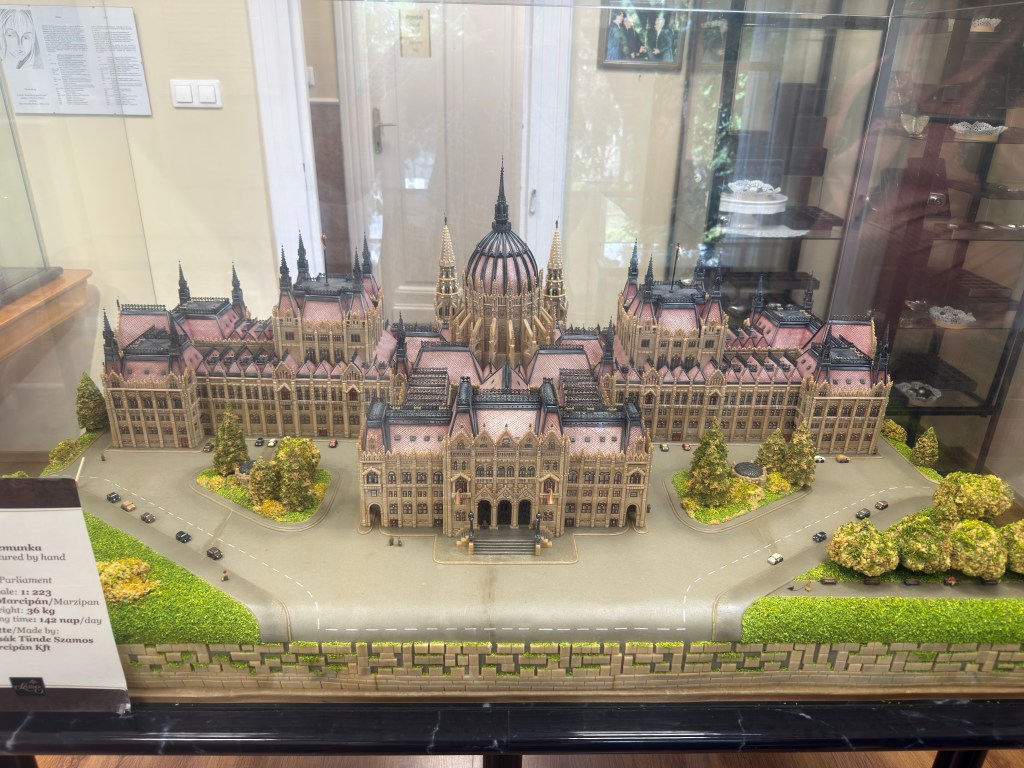
One of the first things we noticed after arriving in Budapest was the stunning architecture. There are courtyards, fountains, statues, and historic buildings that make this one of the most beautiful cities I think we’ve seen. Besides walking, another great way to see the sites is the in the city is to hop on the tram line number two. National Geographic rates this Tram is one of the ten most beautiful trams in the world. We first visited the Parliament building where we had gotten tickets for the [music] tour. We advise purchasing these tickets ahead as they can sell out far in advance. The Hungarian Parliament Building, also known as the House of the Country, located on the bank of the Danube River, is an iconic building of Budapest World Heritage [music] and is the home of legislature and also the guardian of the Hungarian Holy Crown. This is a UNESCO World Heritage site [music] built between 1885 and 1902. It’s a neo gothic style but also has a blend of Renaissance and Baroque features. This is an audio tour and takes about 45 minutes. This is one of the largest buildings in Hungary with almost 194,000 square ft, stone sculptures representing great figures of Hungarian history, and just under 2 miles of red carpeting running. With over 43 kg of 23 karat gold used throughout, it’s a spectacular structure and a must-see in our opinion in Budapest.
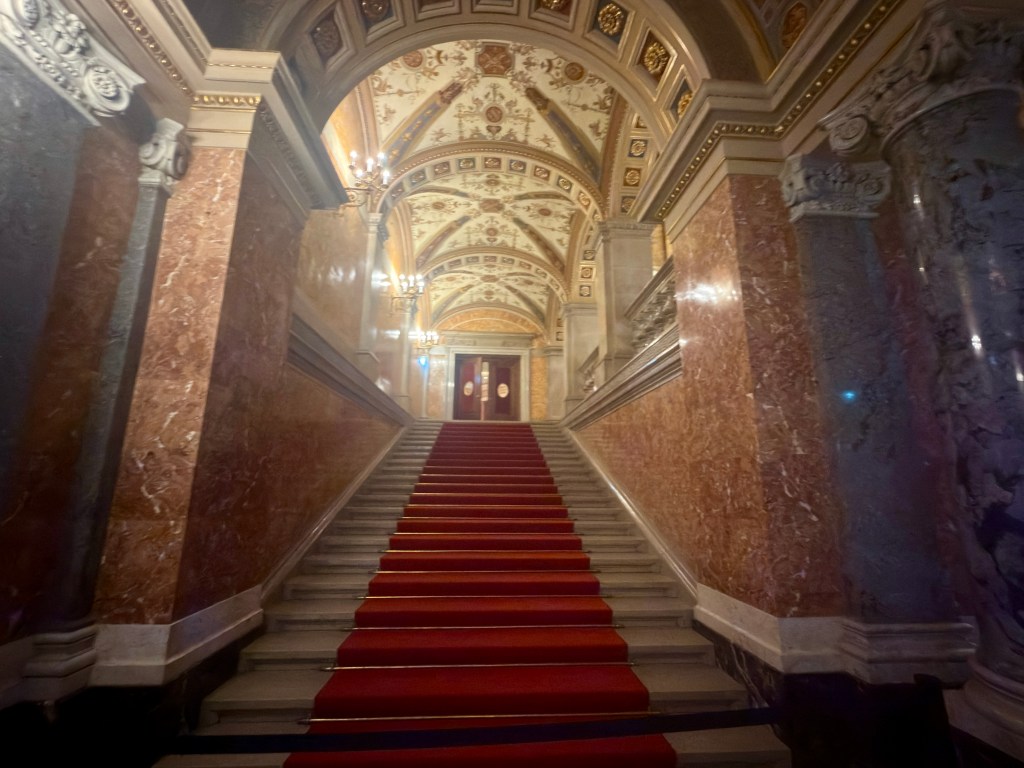
The Hungarian State Opera House opened in 1884 and is a prominent local landmark. Adorned in gold leaf balconies, frescoed ceilings, and stunning crystal chandeliers, this opera house is visually stunning and known for its exceptional acoustics. It hosts a variety of performances including opera, ballet, and classical music. And tours are offered, but unfortunately, we weren’t able to take one.
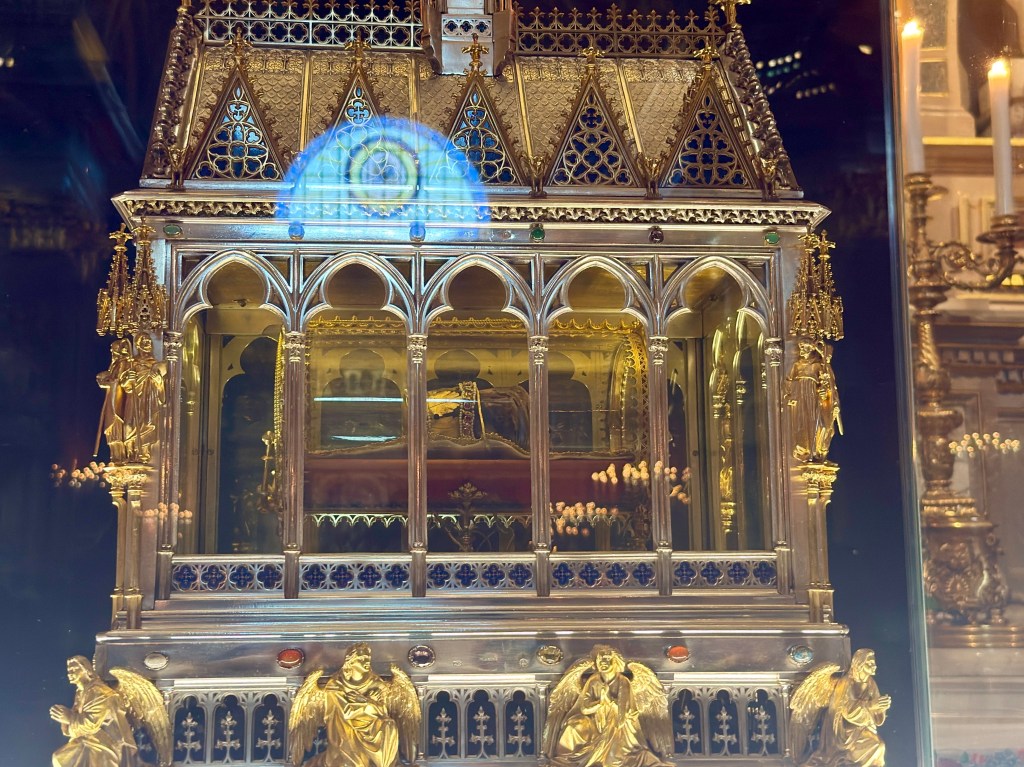
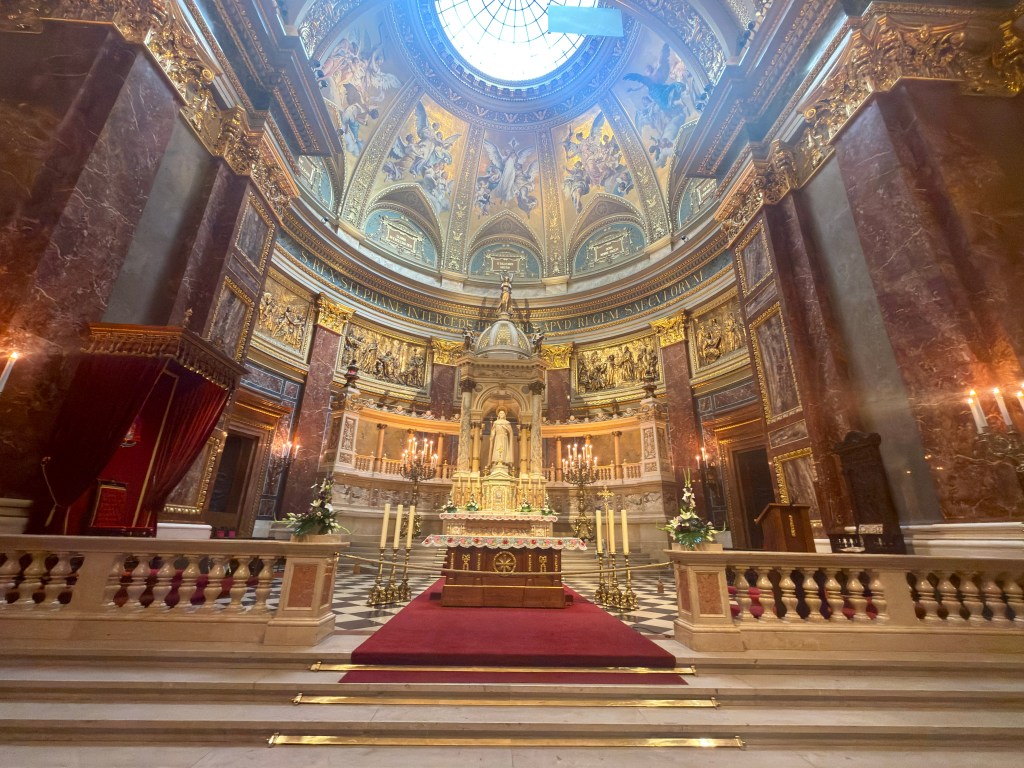
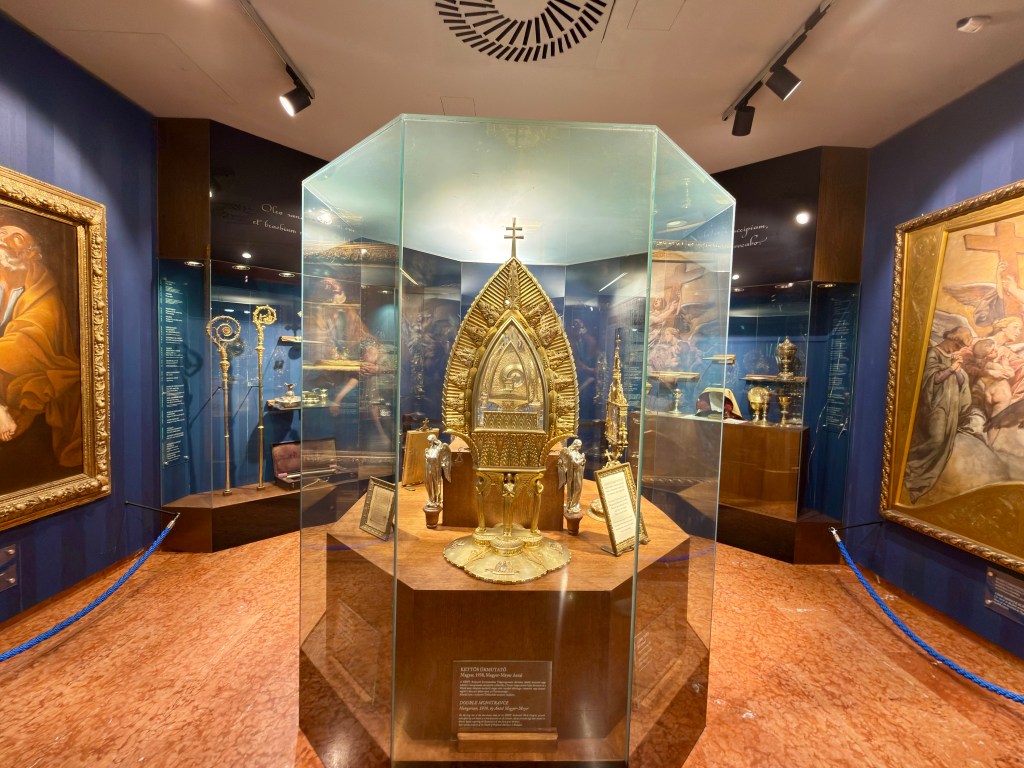
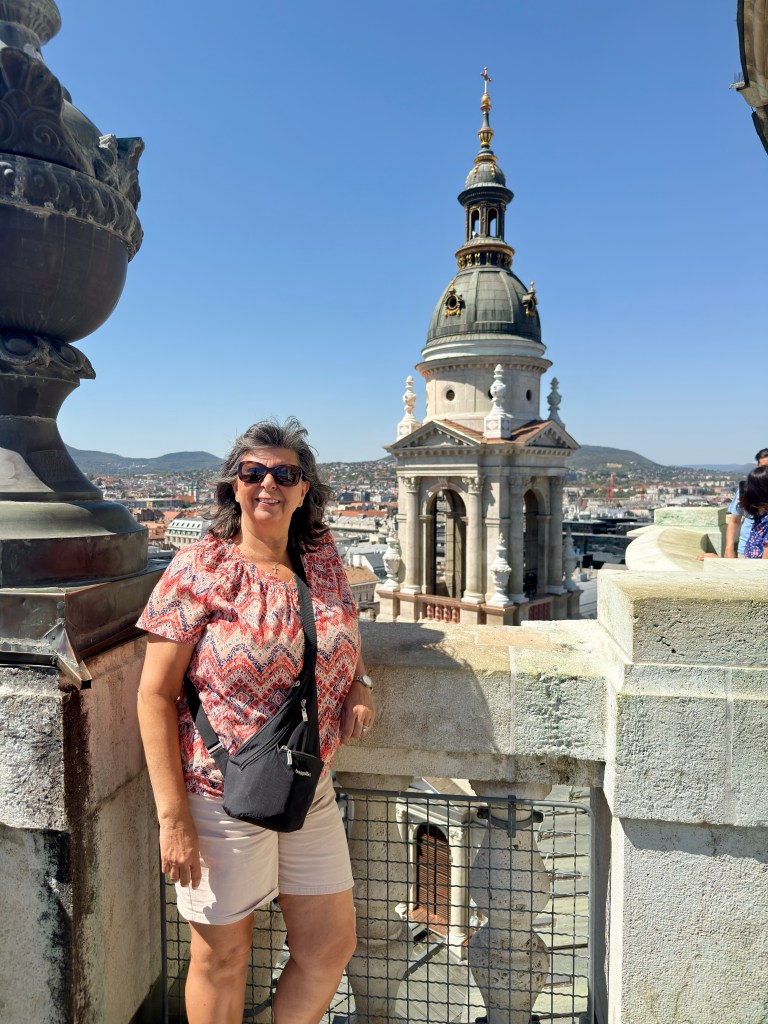
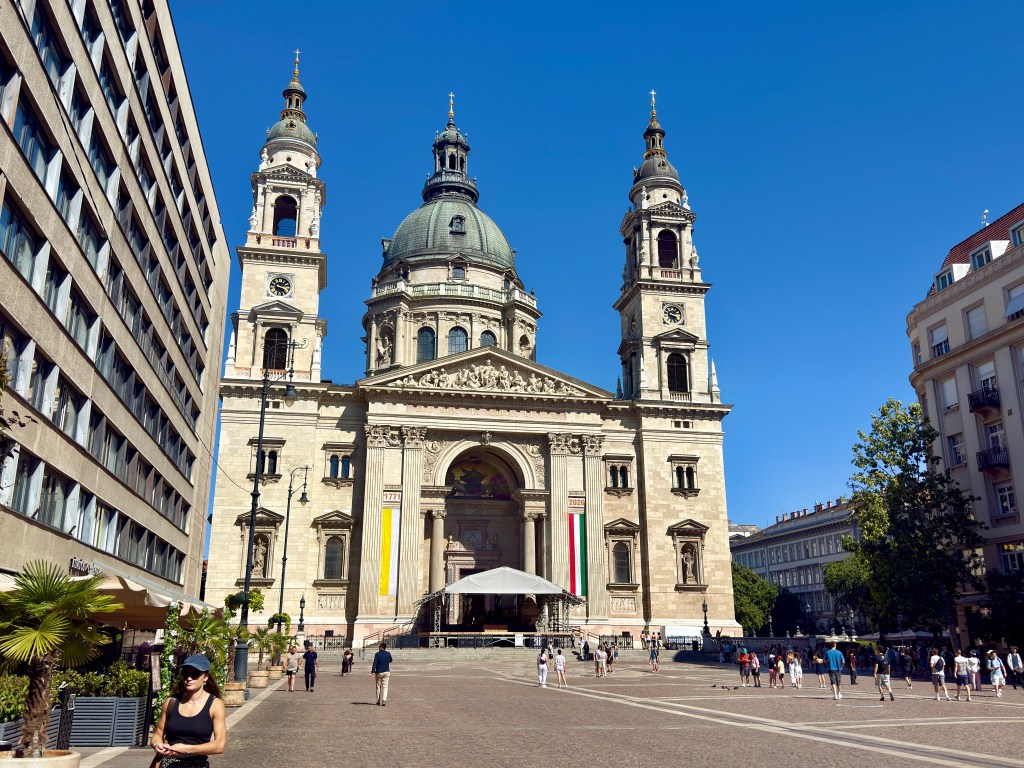
St. Steven’s Basilica named in honor of Steven the first king of Hungary whose right hand is mummified and housed in a reliquary. Built in 1851 and 1905 it’s the third largest church in Hungary and co-cathedral of the Roman Catholic arch diocese of Esztergom Budapest. And walking inside the church will leave you in awe. With its red marbles, mosaics, statues, frescos, and gold completed by numerous artists is truly a feast for the eyes. The large dome in the center can be accessed by climbing the 364 steps, or you can take an elevator for panoramic views. And the views are spectacular. This cathedral, in our opinion, is a must see.
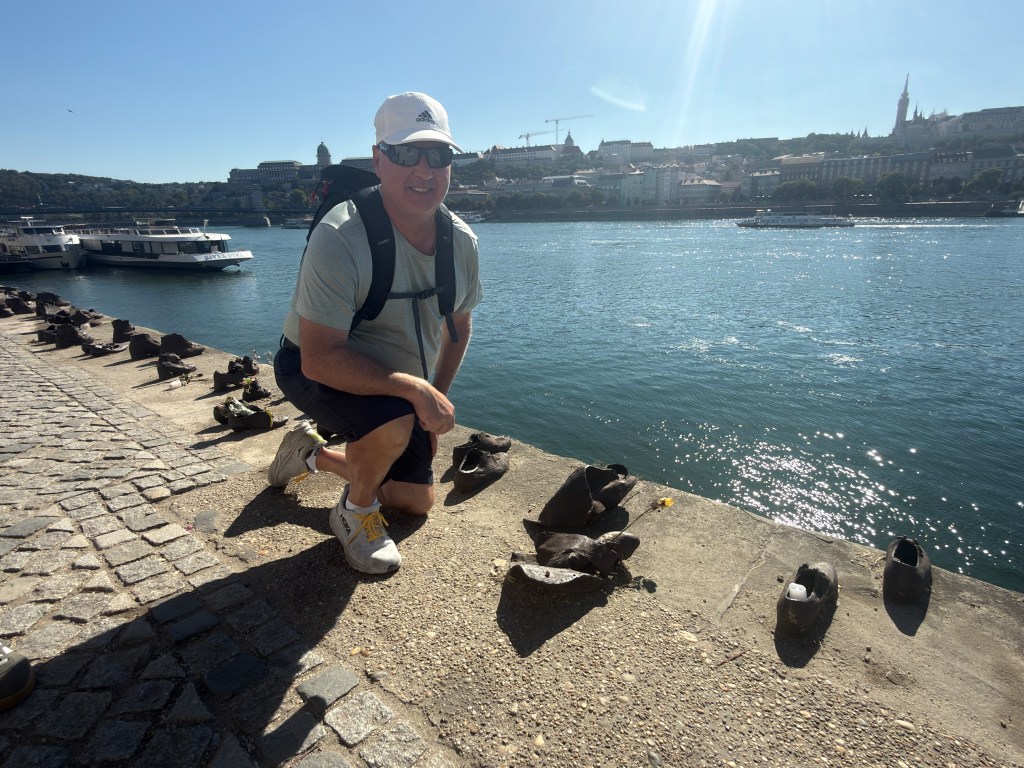
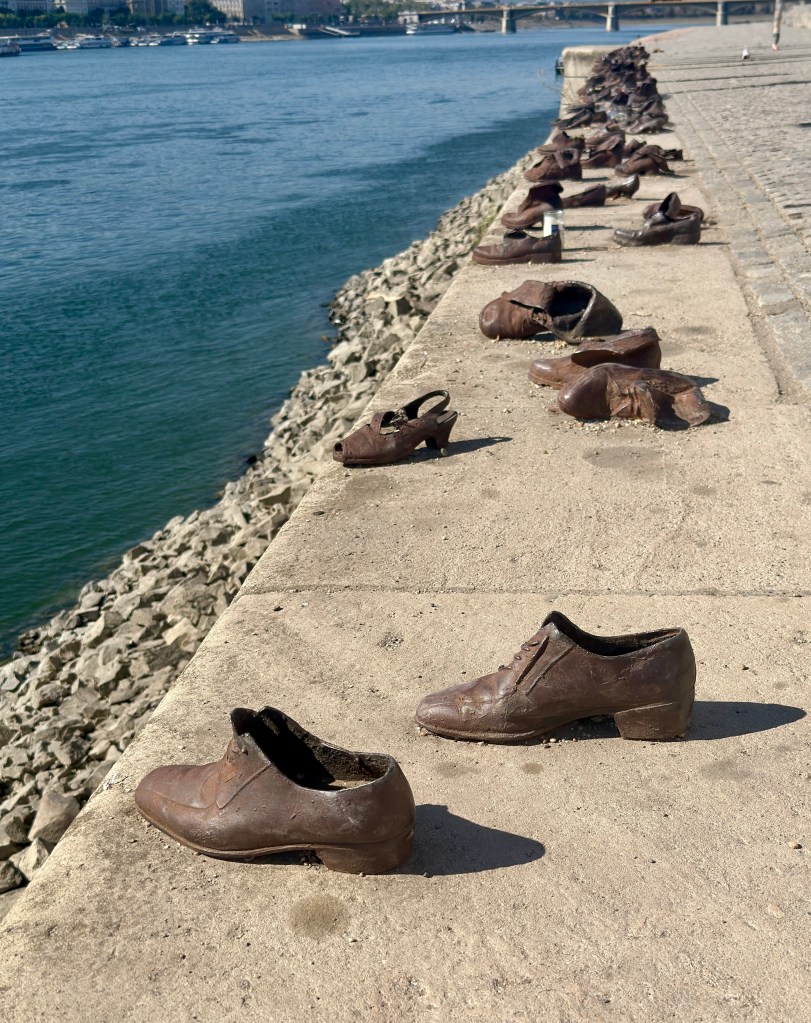
Shoes on the Danube Bank is a memorial on the Pesh side of the Danube River, erected in 2005. There are 60 pairs of cast iron shoes commemorating the thousands of Jews who were forced to remove their shoes before being shot at the edge of the water so that their bodies would fall into the river and be carried away. This is a heartbreaking and horrific part of the history here. And these shoes are a reminder to never forget the horrors of what happened.
The Hungarian State Opera House opened in 1884, and is a prominent local landmark in Hungary. Adorned in gold leaf balconies, frescoed ceilings and stunning crystal chandeliers, this opera house is visually stunning and known for its exceptional acoustics. It hosts a variety of performances including, opera, ballet and classical music. Tours are offered, however we did not do a tour.
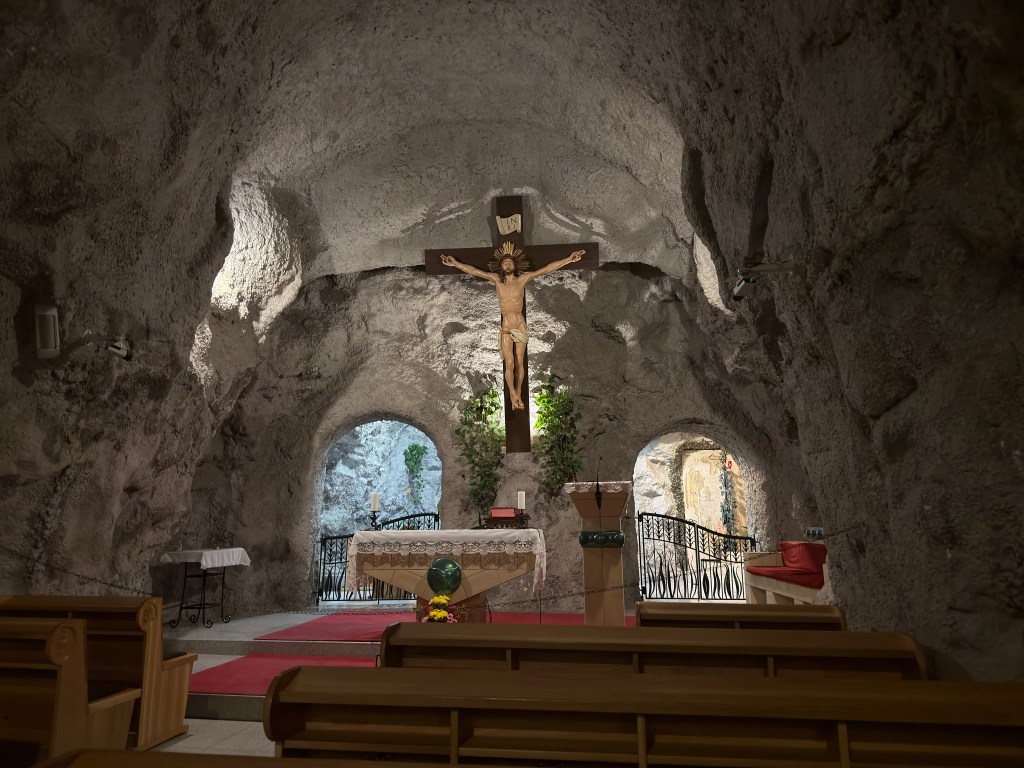
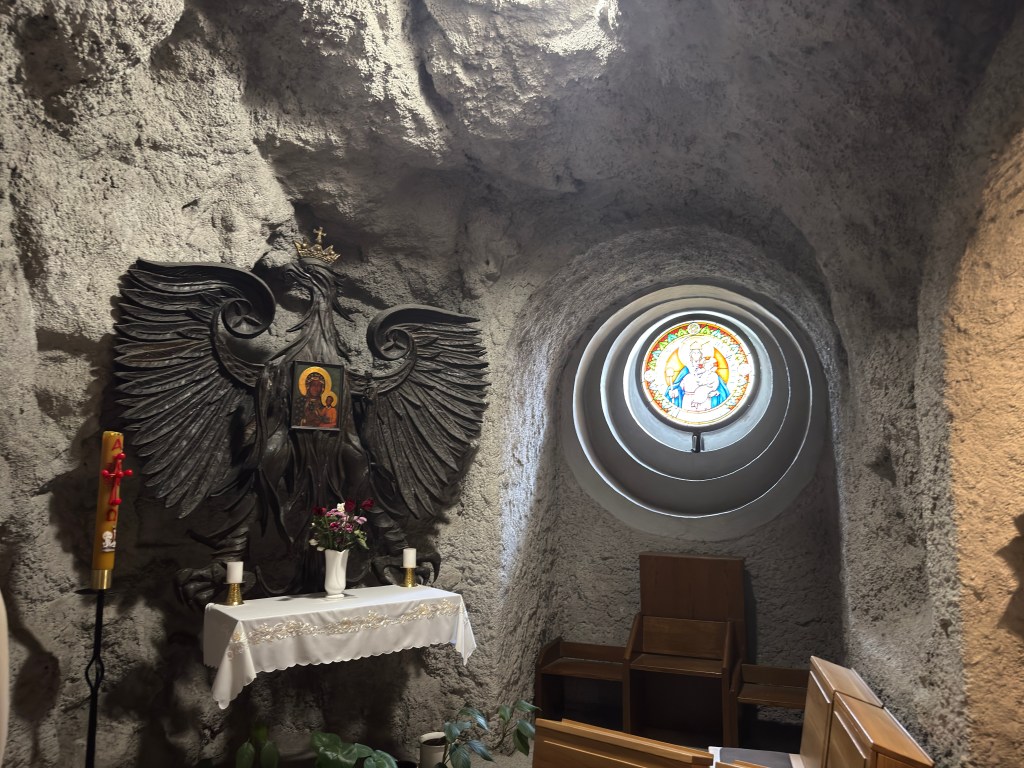
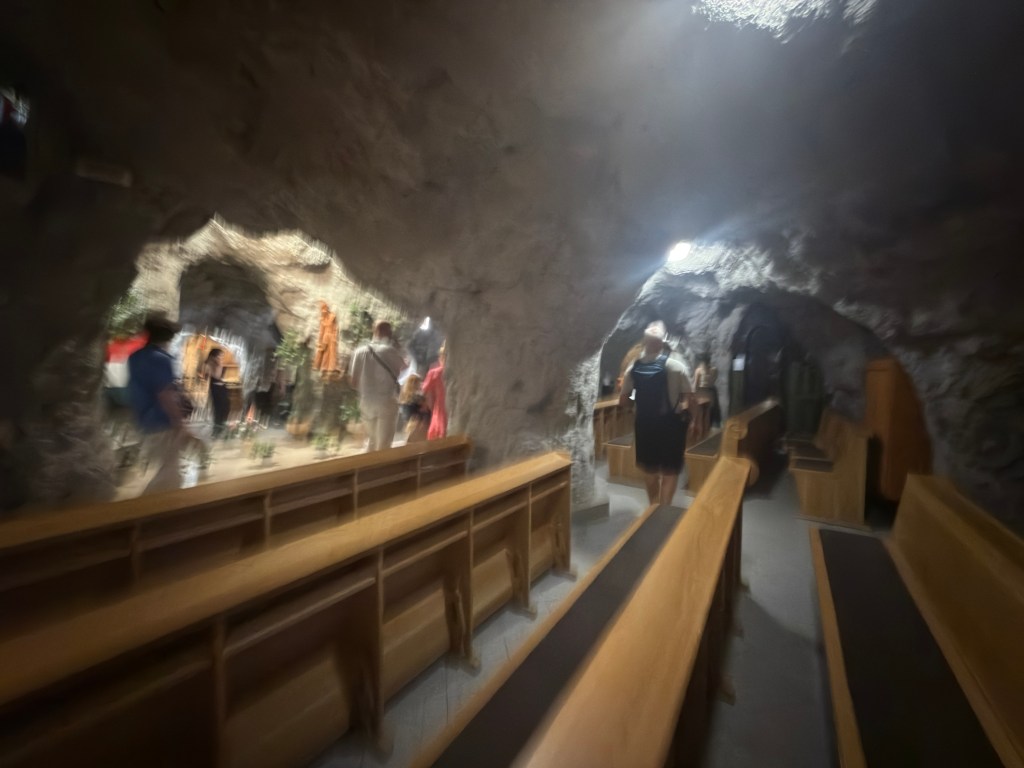
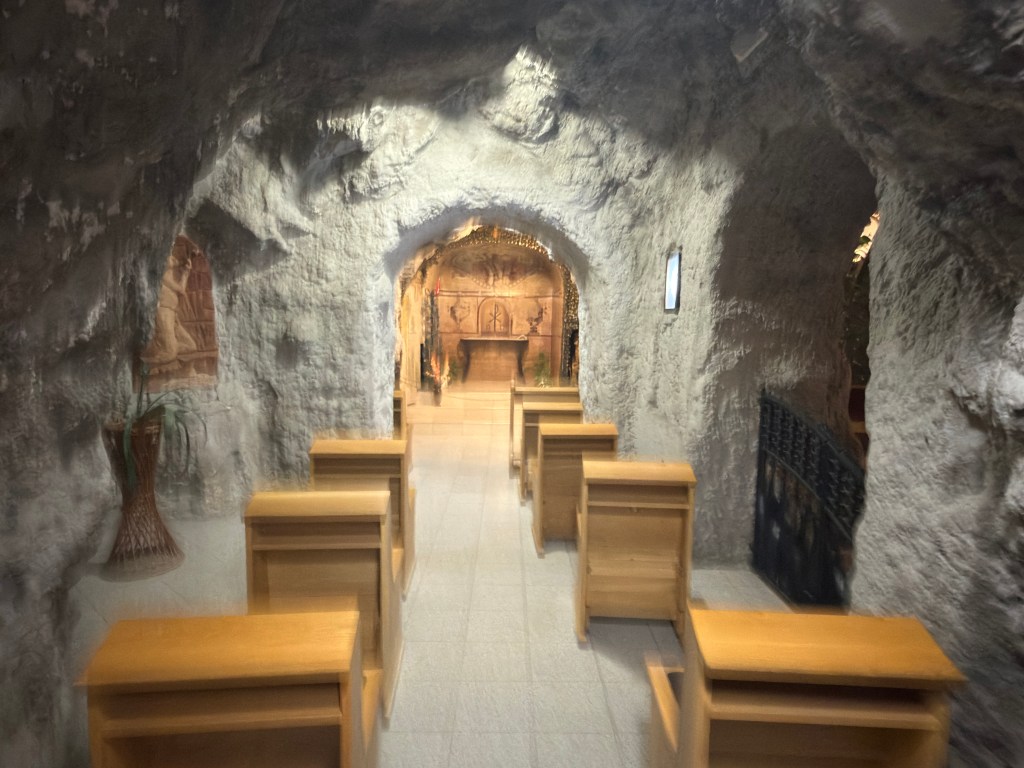
The Cave Church on the side of Gellért Hill was completed in 1931. Half natural formation and half man made, this church is one of a kind. The church occupies a natural cave system with the main chapel in the center and several smaller chapels branching off to the sides. On Easter Sunday 1951 the Communist regime in Hungary abolished all monastic orders. The monks were forced to abandon the Cave Church, its entrance was walled off with concrete, and the cross above the entrance was torn down. The place was no longer permitted to function as a church until 1989, when finally the concrete wall blocking the entrance was demolished. A piece of the wall remains preserved on the right side of the entrance, serving as a reminder of the communist dictatorship to visitors. There is a small fee to enter and a headset is provided. Also mass is still celebrated here and tourism is not allowed during services.
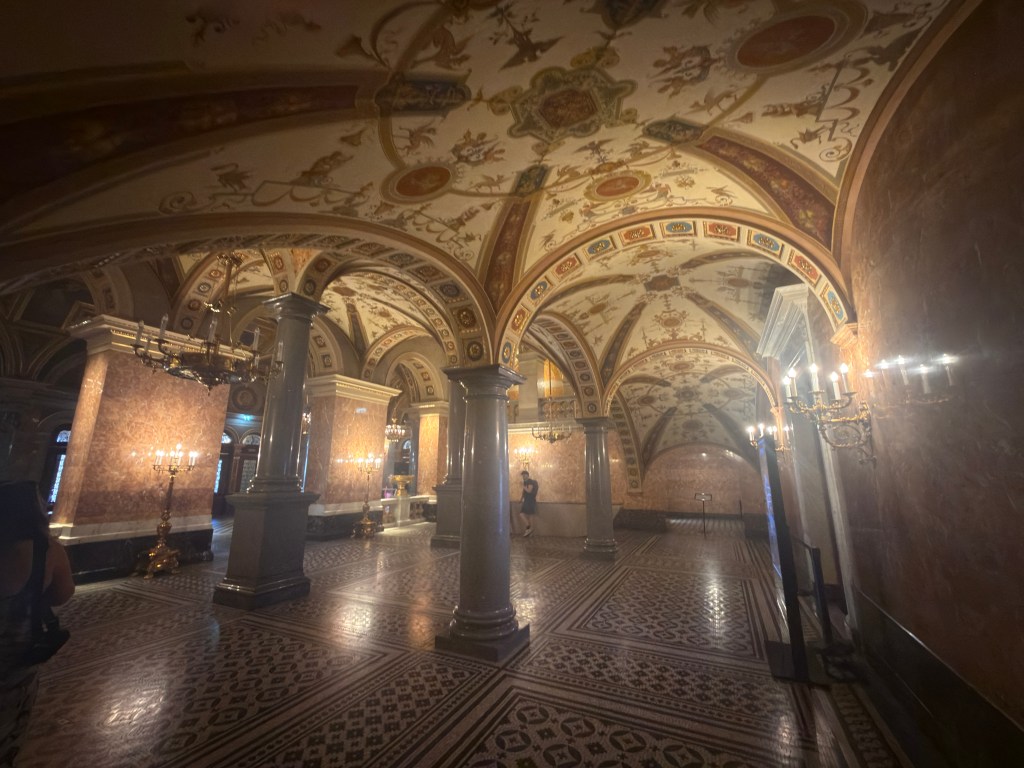
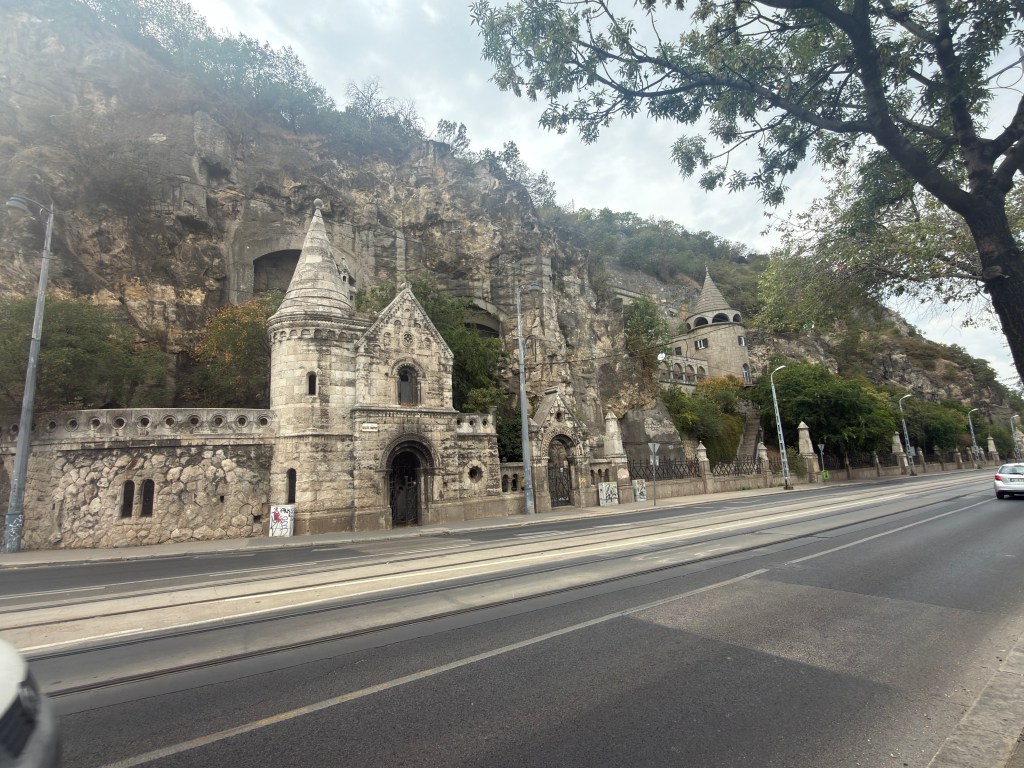
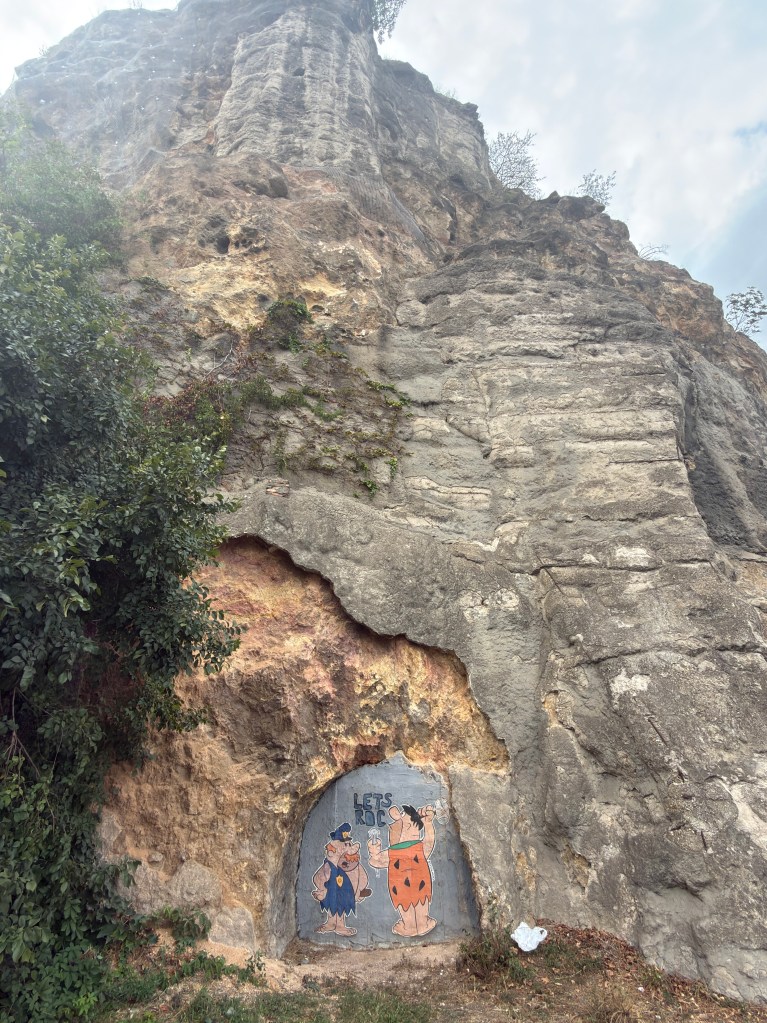
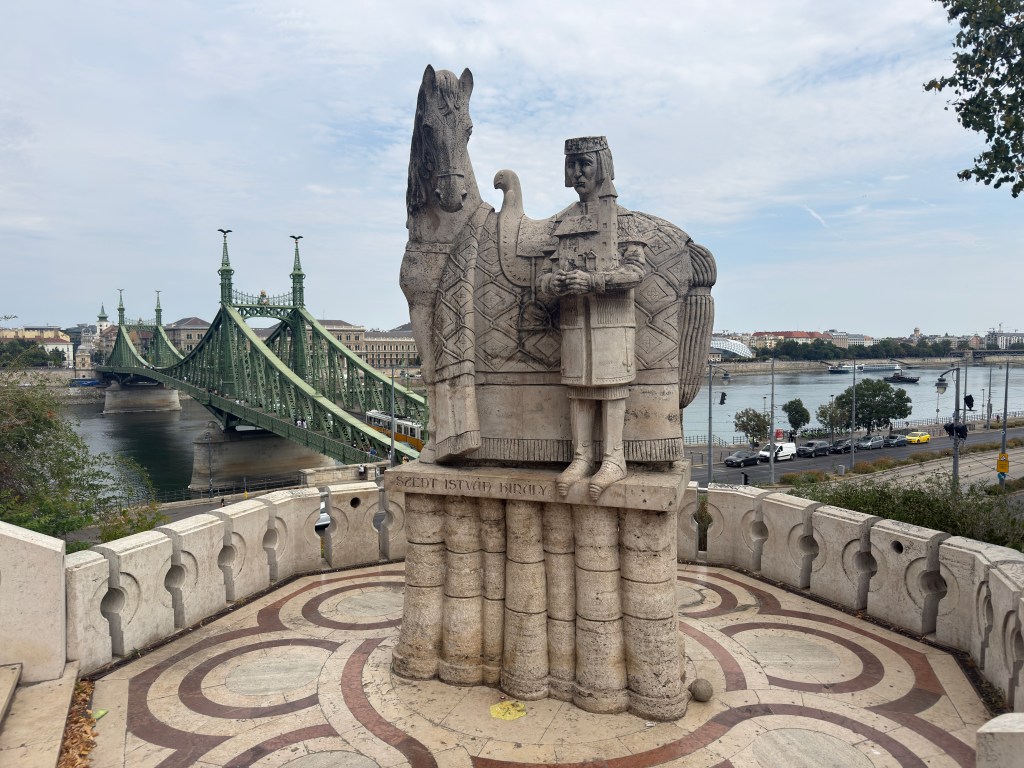
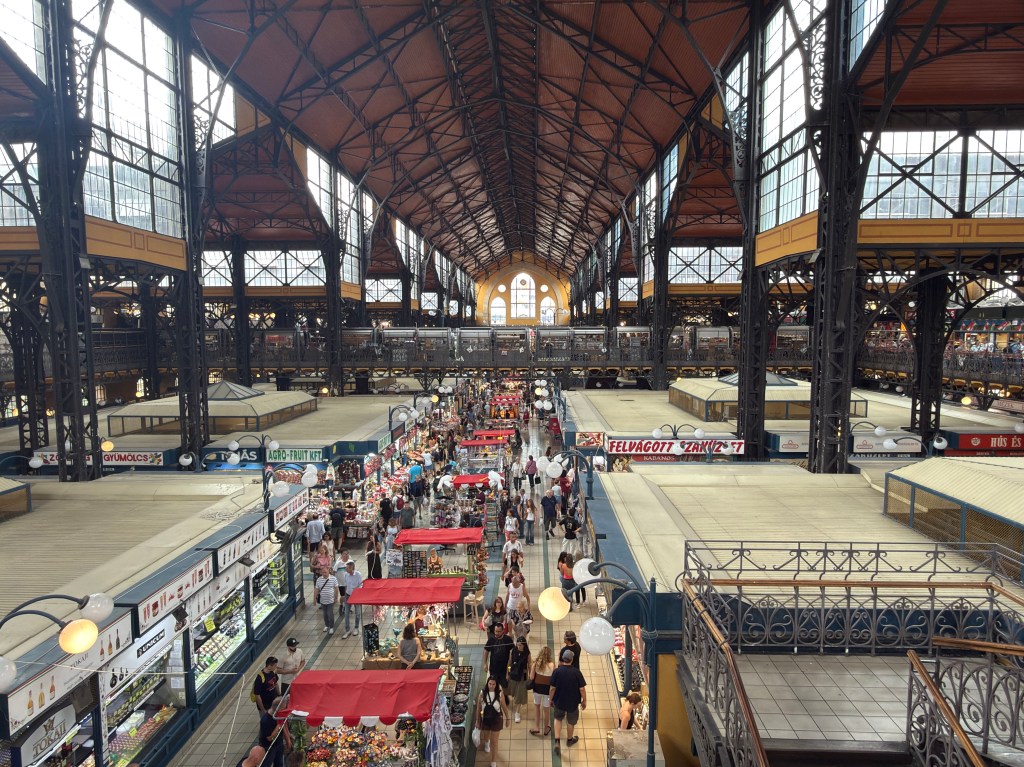
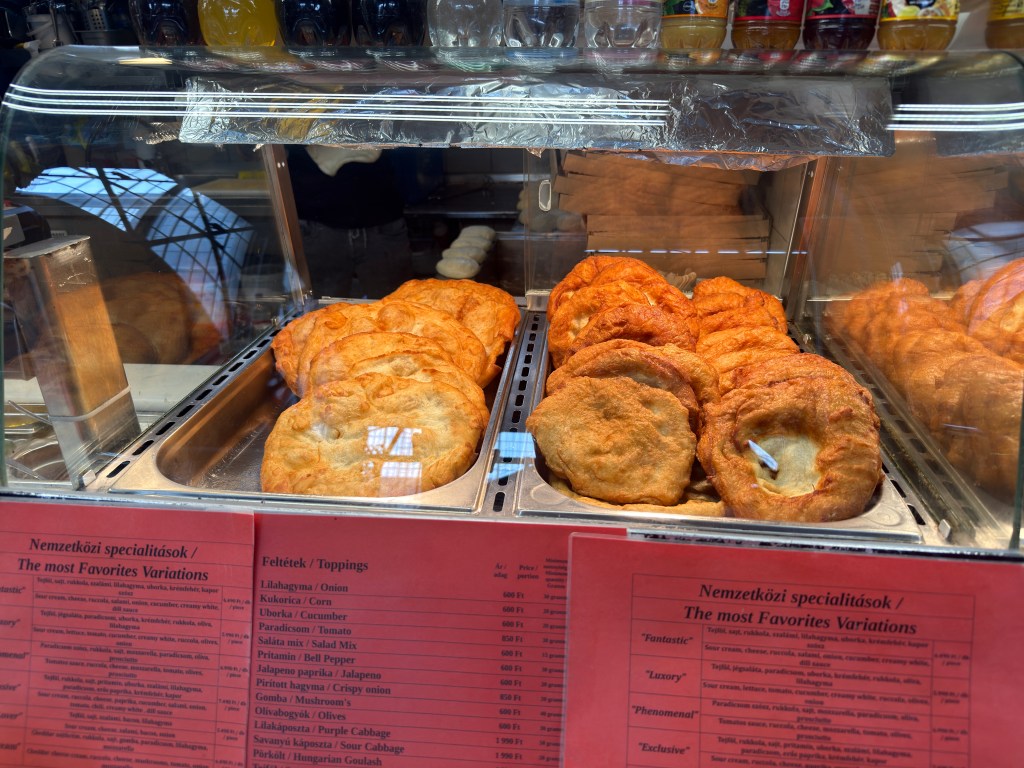
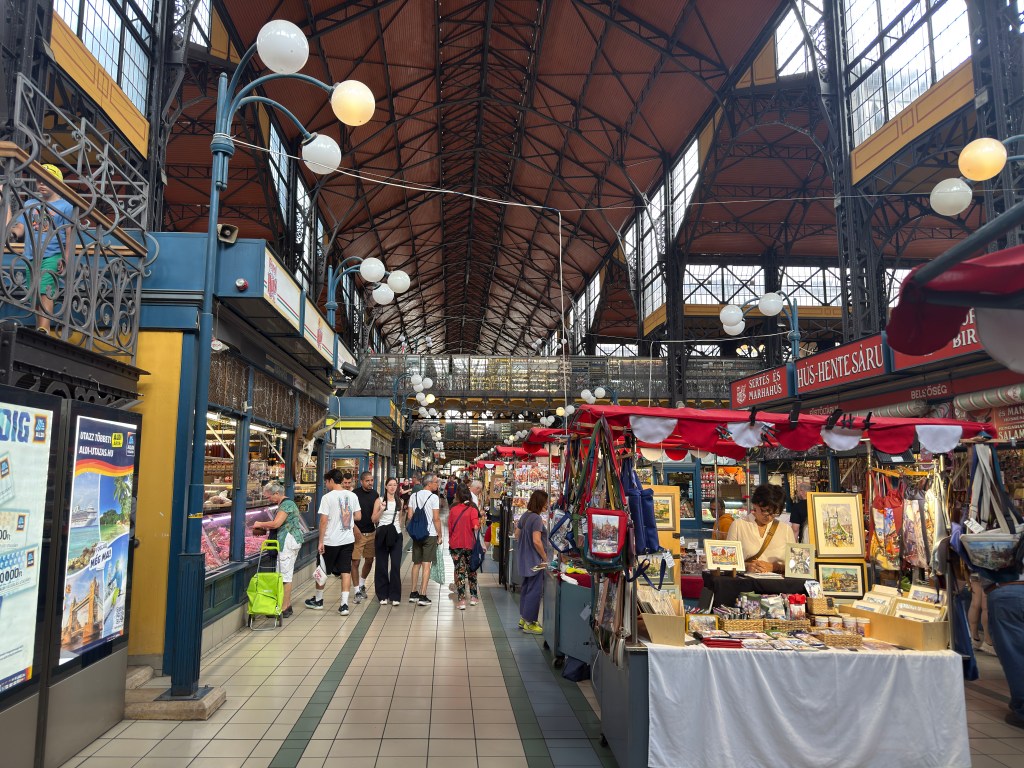
Central market Hall is the largest and oldest of the five indoor markets in Budapest. It was built in 1897 but was completely destroyed during WWII. In 1994 the market was restored and is now one of the most visited places in Budapest. Filled with produce, meats, restaurants, artisan goods and souvenirs. You can find almost anything here. The market is open every day except Sunday. Our favorite thing we found at the market was Langos, this is remarkably similar to our Native American Fry Bread. It is absolutely delicious and a popular treat in Budapest.
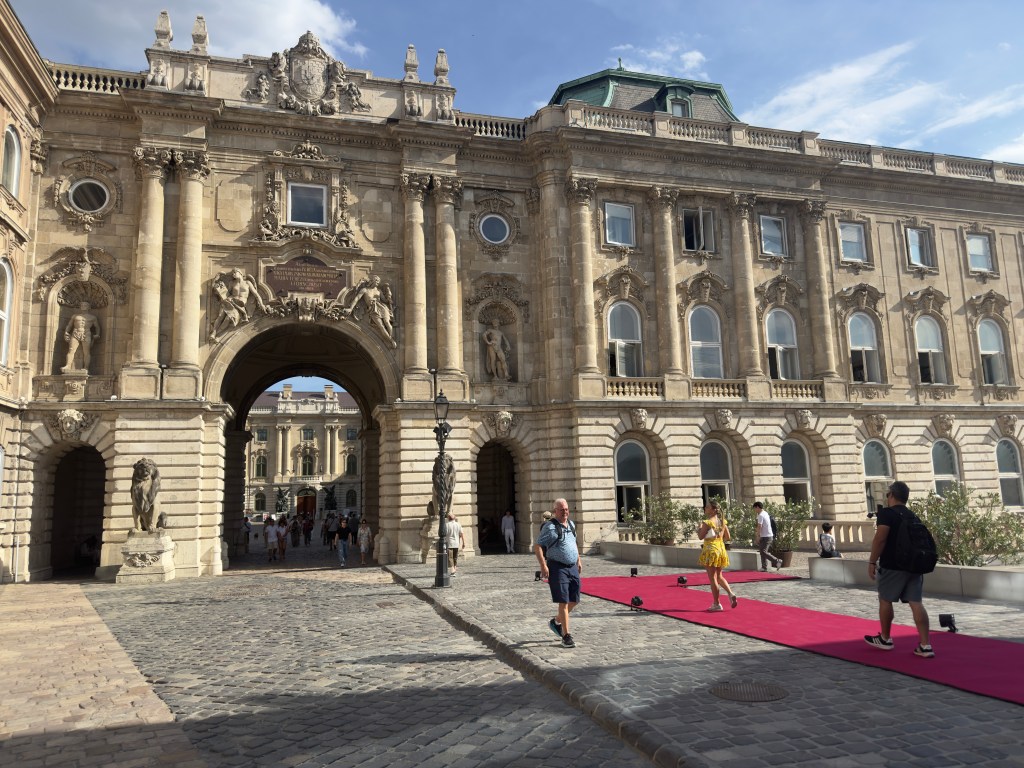
Buda Castle also known as The Royal Palace was built in 1265 for the Hungarian kings and is a UNESCO World Heritage site. Most of the Baroque palace you see today was built between 1749-1769.
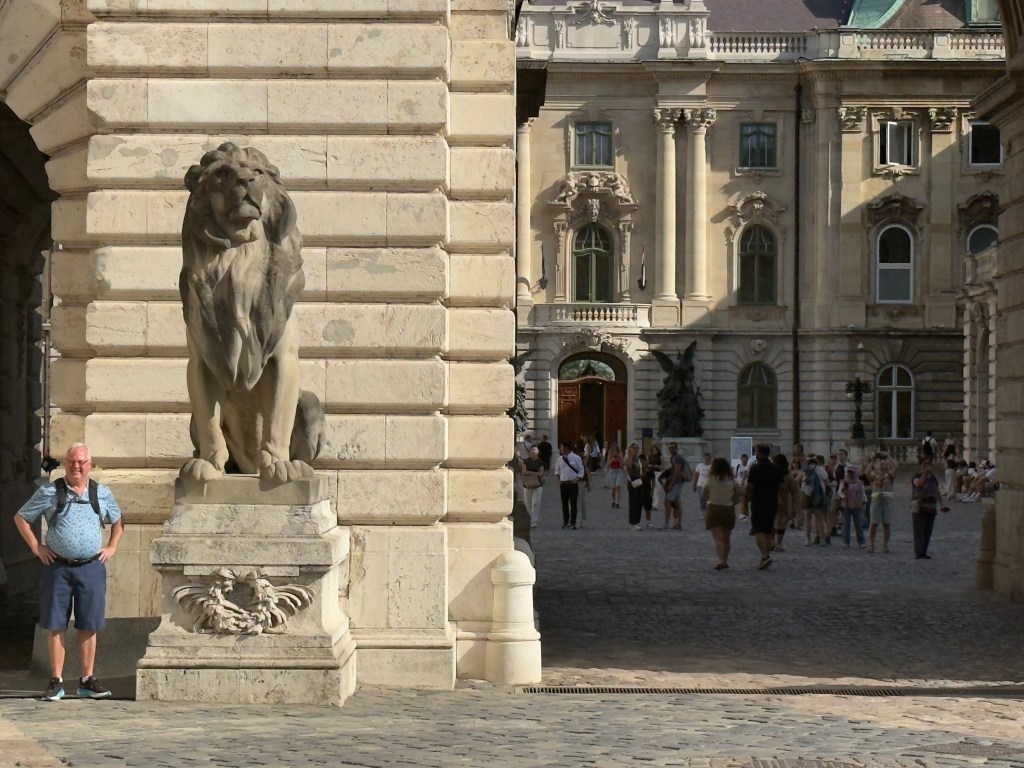
As you enter the Buda courtyard you go through the lions gate. These are four lion statues considered guardians of the palace, there are two upon entering with their mouths open and teeth showing and two upon exiting. These lion statues were not installed until 1903 and symbolize power and protection. Unfortunately when we were there they were doing some major work on the castle and the tour was very limited so we opted to not take the tour. Today the castle houses the Hungarian national gallery, Budapest History museum, National Széchényi Library, Matthias Church and Fisherman’s Bastion. One can reach the castle by foot or take a funicular.
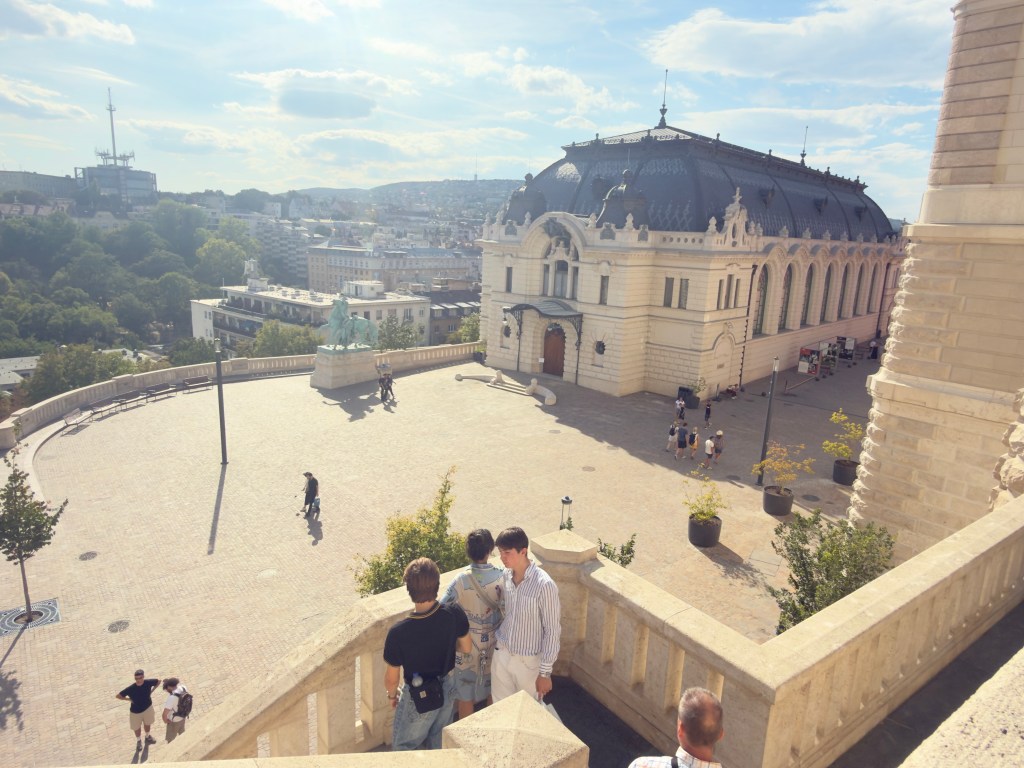
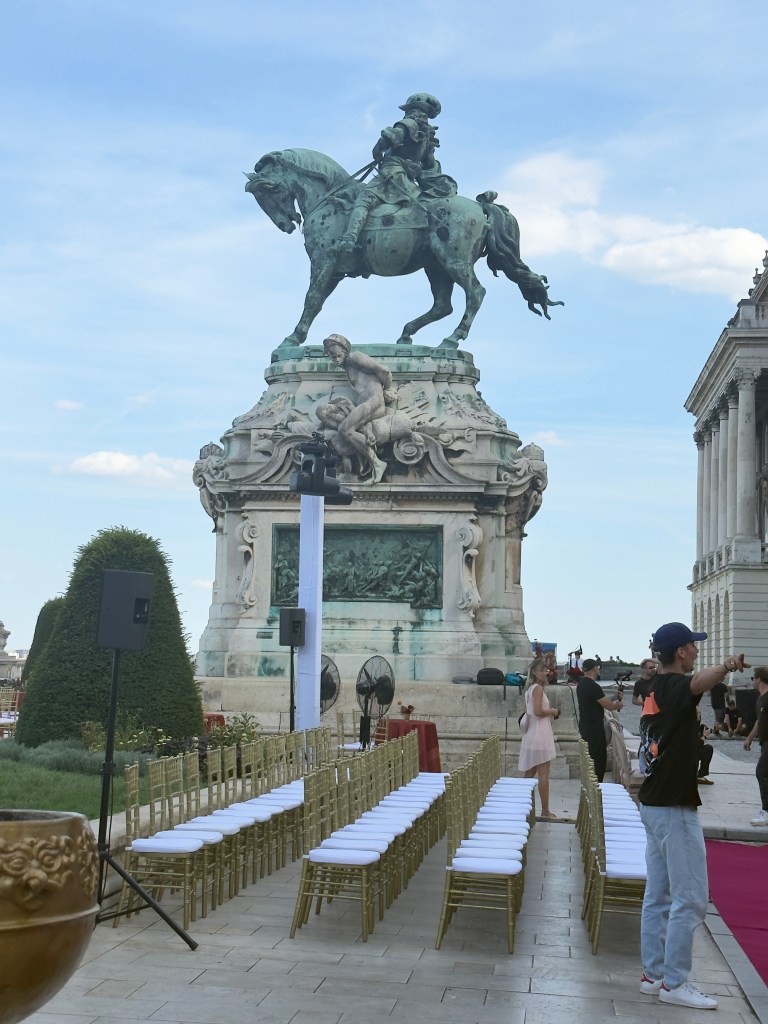
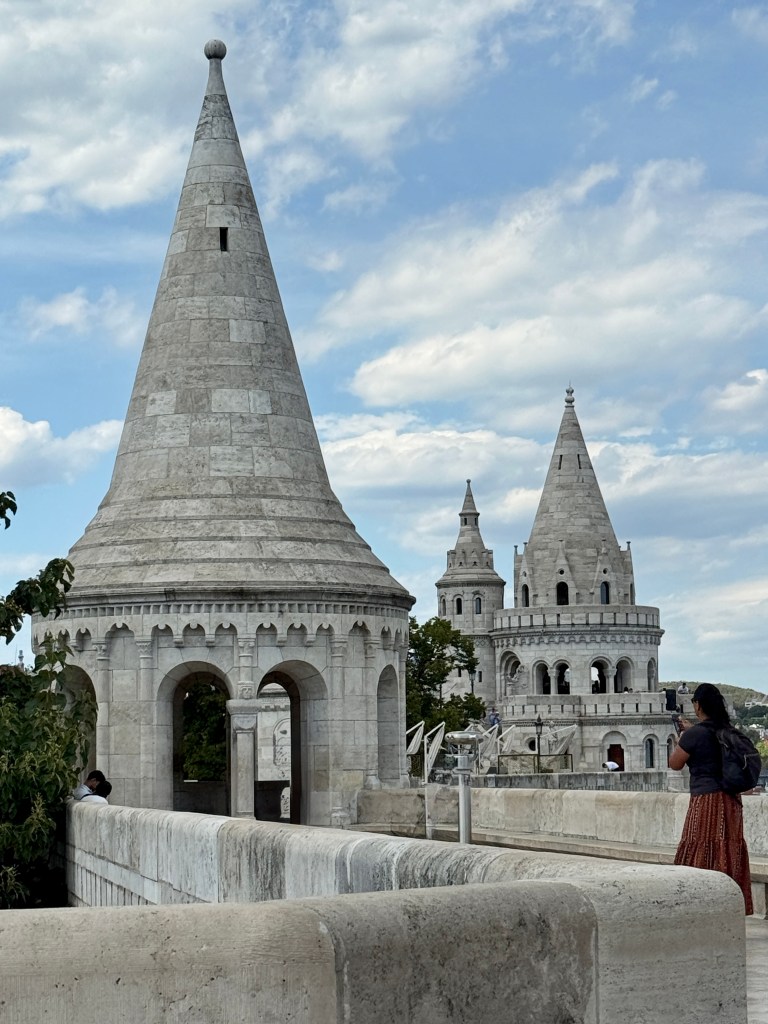
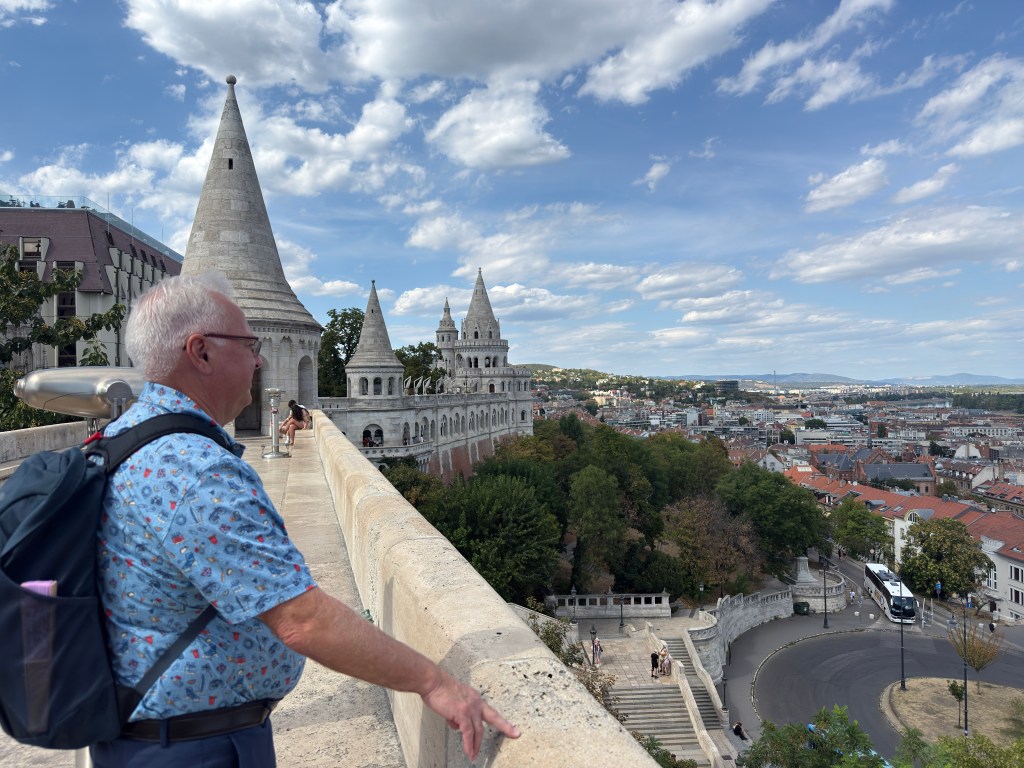
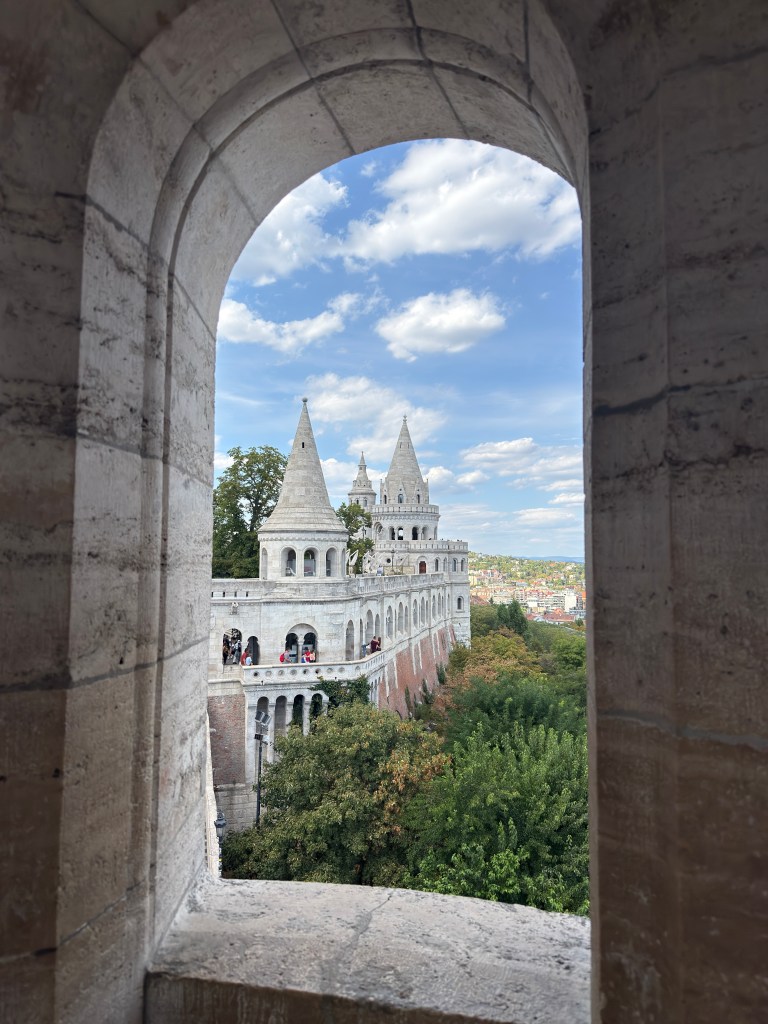
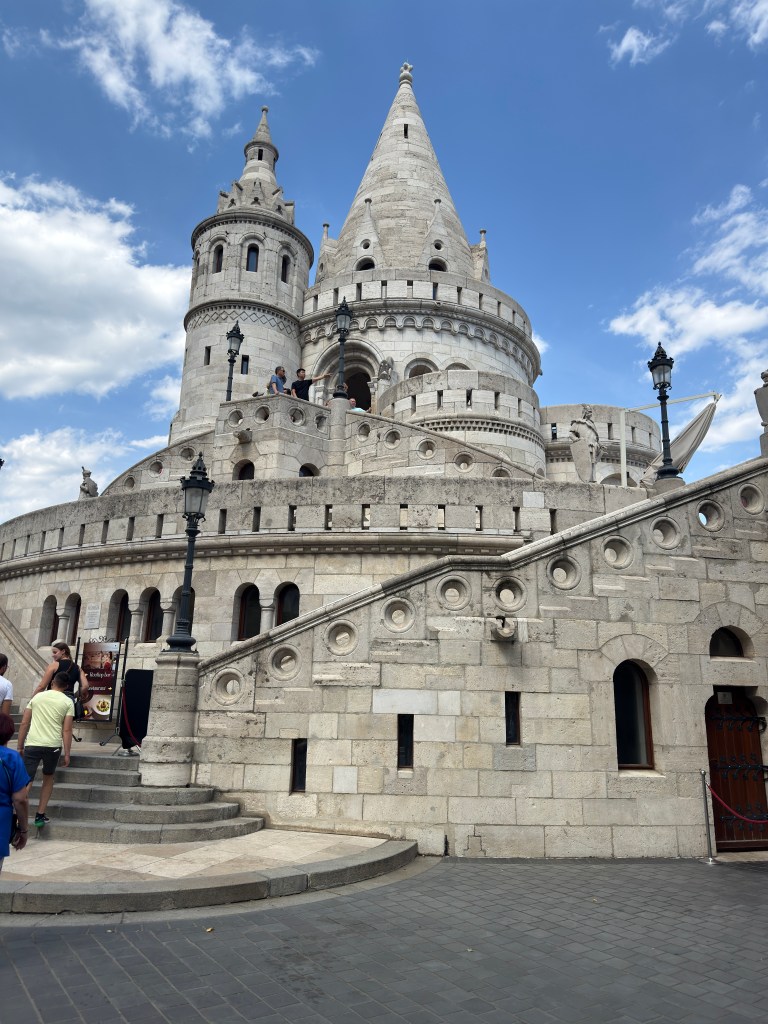
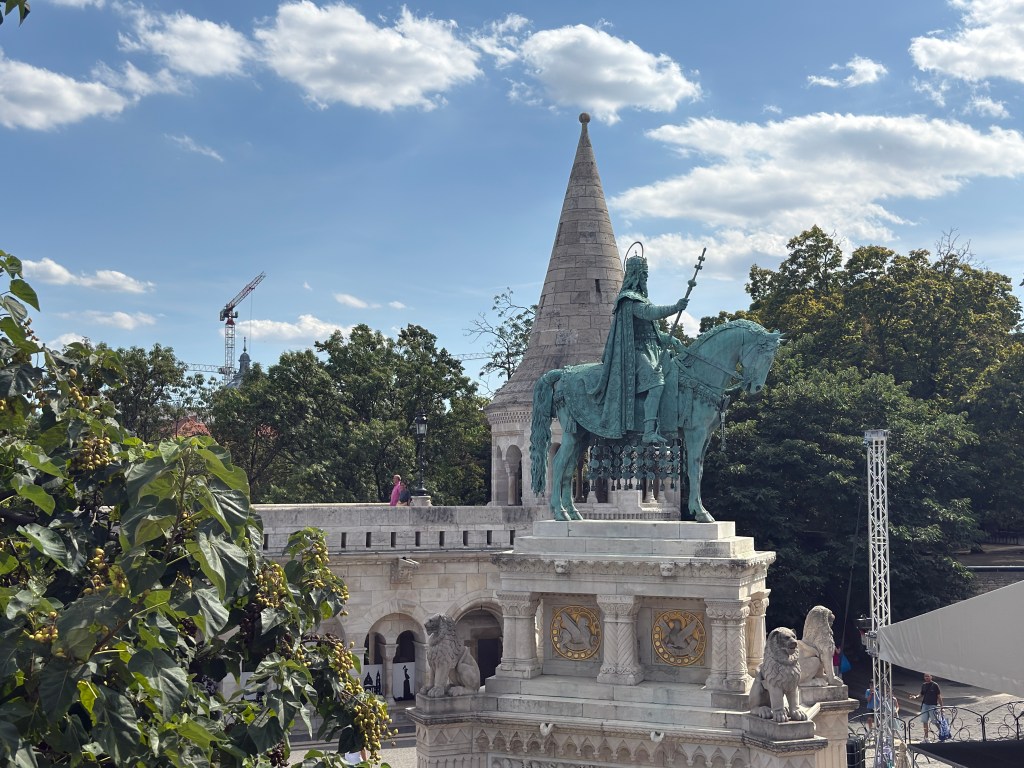
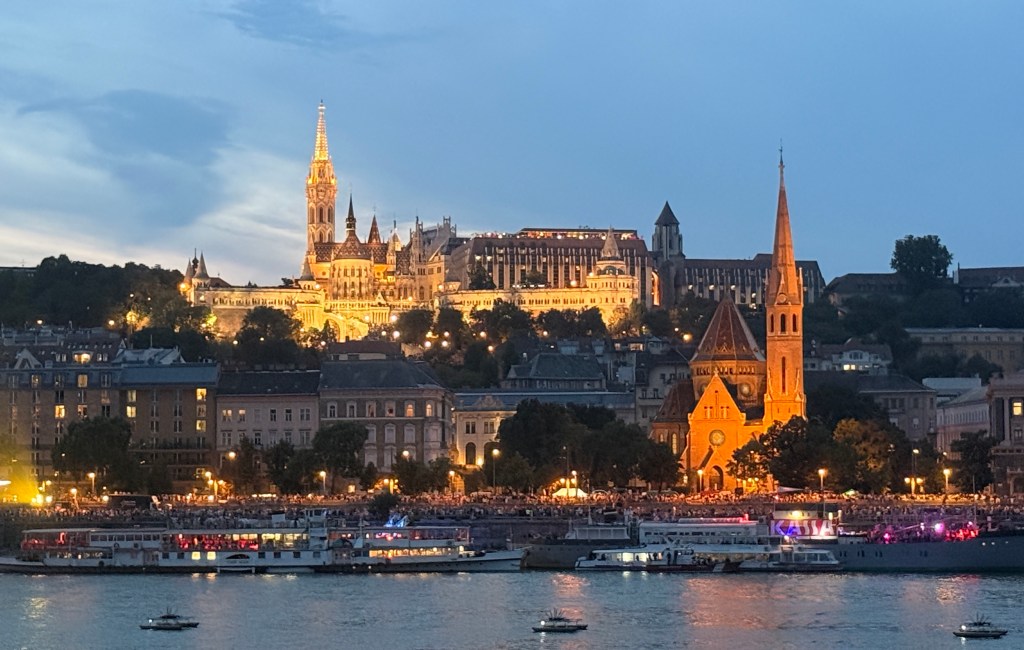
Fisherman’s bastion Is one of Budapest’s best known and most visited historical monuments. This was designated as a Unesco World Heritage site in 1987 and sits in the Buda Castle District. Built between 1895 and 1902 it sits atop Fisherman’s hill, one of the most picturesque spots in the city, with remarkable views of the Parliament Building and the Danube River. It was Initially constructed as a defensive structure to protect the city and defended by the fisherman’s guild during the middle age and is part of the old walls of the Buda Castle.
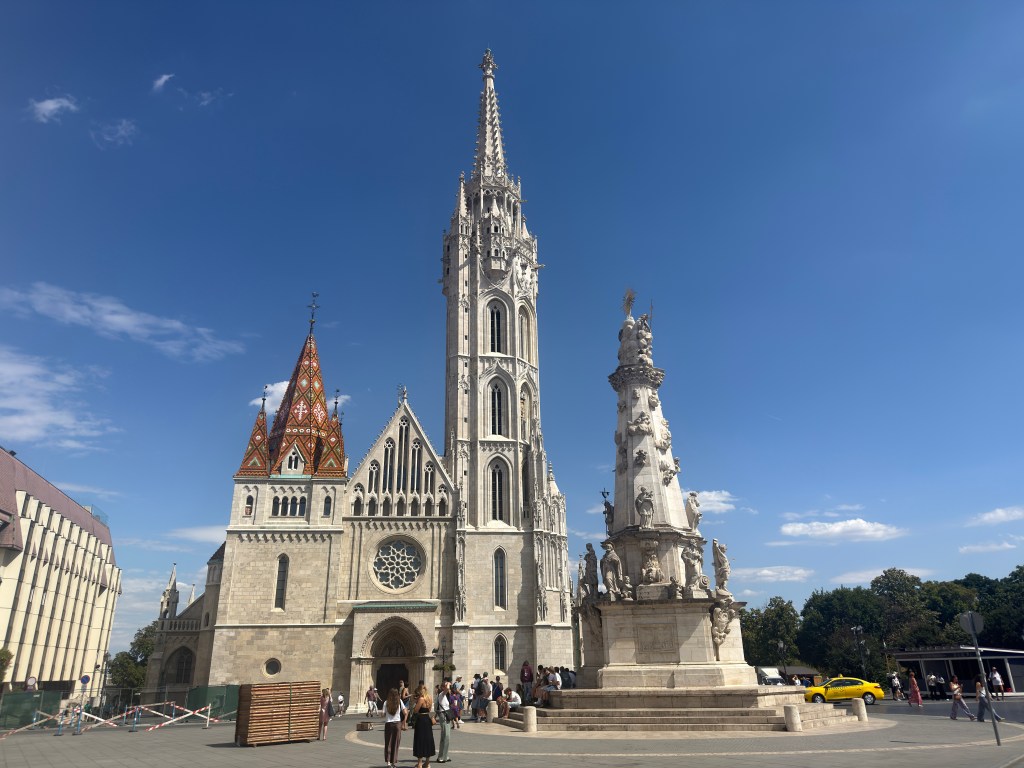
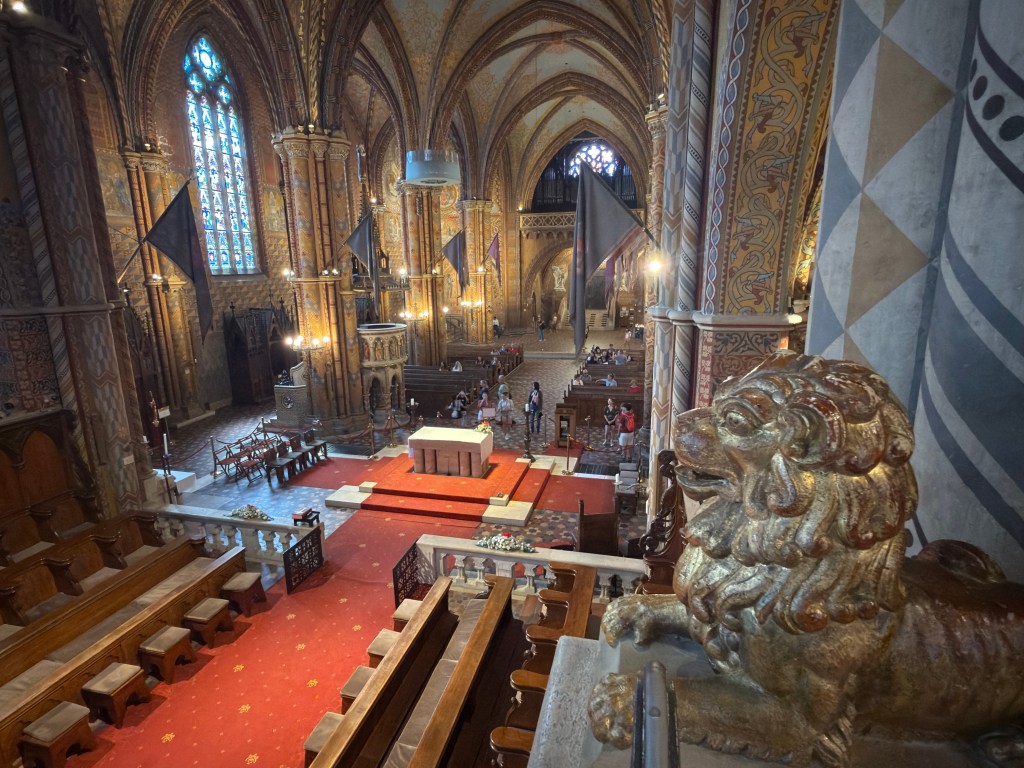
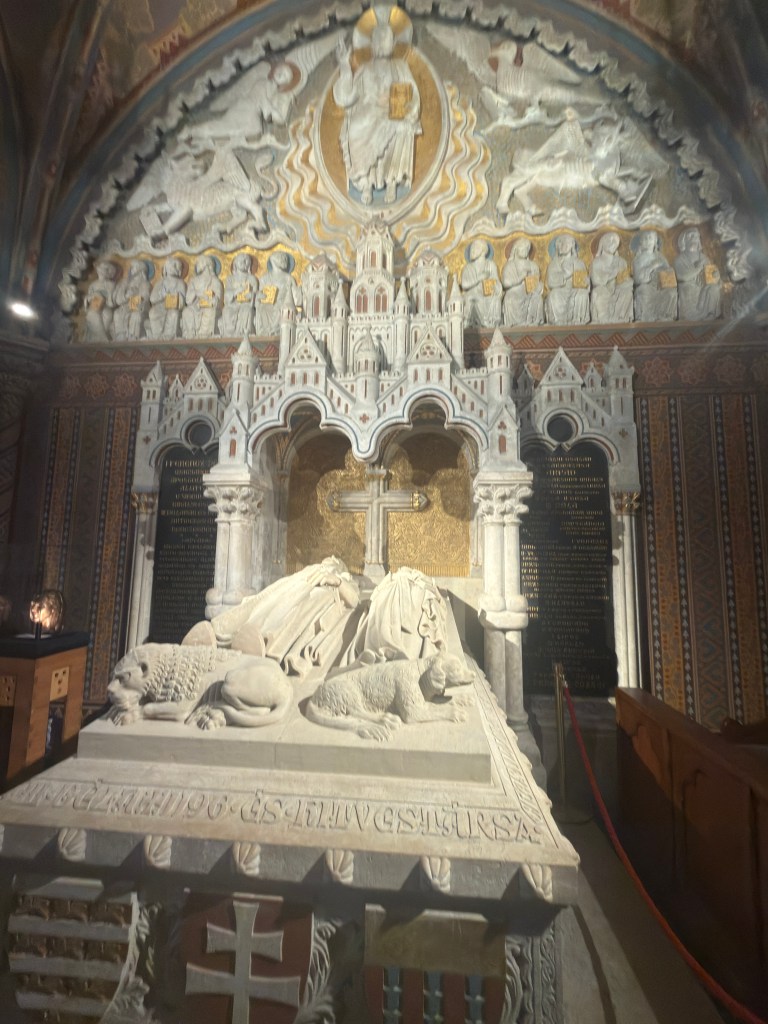
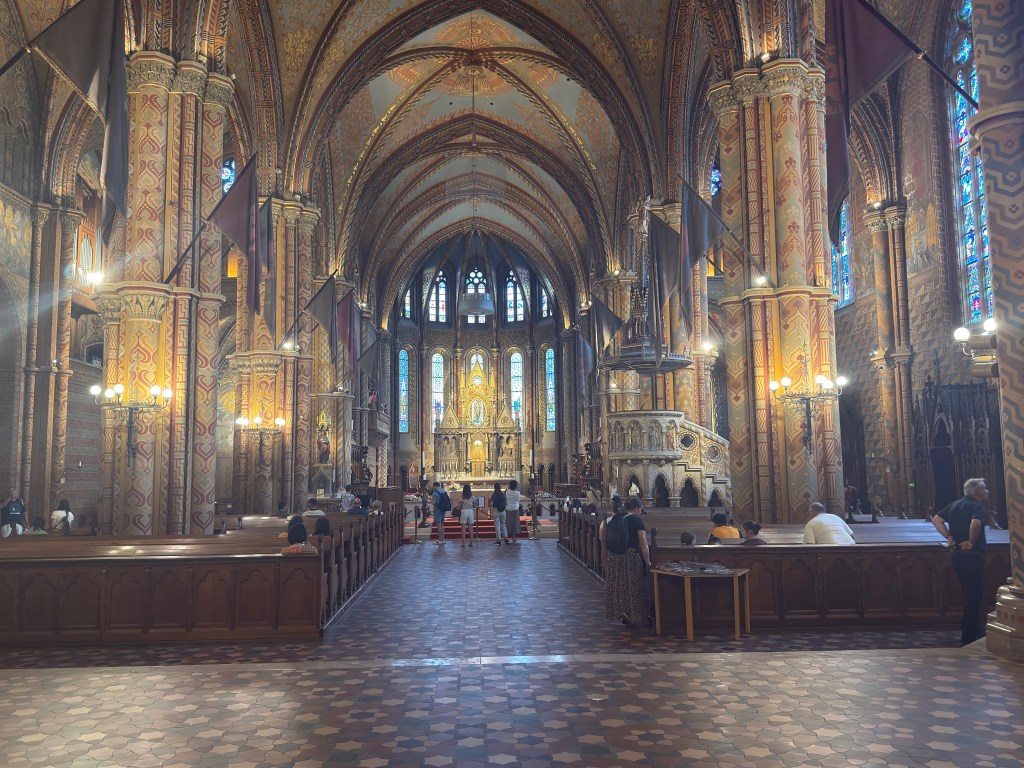
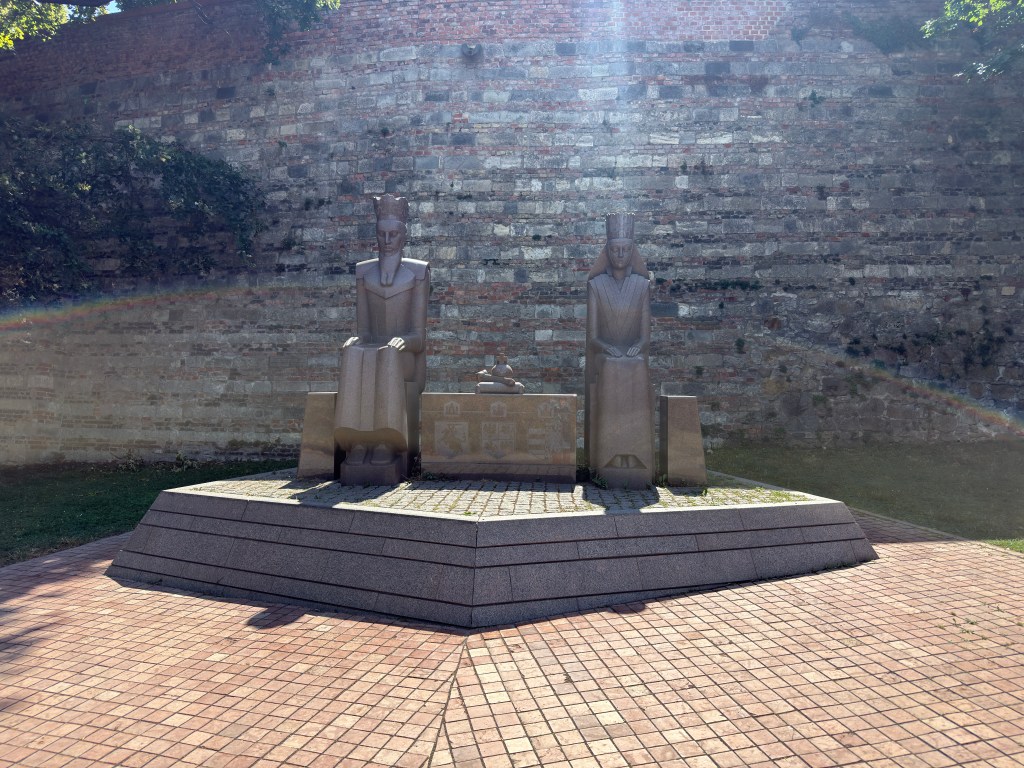
Matthias church is a Catholic church in Holy Trinity Square, it sits in front of the Fisherman’s Bastion at the heart of Buda Castle District. The church as you see it today was built in the 14th century and refurbished in the 19th century. The last two kings of Hungary were crowned within its walls giving it great historical significance. The church has 7 bells, 6 of them are in the bell tower and the 7th damaged bell hangs in the cavalry tower. Matthias church is also the final resting place of Béla III king of Hungary and Croatia, and his wife Agnes of Antioch. The interior colors are inspired by orientalism and neo gothic features and is absolutely stunning to see. Tickets are required for entry.
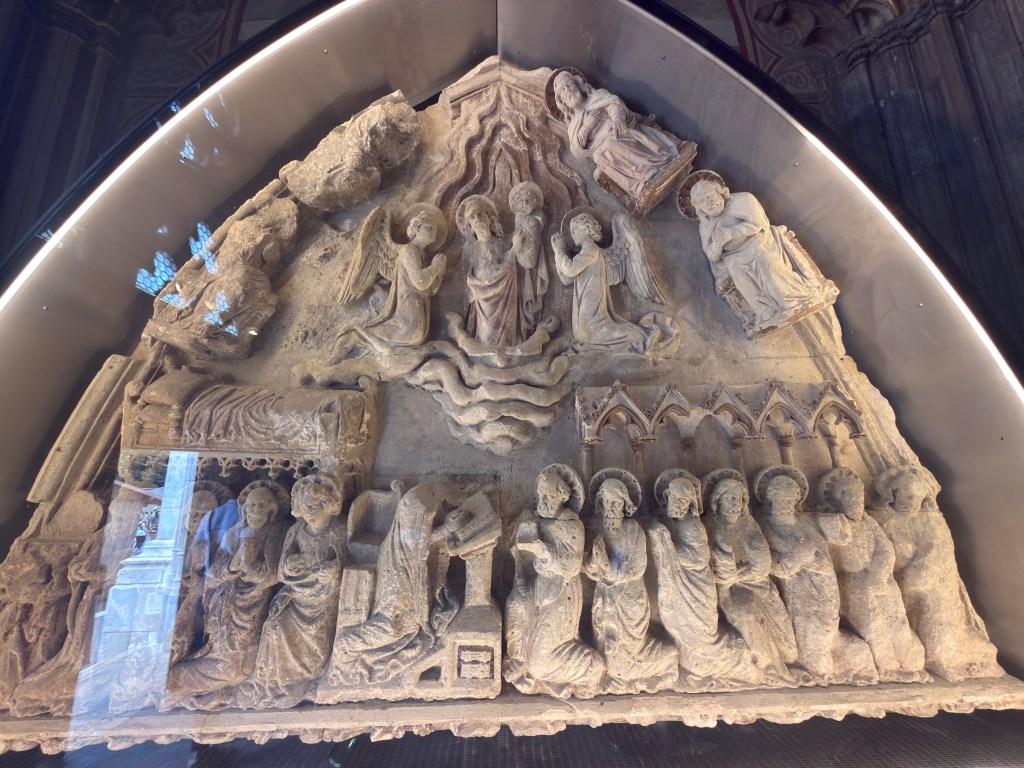
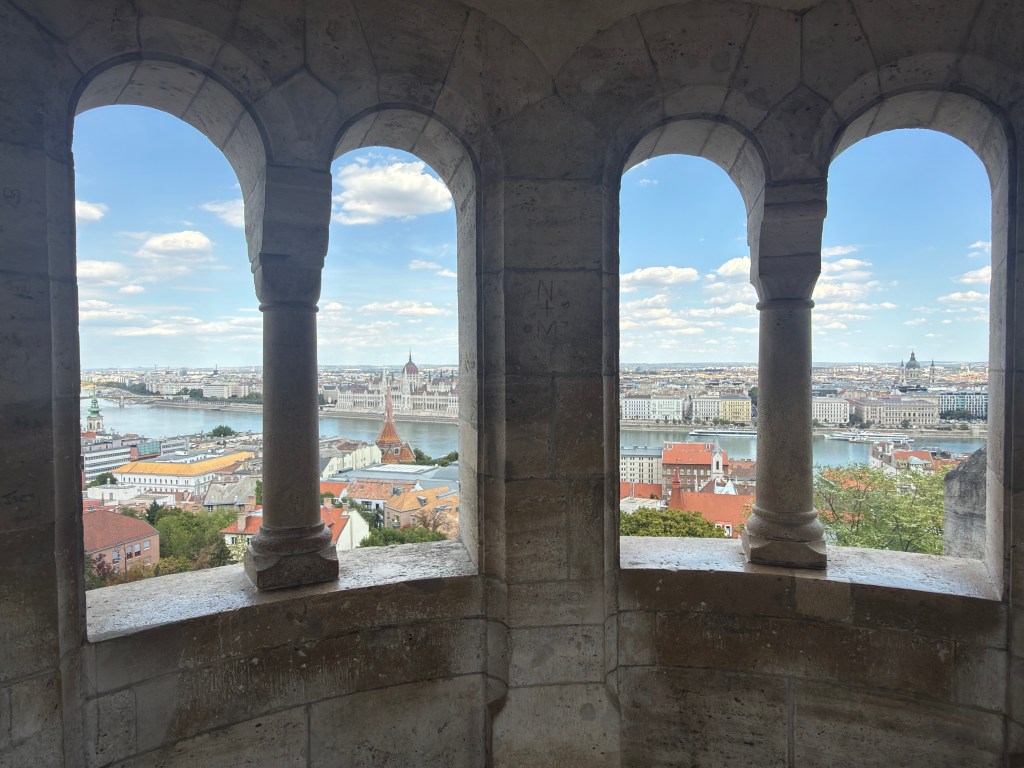
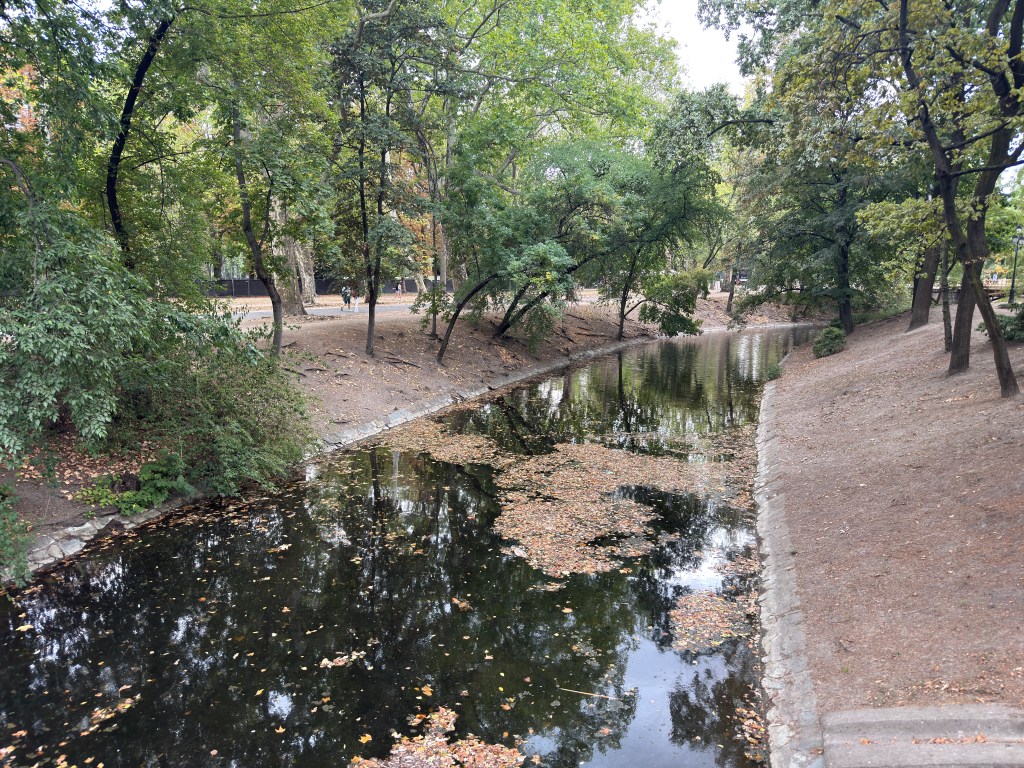
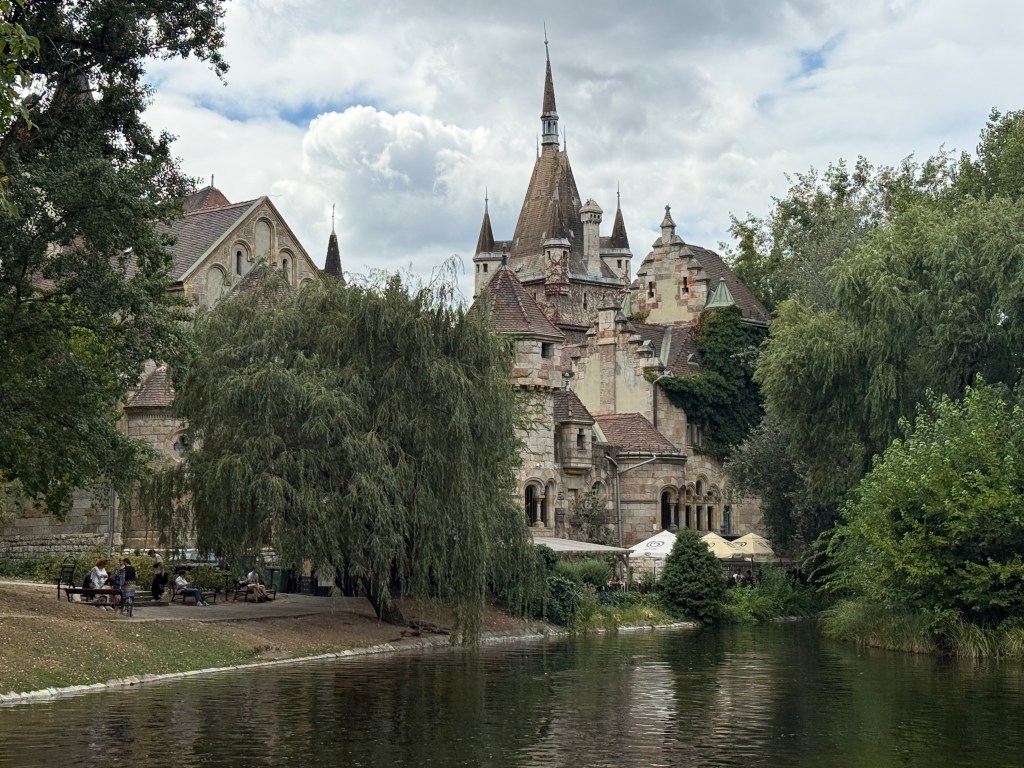
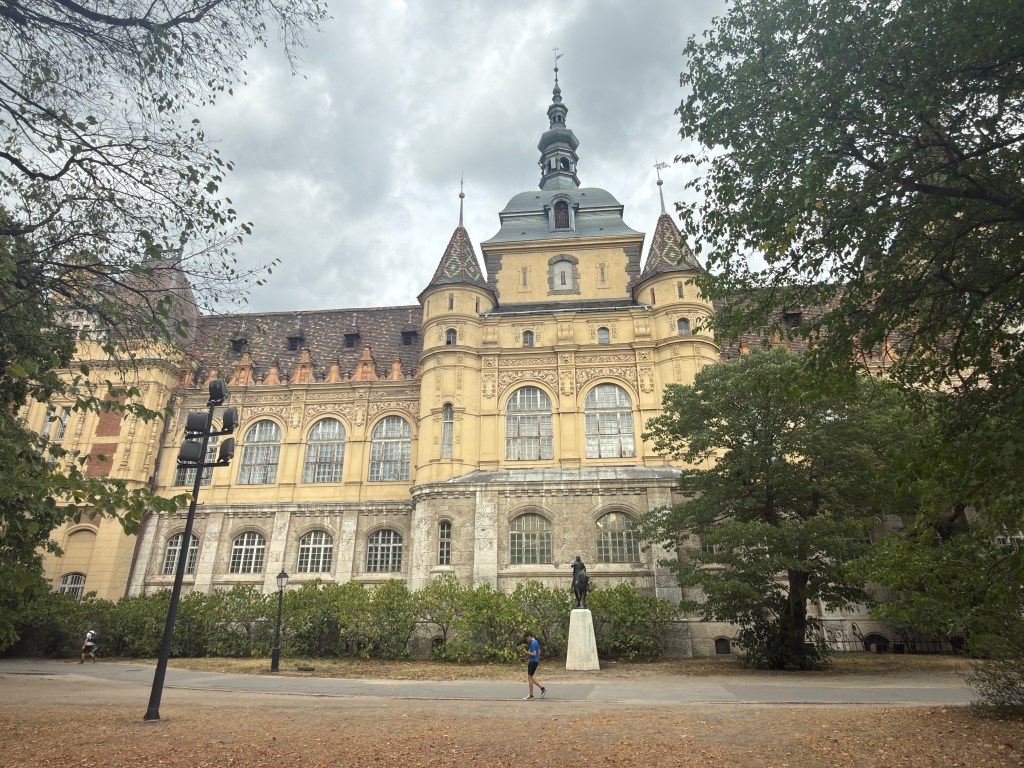
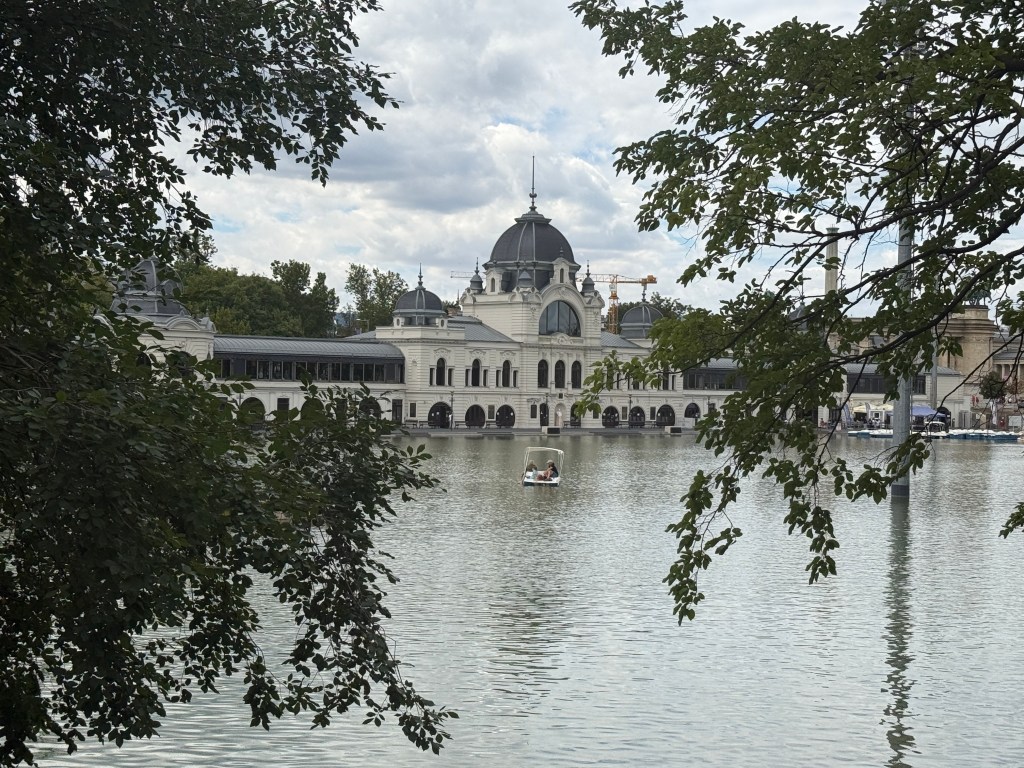
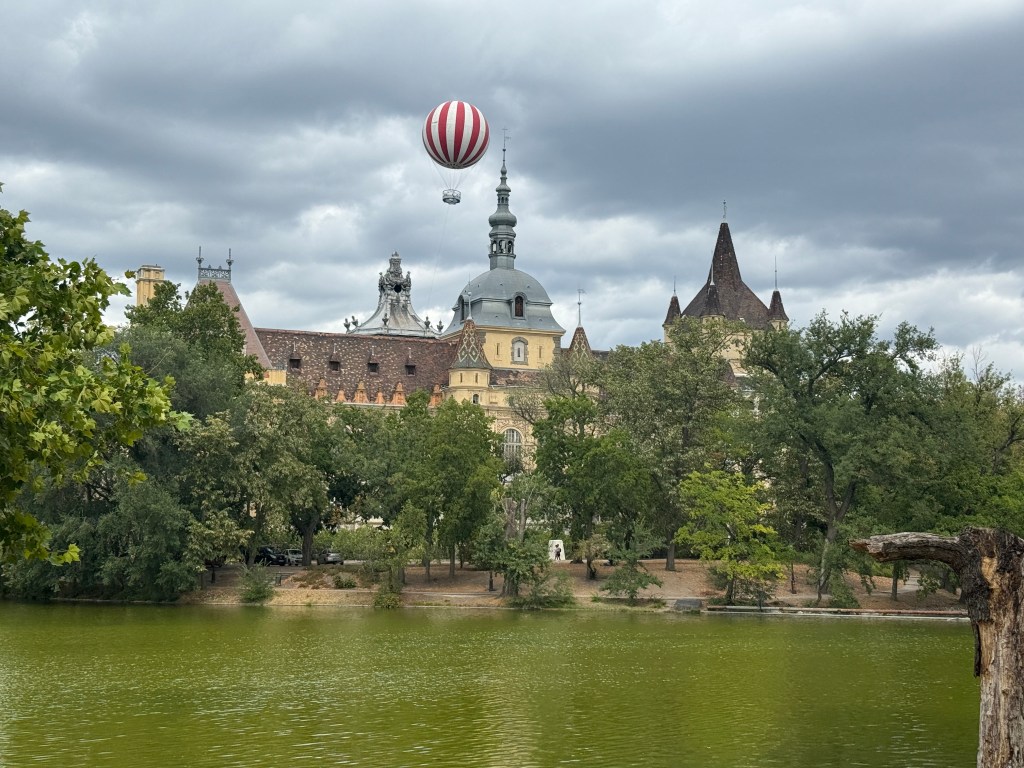
We made our way to Városliget City Park, this is Budapest’s largest green space, located just behind Heroes’ Square, functioning as the city’s main public park and cultural hub. It started as a private hunting ground used by nobility. It is home to iconic attractions including the famous Széchenyi Thermal Bath, the fairy-tale-like Vajdahunyad Castle, the Budapest Zoo, and the magnificent House of Music Hungary. The park features a large central lake that is popular for boating during the summer and transforms into Europe’s largest outdoor ice-skating rink throughout the winter.
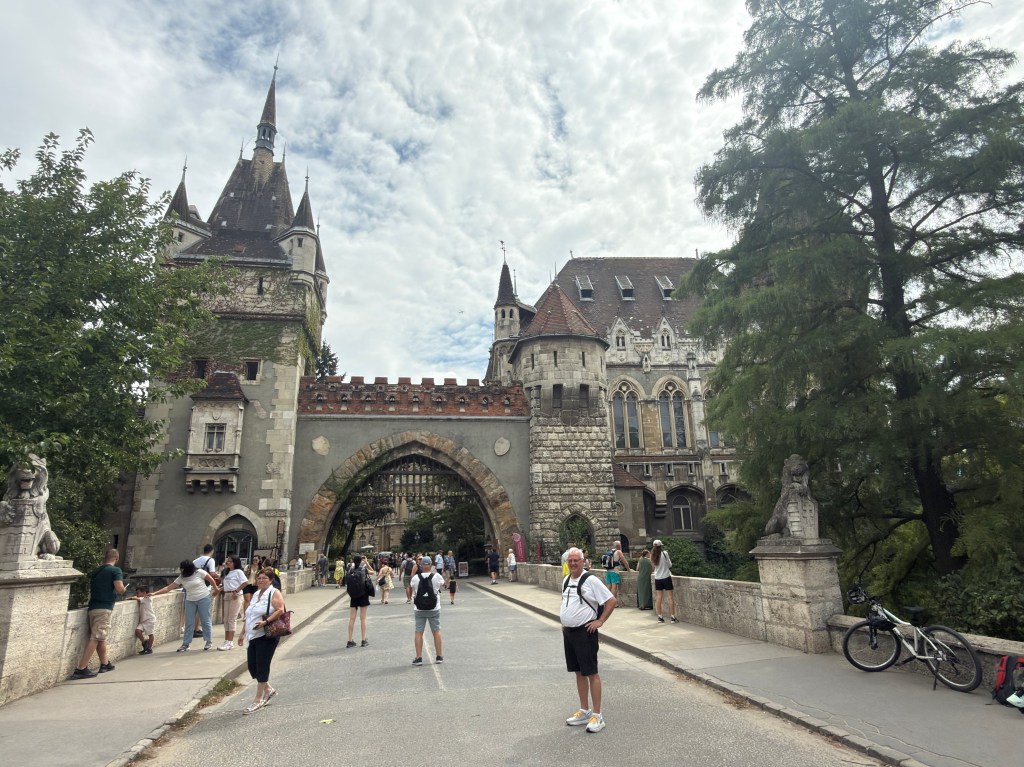
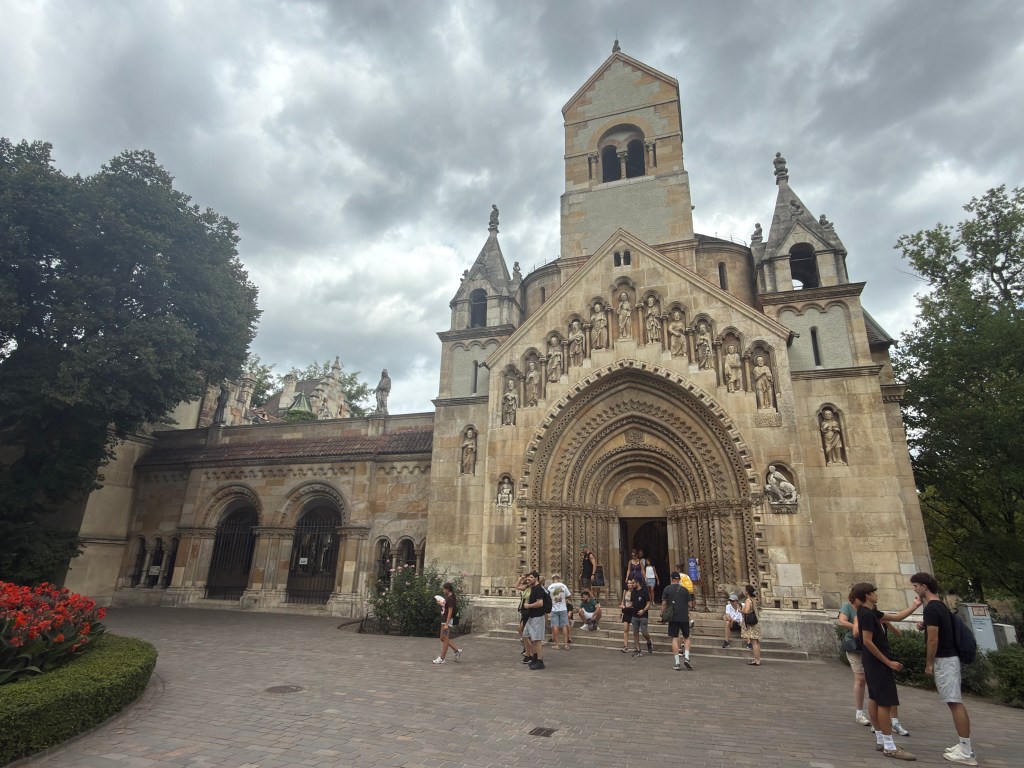
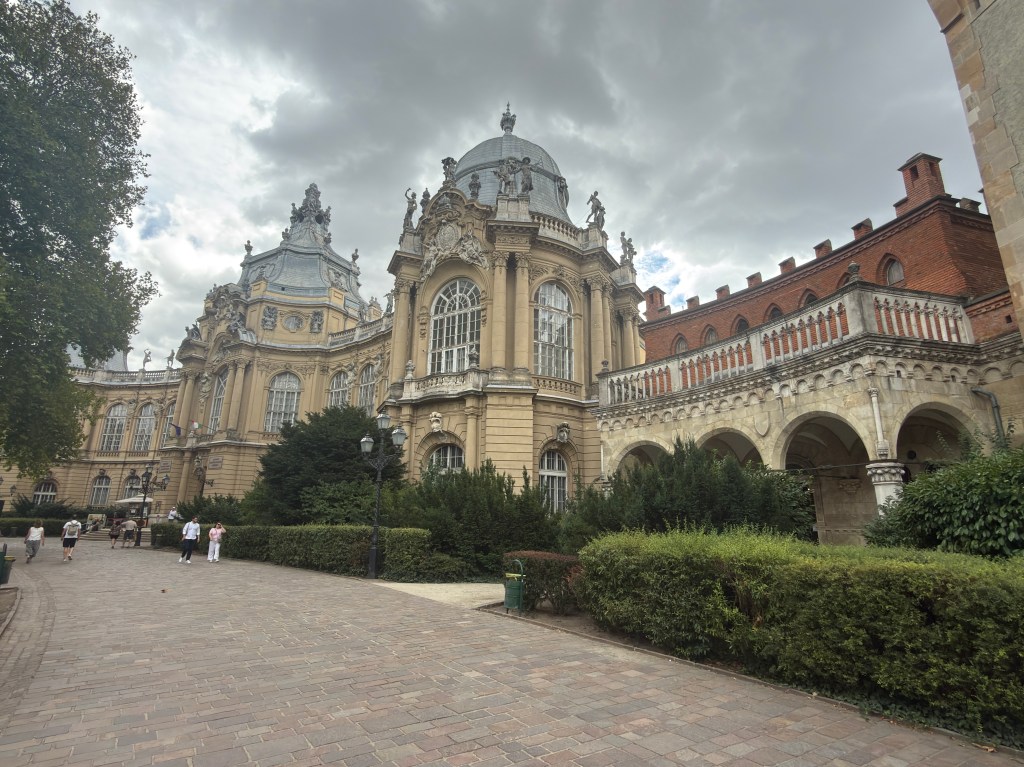
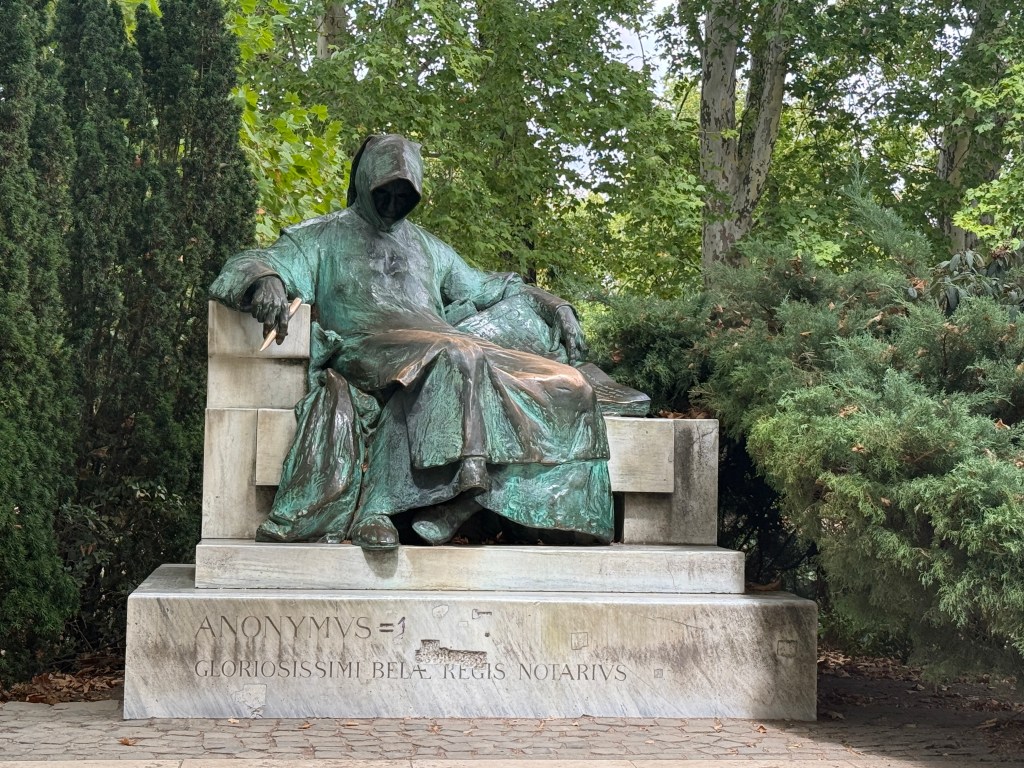
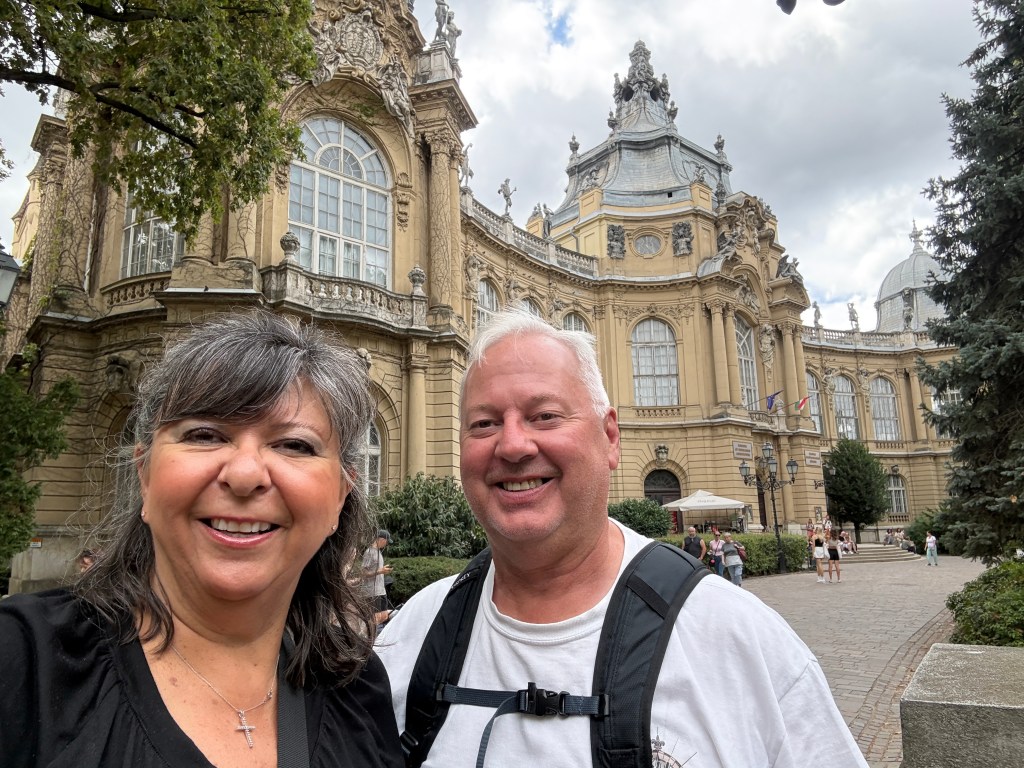
Vajdahunyad Castle which sits within the park was built in 1896 made from wood, for the Millennium exhibition. Between 1902-1908 the castle was reconstructed using brick and stone making it a permanent feature. The castle is a replica of several historic buildings from around the country, including the Transylvanian Vajdahunyad Castle, after which it is named. Tickets are available to go in the castle.
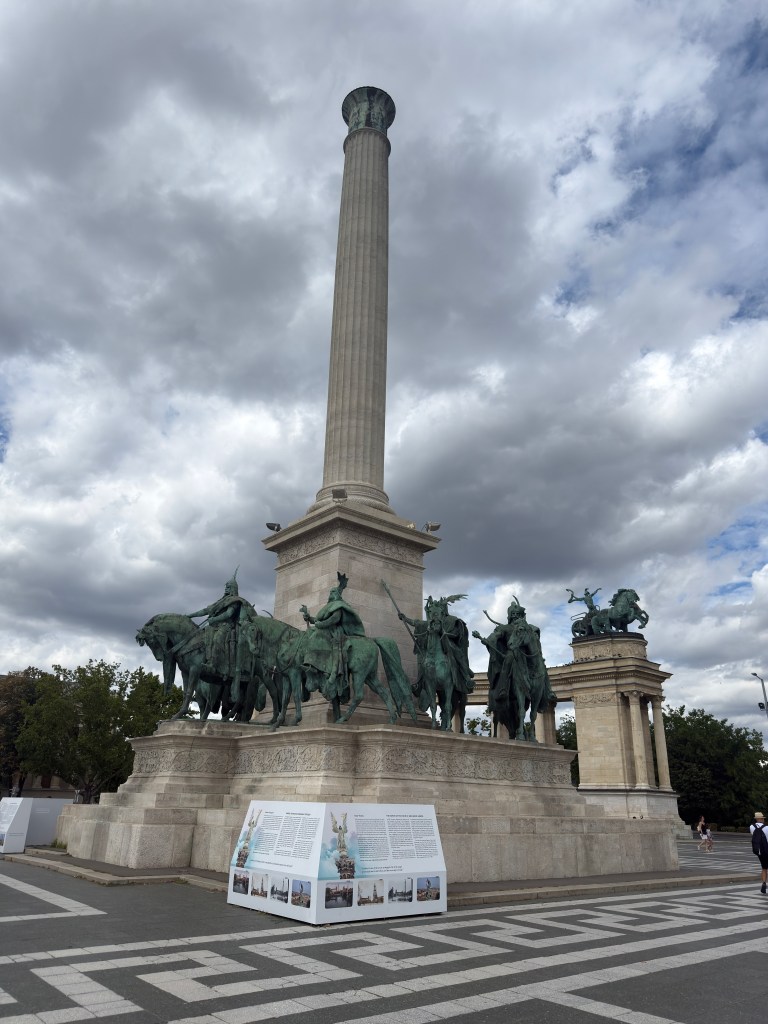
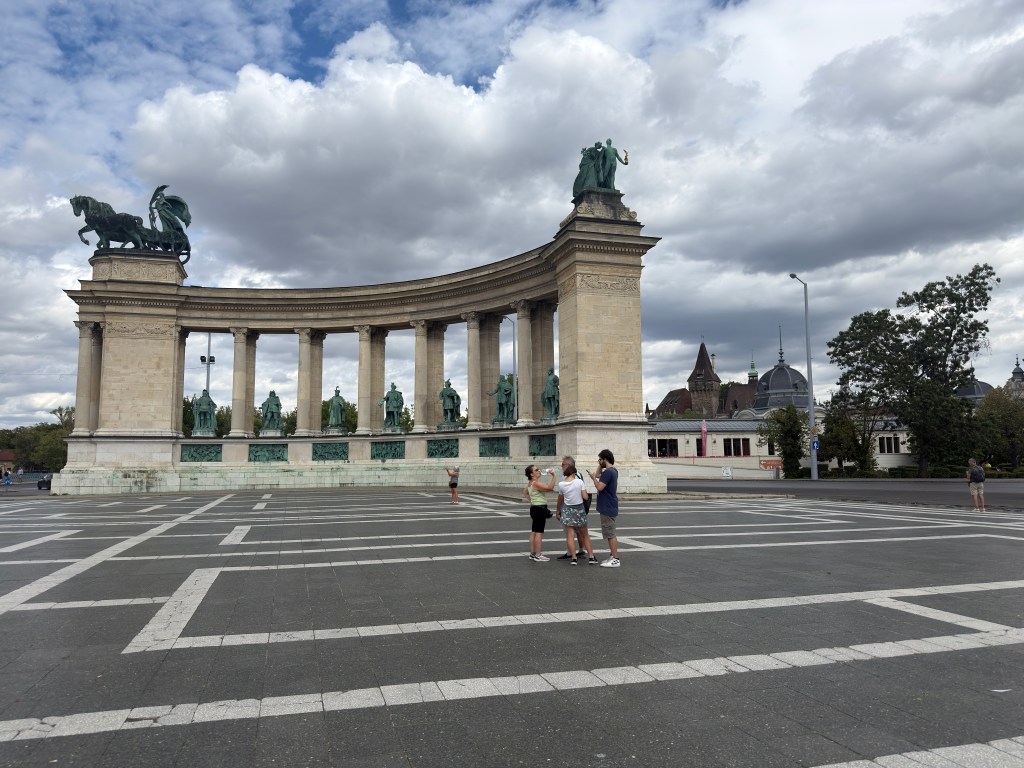
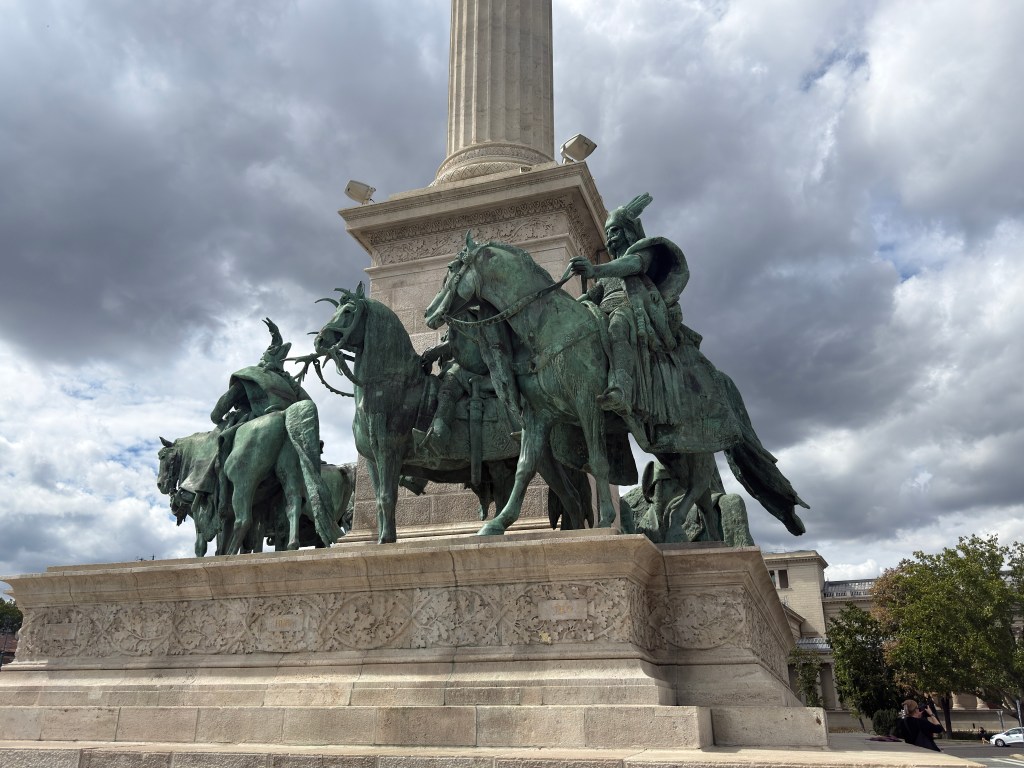
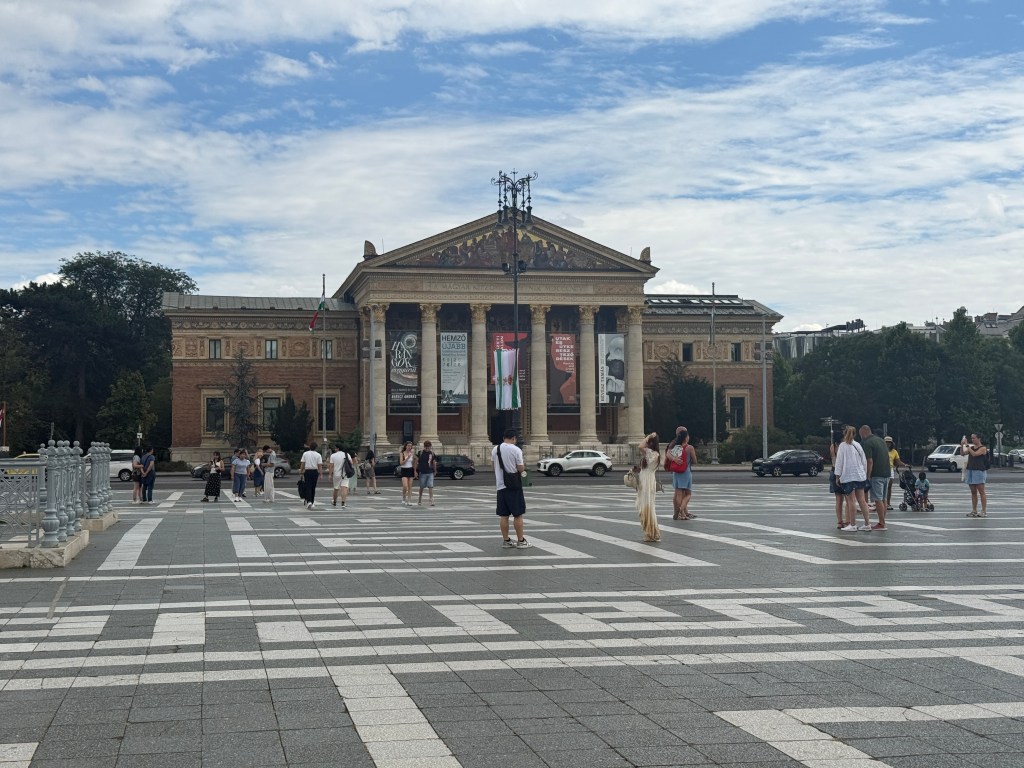
Heroes square is a historical landmark located at the entrance to City Park. Completed in 1896 to commemorate the thousandth anniversary of the Hungarian conquest of the Carpathian Basin and is a Unesco World Heritage Site. At the center of the square stands the Millennium Monument, consisting of a 36-meter-high Corinthian column and a semicircular colonnade. At the top of the column is a statue of the Archangel Gabriel holding the Holy Crown. On either side of the square are the Museum of Fine Arts and the Hall of Art, both important cultural institutions. In addition to the statues of the Millennium Monument, the square also features the Memorial Stone of Heroes, symbolizing the Tomb of the Unknown Soldier. This is a spectacular historical landmark.
Nearby is the famous Széchenyi Thermal Baths, one of the world’s largest and most famous thermal spas. We chose not to go due to overly large crowds, but this was something we wanted to do and hoping to do one day.
There are three statues depicting American presidents in Budapest as reminders of the enduring relationship between Hungary and the United States, a connection forged in history and preserved in bronze. Up to this day, the three American presidents that have been honoured are George Washington, the One who led the United States in the 18th century, while the other two Ronald Reagan and George H. W. Bush both held office during the 20th century. These statues are located in Budapest’s City Park and Freedom Square, where the United States Embassy operates.
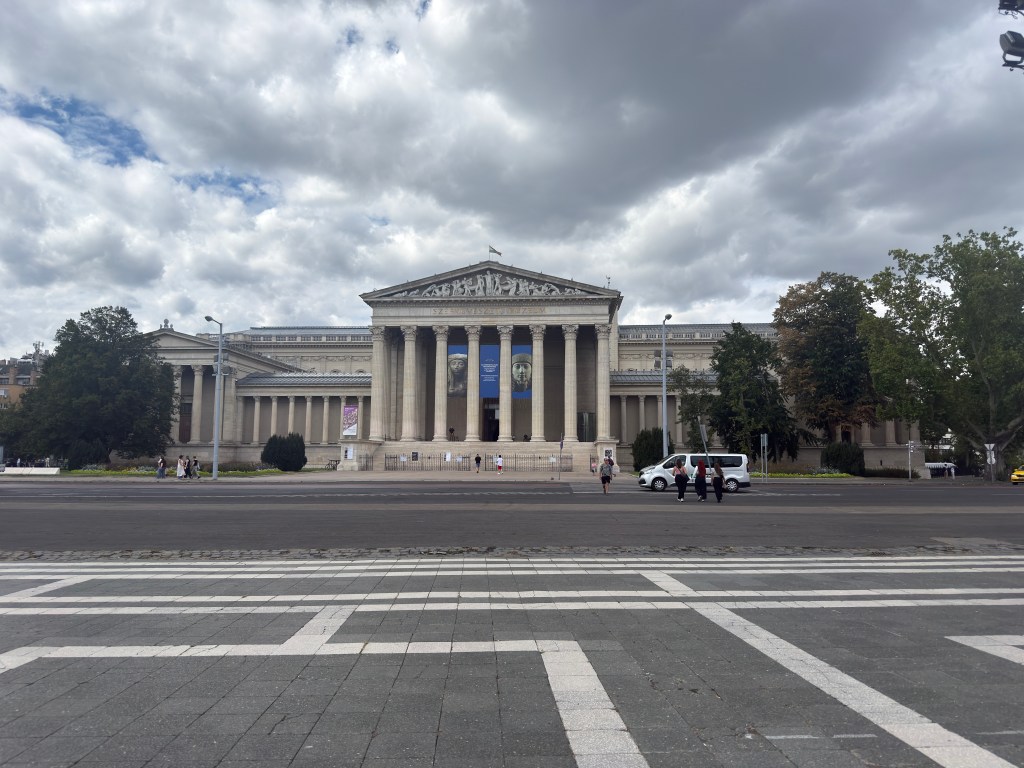
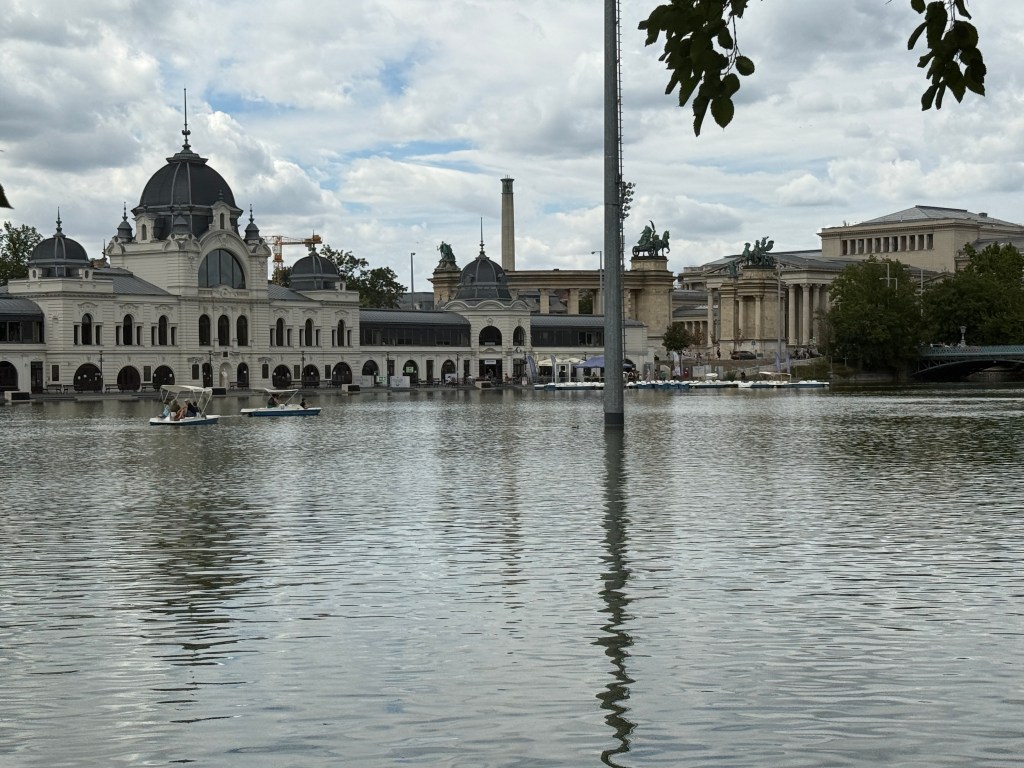
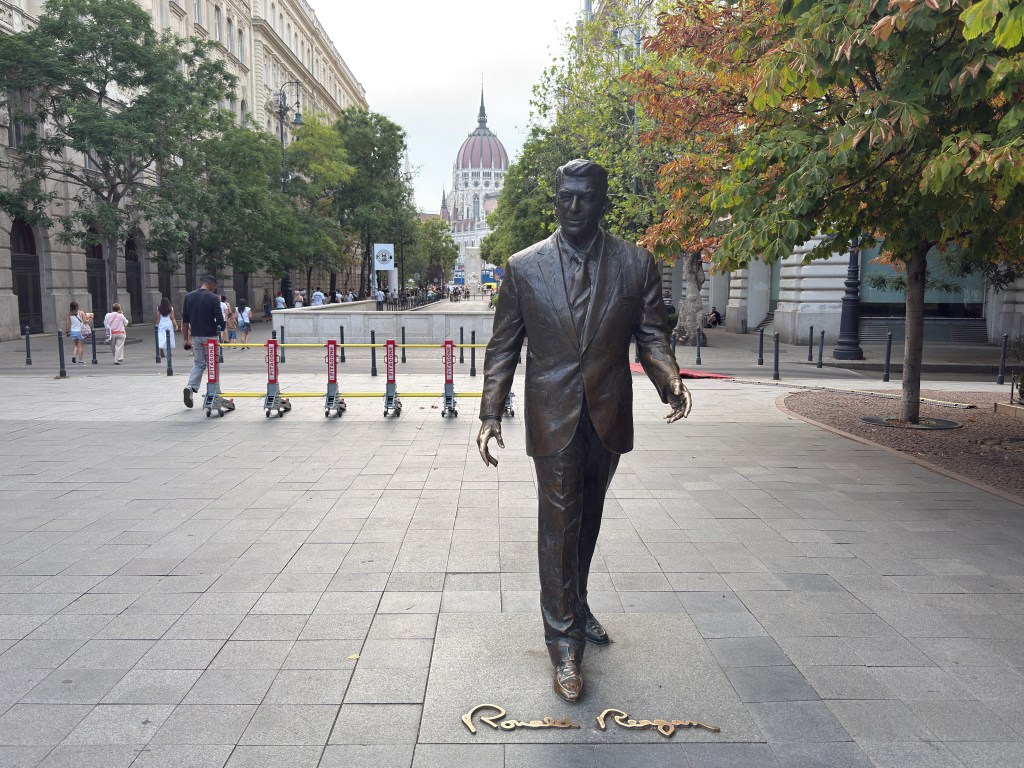
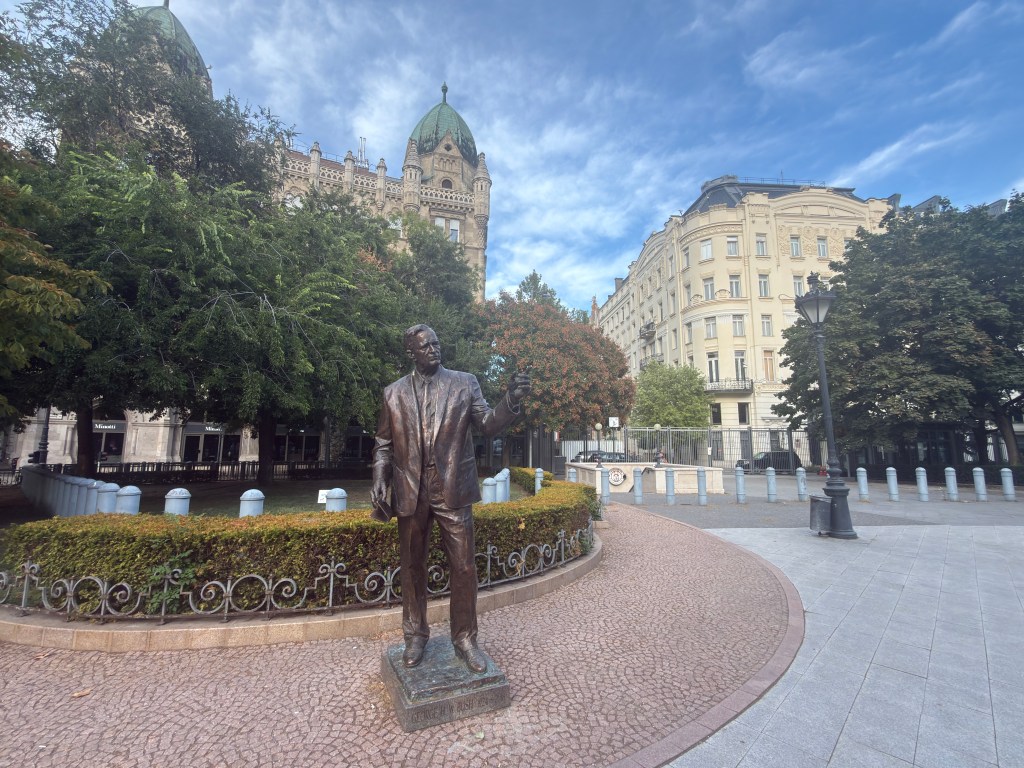
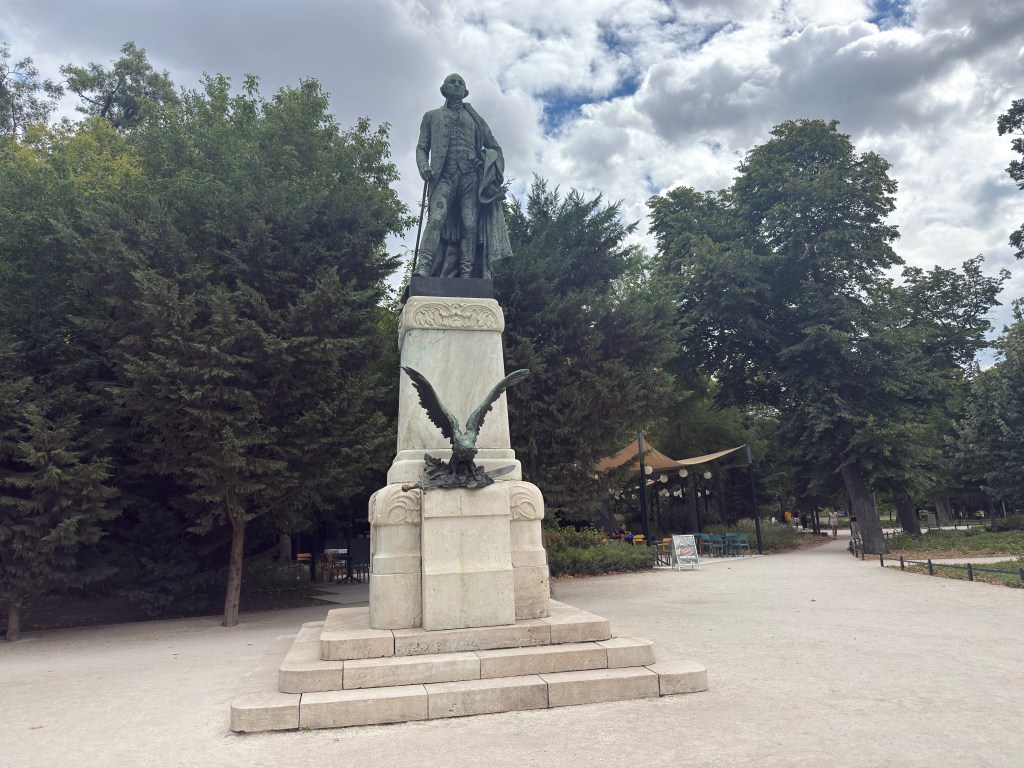
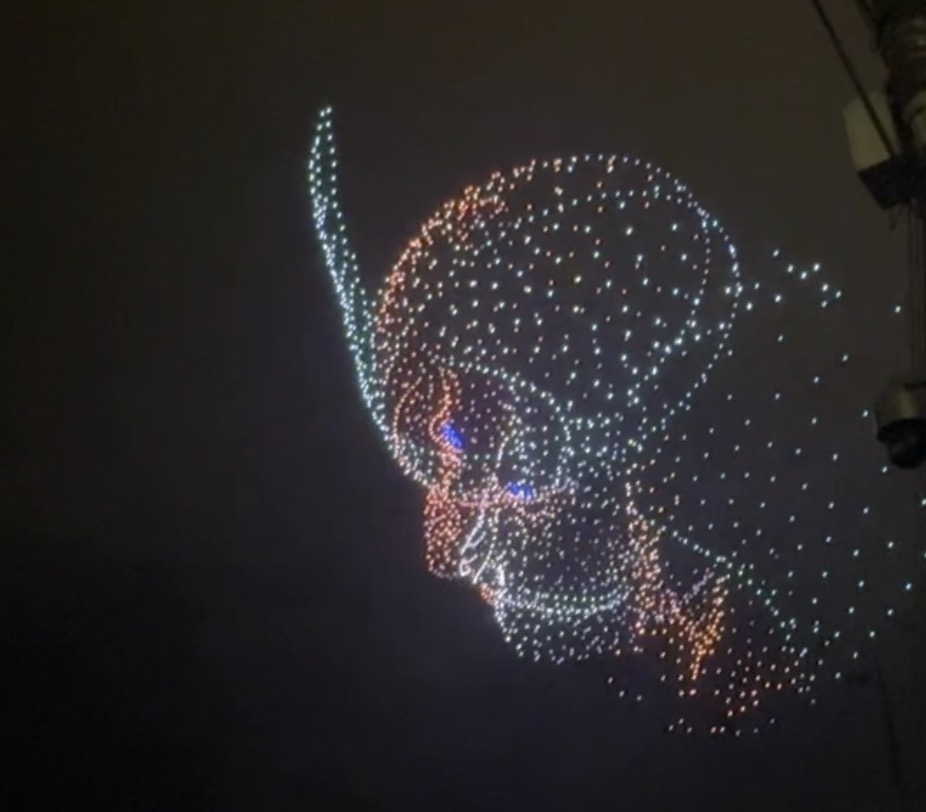
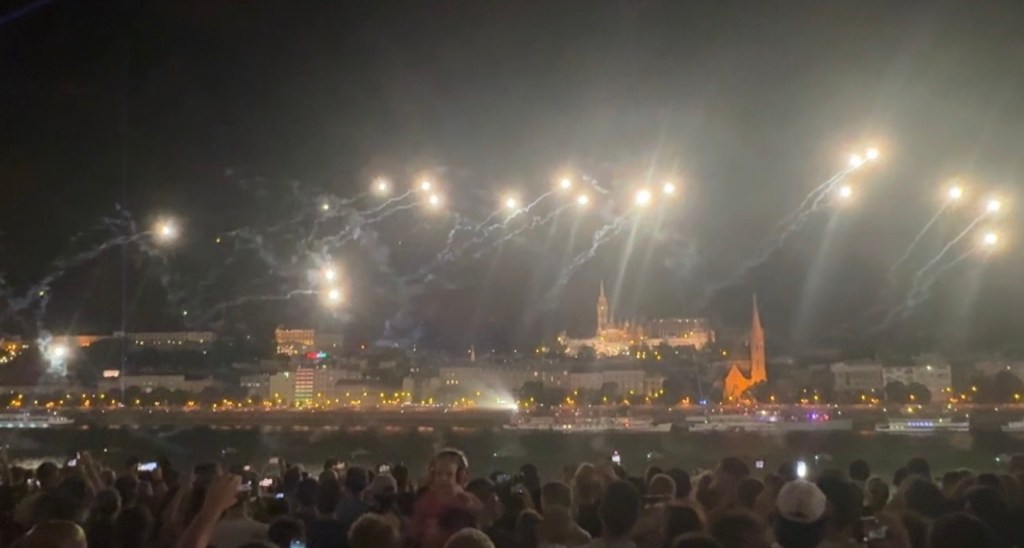
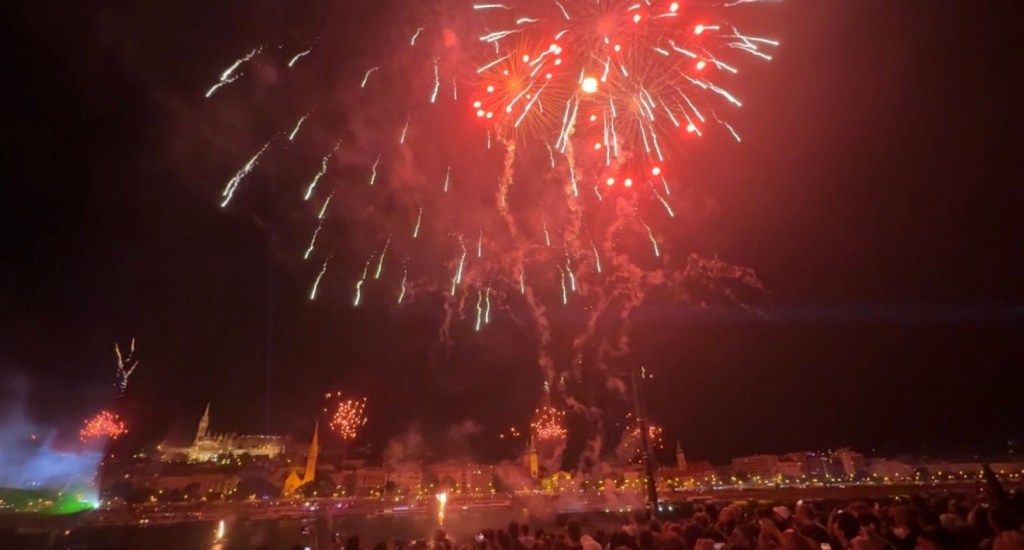
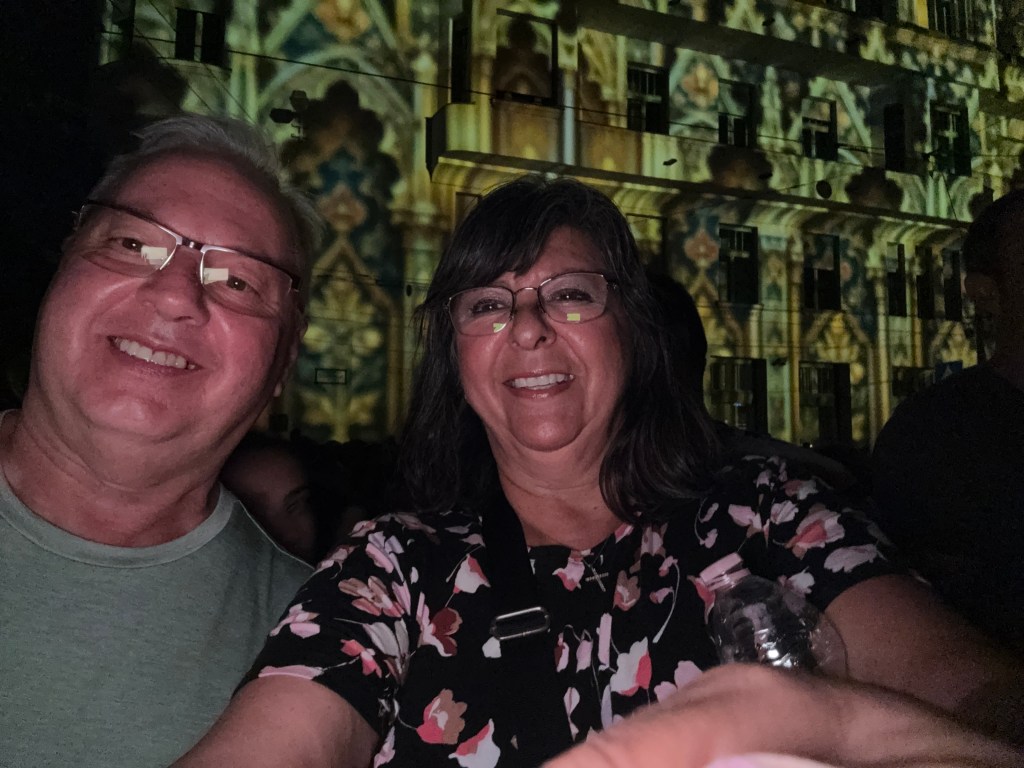
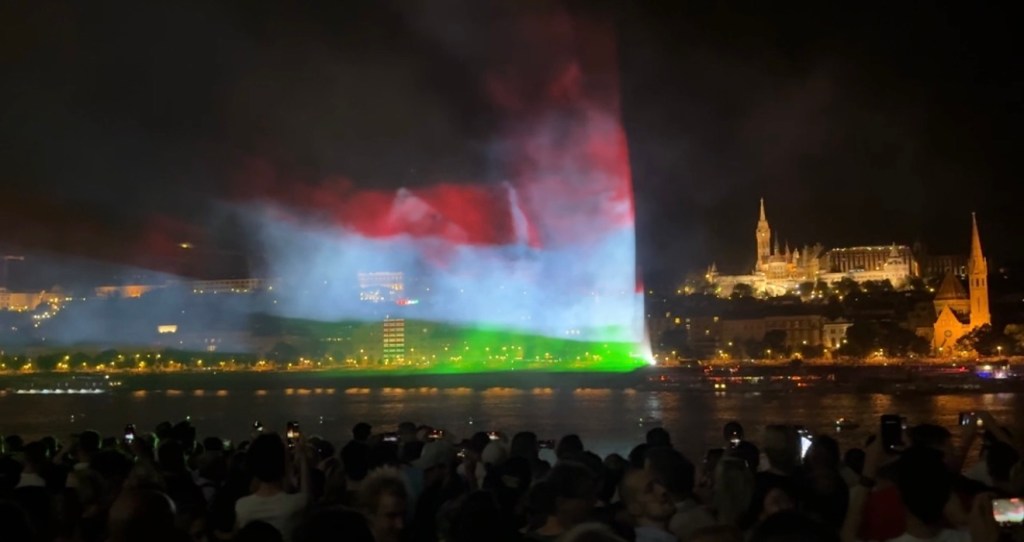
We were lucky enough to be in Budapest for the Saint Stephen’s Day celebration.
St. Stephen’s Day is celebrated with a variety of festivities including open-air concerts, street fairs, traditional food, and a spectacular fireworks display over the Danube. The day honors King Stephen I, the founder of the Hungarian state, and features a ceremonial raising of the national flag and a religious procession. We did a video o our YouTube channel of our time at the fireworks show titled Saint Stephen’s Day Celebration on the Danube. If you haven’t seen that yet we invite you to watch it.
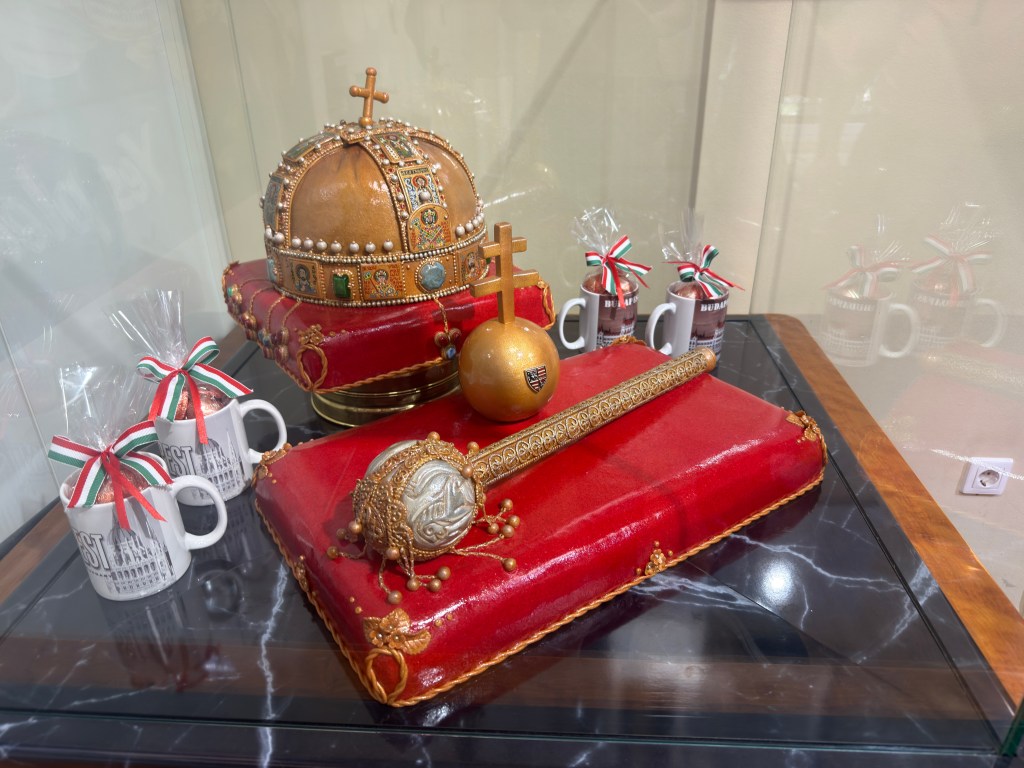
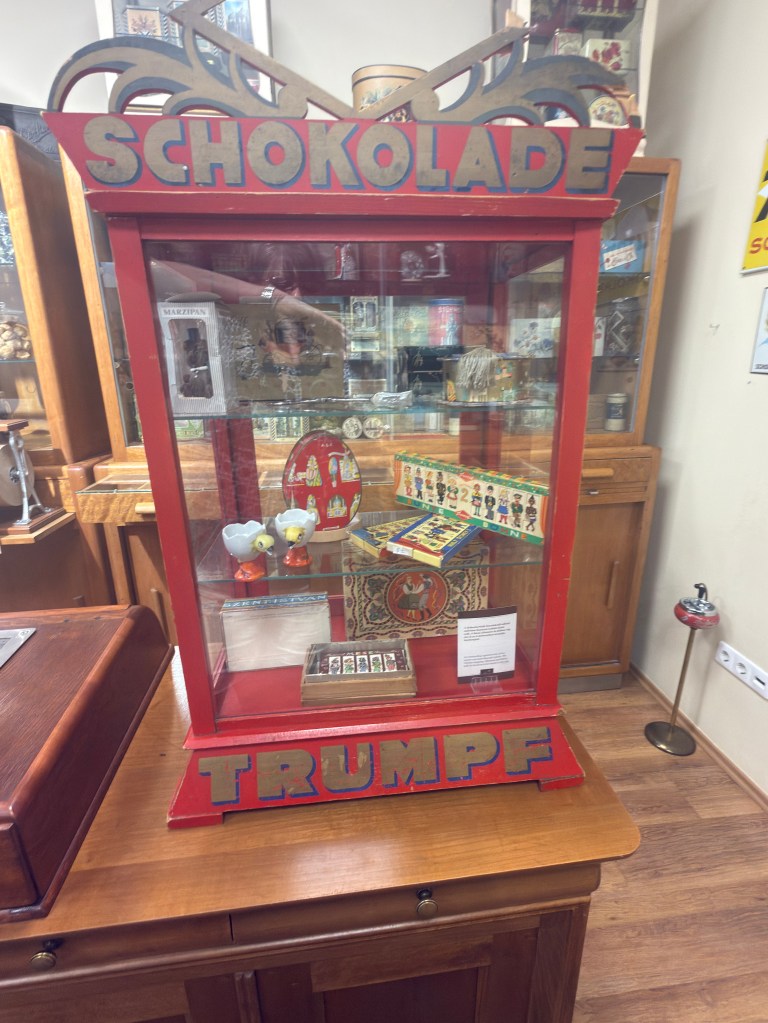
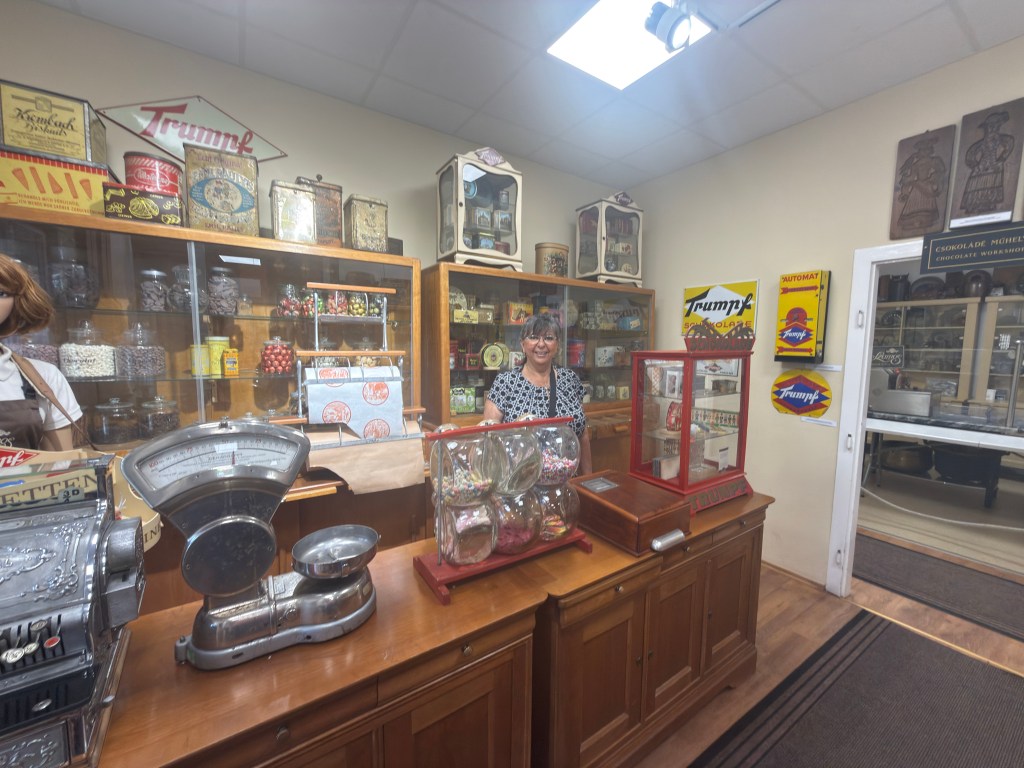
We also visited the Szamis Chocolate museum. The museum combines six exhibition rooms with historic chocolate-making equipment, decorative collections, marzipan artistry and opportunities to taste chocolate. Part of the museum recreates a 1920s-style sweet shop filled with nostalgic details alongside a historic chocolate workshop displaying period equipment and chocolate moulds. You can take a guided tour or a self walking tour. Visitors can stop downstairs at Szamos cafe for cakes, pastries, chocolates and other confections.
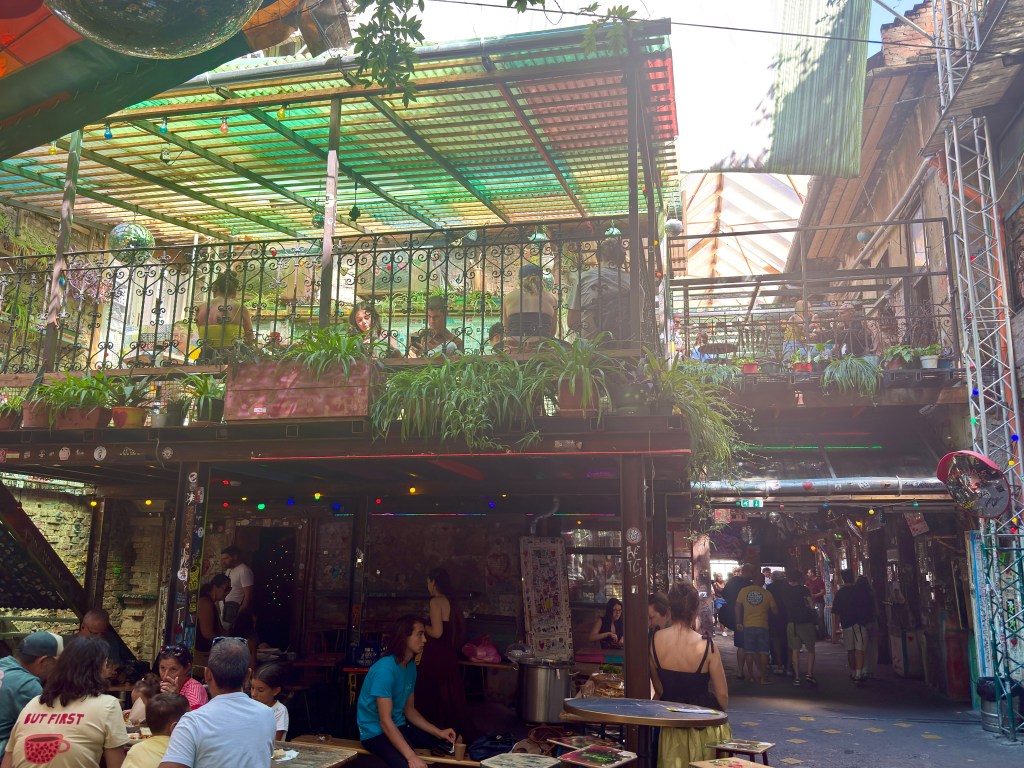
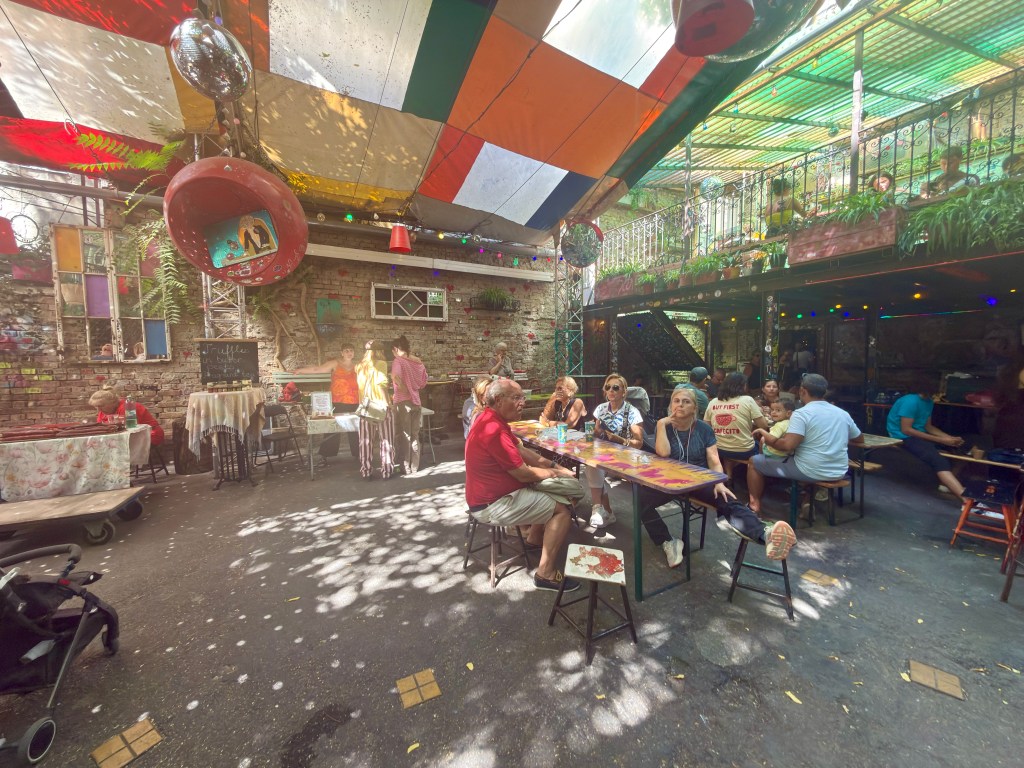
We couldn’t be in Budapest and not check out the Karaván street food court and Ruins bars.
Karaván is Budapest’s top street food court in the Jewish Quarter featuring Lángos, chimney cake, craft burgers & more at budget prices next to Szimpla Kert ruin bar, which is the oldest ruin bars in Budapest This is a mix of funky, eclectic, and unique bars with open air and smaller rooms branching off the center. This is a fun place to visit and enjoy the quirkiness of this place
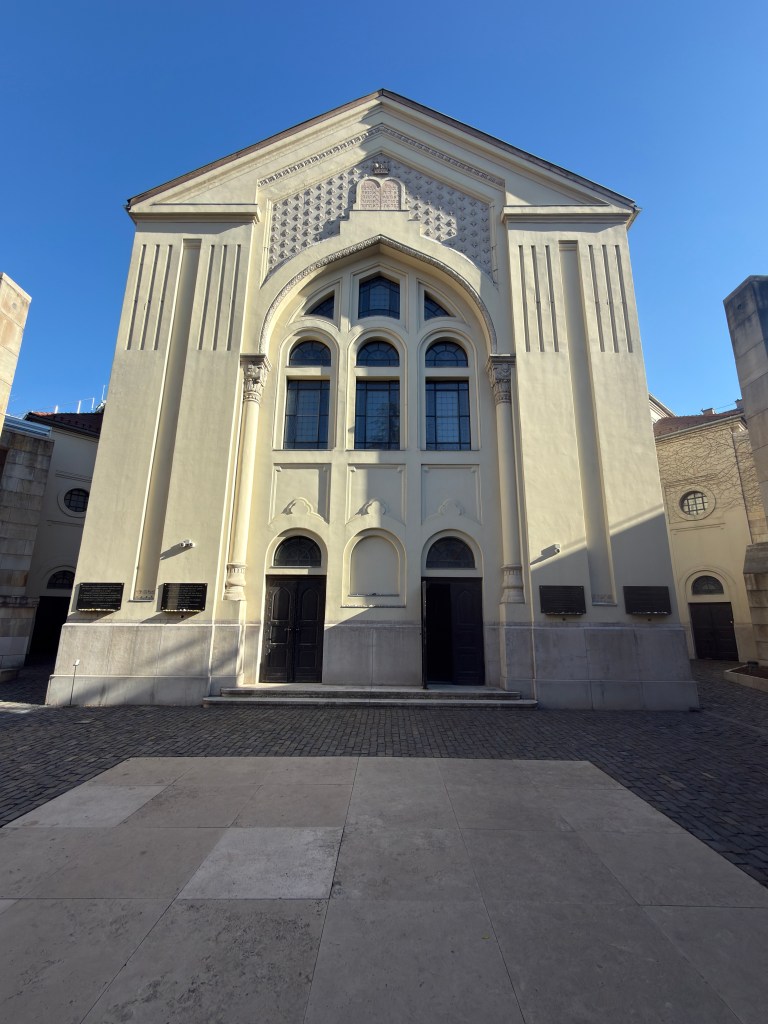
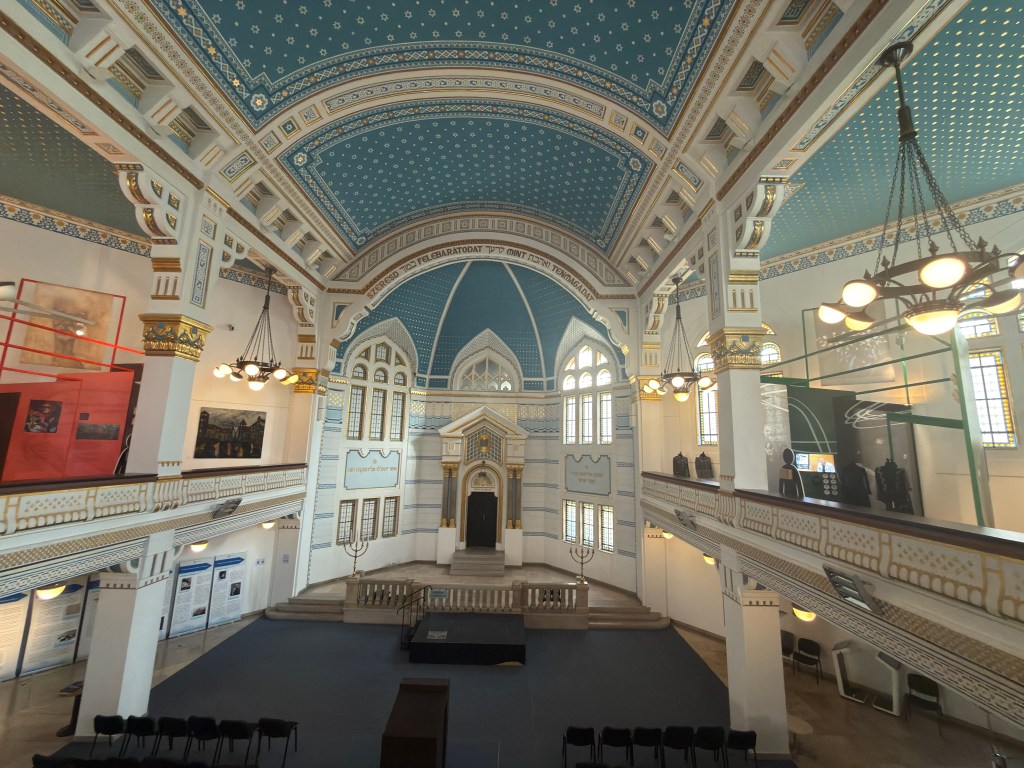
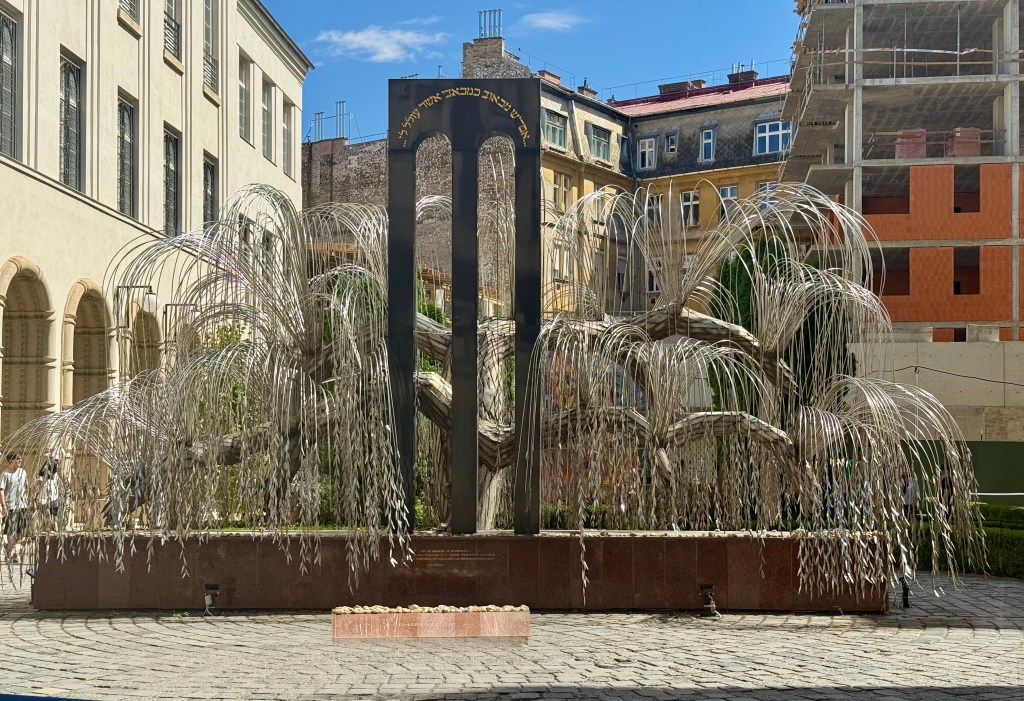
We also visited the Holocaust Memorial Center and Páva Street Synagogue. This memorial Center opened in 2005 to honor the over 600,000 Holocaust victims in Hungary. Hearing directly from survivors this is a somber remembrance to those who did not survive. As you make your way through the photos that tell their stories you will wind your way to the Páva Street Synagogue. This is beautifully restored in Jewish colors of blue, gold and white that dazzles the walls and ceiling and is simply stunning. This is definitely worth a visit.
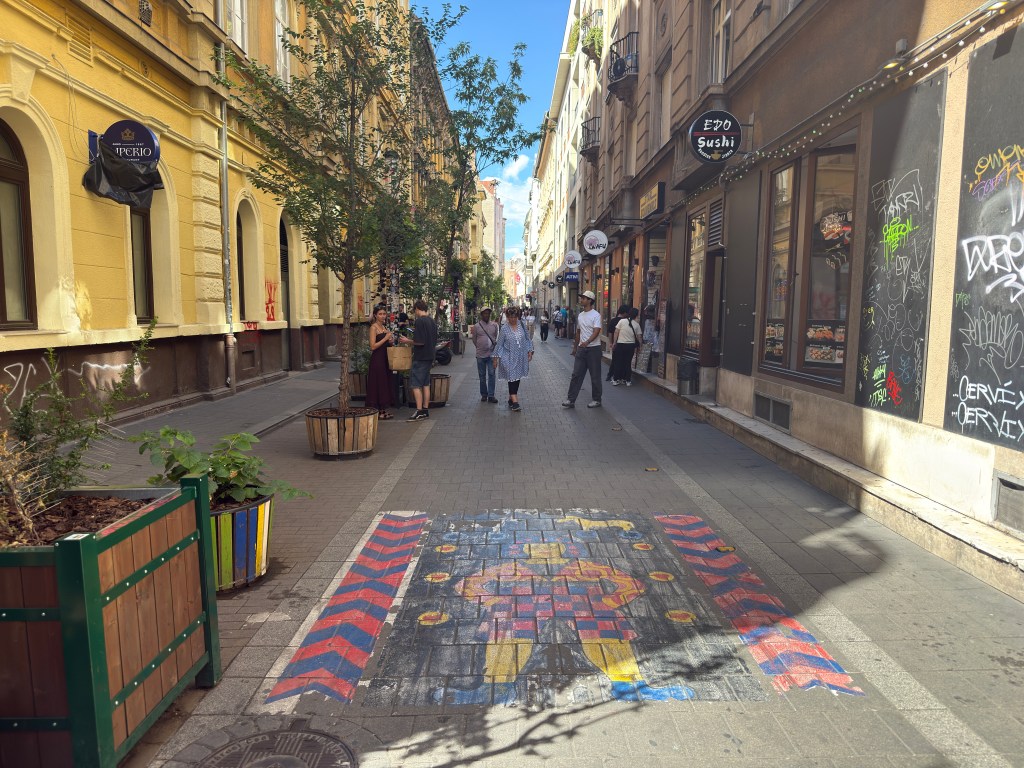
Anker köz Street was one of the prettiest streets we visited. Köz means between or among, and is a small elegant street that connects between two larger streets. Generally cars are not allowed and the architecture is exceptional. There are 525 Köz in Budapest but Anker Köz was our favorite.
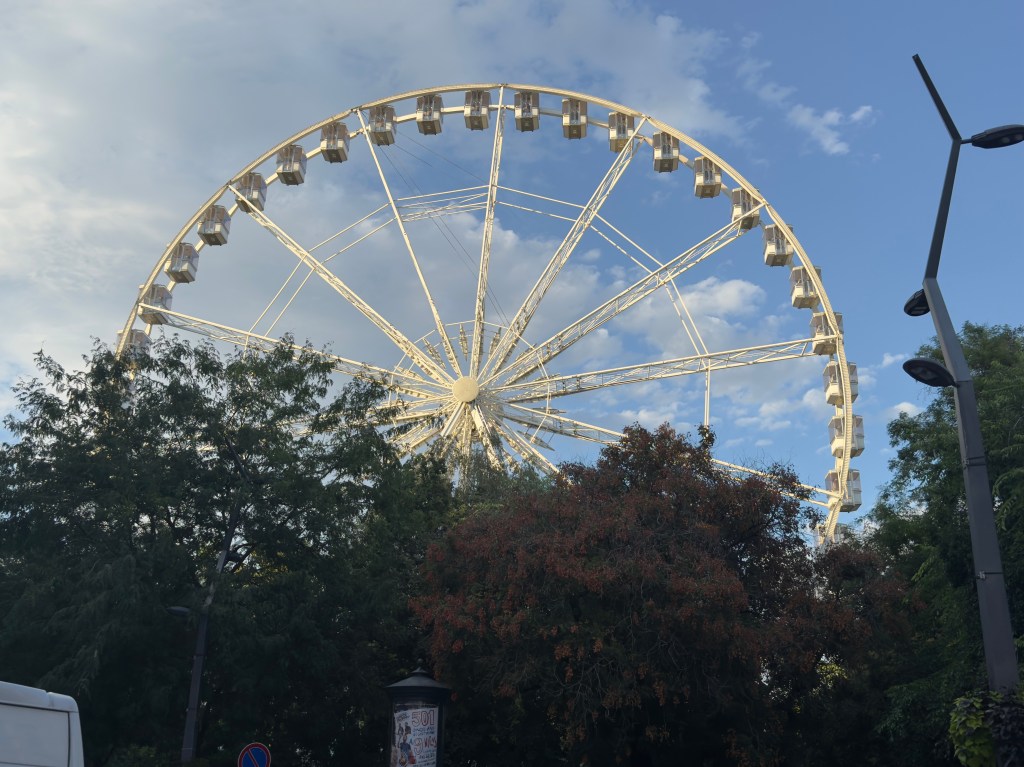
You’ll come upon Anker Palace built between 1908 and 1910, this is a stunning piece of architecture built in the eclectic style and is a beautiful part of this street. Also as your walking down Anker Köz you may notice the Budapest Eye.
The Budapest Eye is a large Ferris wheel that opened in 2017, on park Erzsébet Square in the city centre. This is the largest Ferris wheel in Europe, it has 42 partially open cabins, and is 213 feet high and offers amazing panoramic views from the top.
After two weeks in Budapest we truly enjoyed our time here and have determined we want to return, there were still things we wanted to see and do and due to time constraints we didn’t, so this has been added to our list of places we hope to visit again. We also could not possibly post everything we seen here as there was so much to see and do and if we posted it all it would be more of a book instead of the article it is meant to be.

